In conversation with Manuela de Lachapelle, Head of R&D at Domaines Barons de Rothschild Lafite.
As Head of R&D at Domaines Barons de Rothschild Lafite, Manuela de Lachapelle explores what biodynamics, backed by evidence, brings to the resilience of Bordeaux estates and the redefinition of the winegrower’s craft.
Being a young woman in a senior role at a leading Bordeaux estate is enough to set you apart. Add to that expertise in biodynamics and the perspective of an ‘outsider’, and only one name springs to mind: Manuela de Lachapelle.
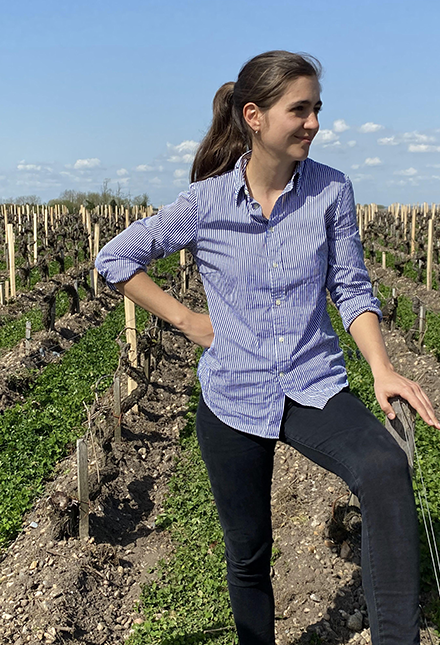
Manuela de Lachapelle, Head of R&D at Domaines Barons de Rothschild Lafite.
Manuela’s role is crucial, particularly at a time when climate and economic pressures are forcing us to rethink our practices. Based at Lafite, she serves as Director of Viticultural and Oenological Research & Development for Domaines Barons de Rothschild, overseeing biodynamic trials and agroecological projects across the group’s ten estates.
Manuela has recently completed a PhD in viticulture and oenology, grounded in these field experiments. Its title? ‘Biodynamic preparations in viticulture: professional perceptions and analysis of their effects on vine and grape berry development.’
Rest assured: when Manuela talks about it, her contagious enthusiasm makes it seem anything but dry.
‘Biodynamics encapsulates all the challenges of changing practices. It touches on the sensory, the spiritual, and the way we define “good” viticulture.’
An agronomist who embraces her spiritual heritage
Q: As a scientist, what led you to choose biodynamics as the subject of your PhD rather than a more ‘classical’ approach to viticulture?
Manuela de Lachapelle: At the outset, it wasn’t biodynamics itself that drew me in, but the question of change. At Lafite, we launched biodynamic trials in 2017. Very quickly, I realised these trials were not merely technical. They disrupted habits, perceptions, and sometimes deeply held beliefs.
Biodynamics concentrates all the difficulties of changing practices. It engages the sensory, the spiritual, and the way we conceptualise ‘good’ viticulture. That’s what interests me: why do some changes take hold easily, while others provoke resistance, mistrust, or even ridicule? My thesis emerged from that tension more than from any initial fascination with biodynamics itself.
Robust evidence must underpin biodynamic trials.
Q: Where do you personally stand between conviction, scientific curiosity, and scepticism?
I don’t come from a Cartesian culture, but from a South American one, where syncretism is common. One grows up in a natural blend of inherited beliefs, Catholicism, and indigenous traditions. For me, it is not contradictory for multiple frameworks to coexist.
However, I work in the French wine sector, where there is a strong demand for scientific validation. And I am myself a trained agronomist.
So I find myself at a crossroads. On one hand, I am comfortable with the idea that sensory or spiritual dimensions may exist. On the other, I see how essential it is, in this context, to provide solid evidence.
My role is to take seriously what winegrowers perceive and observe, while subjecting it to rigorous scientific methodology: protocols, controls, repetitions, and publications.
‘My research has shown that biodynamic preparations do have measurable, reproducible effects on the vine. That finding alone—”it works, and we can demonstrate it”—radically changes the conversation.’
Q: How has your view of biodynamics evolved since the start of your PhD?
At first, I saw biodynamics mainly as a volatile topic. Esotericism for some, a passing trend for others, even a sect in the eyes of a few. Today, I see it as a powerful lens.
First, it reveals our reflexes: in France, we have a strong need for scientific validation to legitimise practices. It also reveals the strength of a systemic approach: by working on biodynamics, we opened up many other areas—biodiversity, cover crops, trees, agroecology, and the role of humans within the system.
Finally, my research has shown that biodynamic preparations have measurable and reproducible effects on the vine. That simple fact changes the nature of the discussion.
Biodynamic preparations: measurable effects, far from charlatanism
Q: If you had to summarise your thesis in simple terms, what question were you trying to answer?
The central question is: do biodynamic preparations have a real effect on the vine and the grape. And if so, what kind? I do not study biodynamics as a whole, but rather one emblematic and often contested component: the preparations that are stirred and sprayed on the vine or soil.
The aim is two-fold: to understand how professionals perceive biodynamics (representations, resistance, beliefs), and in parallel to conduct a rigorous biological study of their effects on vine physiology and grape berries.
‘At Château L’Évangile, 100% of the 20-hectare vineyard has been managed this way from the outset, reflecting the conviction of the teams in place.’
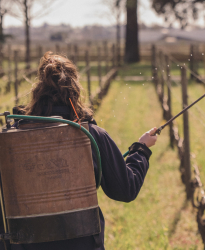
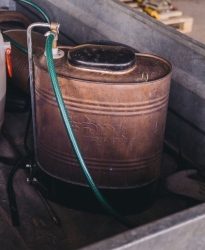
Biodynamic treatments at Château L’Évangile using horsetail infusion, March 2025.
Q: In practical terms, how did you test these effects?
We’ve conducted trials within Domaines Barons de Rothschild Lafite, mainly at Lafite and Château L’Évangile.
At Lafite, we established a four-hectare experimental setup in alternating strips on the Carruades plateau: one strip receiving the preparations, one not. A further 11 hectares receive biodynamic preparations without alternating strips. Everything else remains strictly identical: organic farming practices, identical treatments, identical vineyard management, identical intervention dates.
Importantly, the trial is not confined to marginal plots. It is conducted at the heart of the estate, on land historically used for the grand vin. At Château L’Évangile, 100% of the vineyard has been managed biodynamically since 2017–2018, without internal controls.
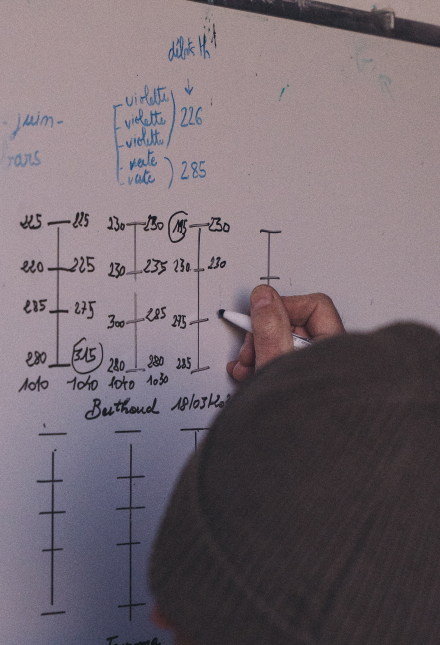
We then closely monitored vine growth, water regulation, the synthesis of defence compounds, berry ripening, and finally wine behaviour—vinifying plots separately and conducting blind tastings.
Biodynamic trials are conducted primarily at Château Lafite Rothschild and Château L’Évangile, with measurable effects on vine growth, berry development, and ultimately on wine behaviour.
Q: What robust effects did you observe on the vine itself?
Several consistent results emerged.
Delayed vegetative growth: fewer internodes per shoot, more controlled canopy development, without affecting vigour or leaf area.
Increased natural defence compounds: higher levels of stilbene polyphenols (such as resveratrol).
Altered water regulation: the vine behaves as though under greater water stress, yet without triggering stress responses—suggesting improved water efficiency.
Slower degradation of berry skins during ripening, maintaining a more ‘juvenile’ state and reducing vulnerability to pathogens.
In other words, the entire system is slightly shifted in time: slower growth, stronger defence, and a different ripening dynamic. This opens promising avenues, particularly for aligning different ripeness parameters or enhancing resilience to climate stress.
‘Six months after vinification, tasters could distinguish between “organic” wines and “organic plus biodynamic preparations”. After eighteen months of ageing, they could no longer tell them apart.’
Q: Are these differences perceptible in the wine?
Yes, but subtly, and they evolve over time. We conducted blind triangular tastings with around forty participants. Six months after vinification, tasters could distinguish wines from treated and untreated plots. After eighteen months of ageing, however, they could no longer differentiate them, either on the nose or palate, despite analytical differences in colour.
The effect of the preparations on the final profile of great wines such as L’Évangile remains very subtle compared with other levers (oak selection, ageing, vinification).
This points to the wine’s colloidal matrix—those suspended compounds (pectins, colloids) that influence colour, texture, and mouthfeel. Preparations may affect this matrix over time, which would merit further research.
That said, the impact of preparations on the final profile of wines like Lafite remains very subtle compared to other factors (oak, ageing, vinification, terroir). The deeper change lies elsewhere: in how vineyards are perceived and managed.
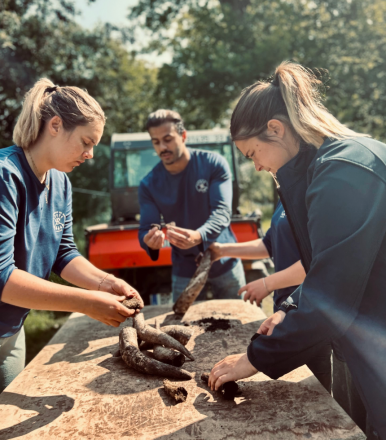
‘We buried the same manure in different containers: plastic, clay, horn. When unearthed, only the manure in the horn had undergone a remarkable transformation.’
From esotericism to serious experimentation
Q: Biodynamics often brings to mind horn silica, buried manure, lunar calendars. What do you think is important to clarify?
The preparations we use are actually quite simple. Two were formulated by Rudolf Steiner: horn silica (ground quartz buried in a cow horn from spring to autumn) and horn manure (fresh manure buried from autumn to spring). The third, Maria Thun compost, is more recent.
The horn often shocks people. Yet when you try the experiment yourself, the result is striking: only the manure buried in the horn transforms completely—developing a forest-floor aroma, a modelling-clay texture, and losing its initial odour. Something happens within the horn, likely linked to its structure or biological properties.
It’s important to encourage people to experience this directly rather than judge from caricatures.
Q: Biodynamics is often labelled a pseudoscience. What do your findings change in that debate?
The key contribution of my thesis is not a specific physiological detail, but the scientific confirmation that these preparations have measurable, reproducible effects.
For ten years at Lafite, biodynamics was tested against the question: are we drifting into something purely esoteric? Demonstrating real effects changed the atmosphere entirely. We can now speak of biodynamic strategy at estate level.
This does not mean everything is proven or fully explained. But it does mean biodynamics can no longer be dismissed outright as pseudoscience. Some aspects are measurable; others remain hypothetical or intuitive. We must accept this grey area.
‘At DBR Lafite, biodynamics naturally led to a broader agroecological project.’
Climate, agroecology, and practical applications at Lafite
Q: In the context of climate change, where do you see the greatest potential for biodynamics?
Results show increased resilience to both biotic and abiotic stress: better disease resistance, improved water-use efficiency, and more robust berries.
That said, preparations are only one lever, and probably not the most powerful against drought. Greater impact lies in landscape structure: trees, hedges, ponds, cover crops, and crop diversification.
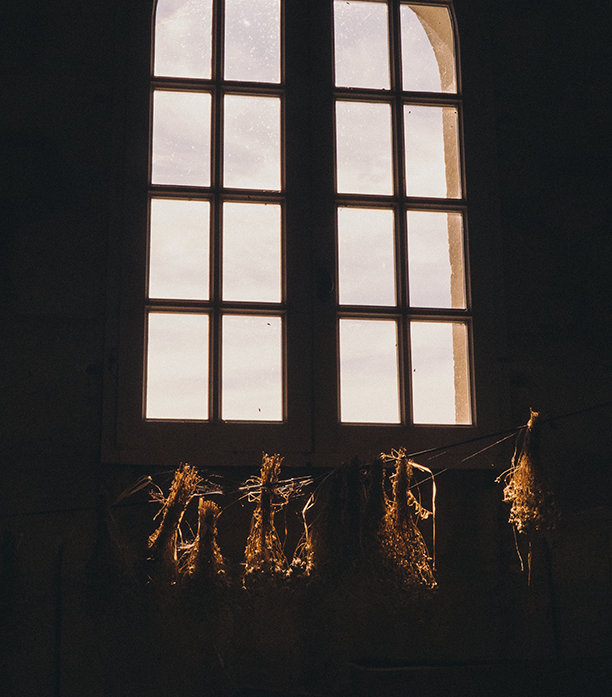
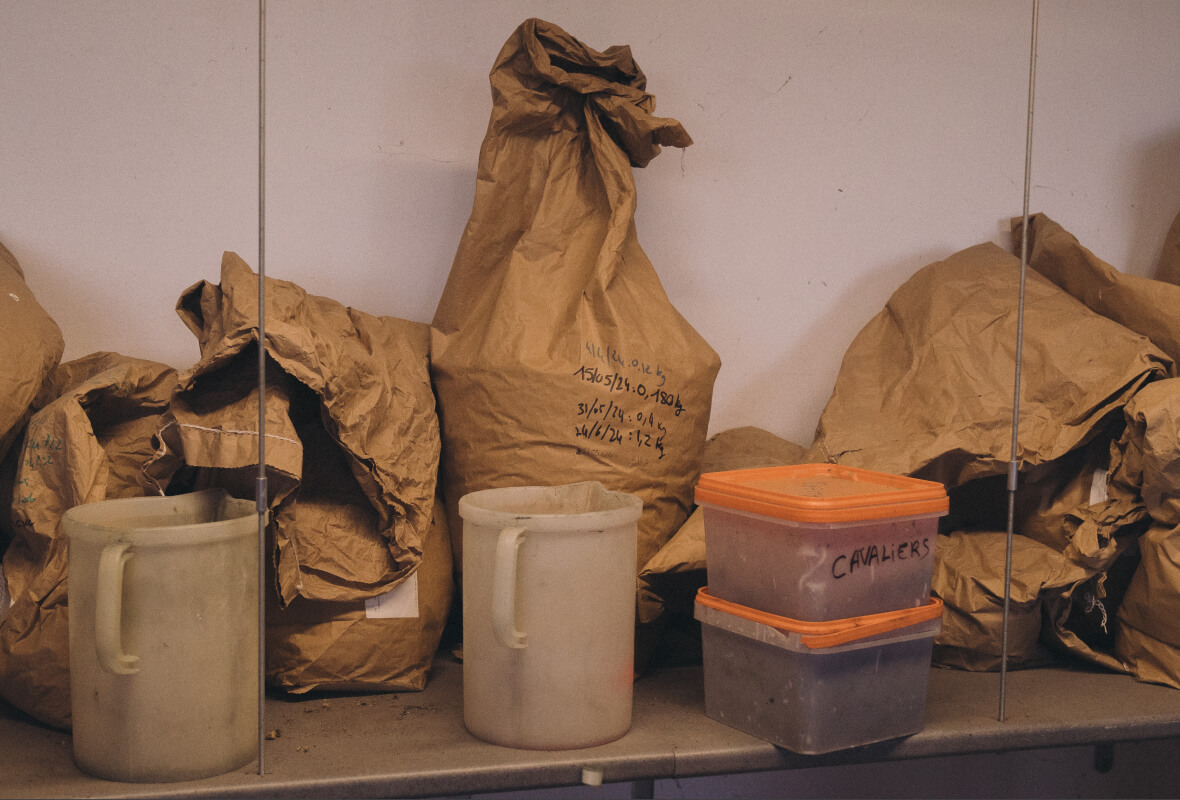
Various dried plants are used in herbal teas and sprayed on the vines depending on the climate and phytosanitary risks.
This is why biodynamics at DBR Lafite has evolved into a broader agroecological and hydrological approach, focused on vineyard regeneration.
Q: How are your findings applied across the estates?
At L’Évangile, biodynamics has been applied across the entire vineyard from the outset. At Lafite, around 15% of the vineyard receives preparations, within a high-quality sector deliberately chosen.
The fact that these plots continue to contribute to the grand vin is already a result in itself.
The next step is a systemic approach: integrating preparations with biodiversity, agroecology, animal presence (such as sheep grazing), and human organisation. This is not a minor adjustment. It is a redefinition of what a wine estate is.
A return to agricultural common sense
Q: You say biodynamics is not a lifestyle trend but a return to agricultural common sense. Could you elaborate on that?
Biodynamics is often caricatured as a niche urban trend or spiritual discourse. In reality, Steiner described a mixed farm: livestock, crops, trees, hedges, and humans. The vine is just one element.
Returning to this model restores depth to the farming profession: pruning vines, but also managing trees, hedges, livestock, and landscapes. It is a demanding, practical skillset that reconnects viticulture with its environment.
‘What is needed is to restore this agricultural common sense: seeing the farm as a living organism and embracing intelligent polyculture.’
Q: In conclusion, what is the greatest challenge, and the greatest necessity, for the future?
The hardest part is accepting that change will not come solely through data and technical arguments, but through patient cultural transformation.
We are asking a generation trained in ‘clean’ vineyards to embrace more complex, living landscapes. And we are doing so under climate pressure and economic strain.
What is necessary is to restore agricultural common sense: to see the farm as a living organism, to work across species and landscapes, and to rediscover intelligent polyculture.
Between scepticism and climate urgency, biodynamics and agroecology will not prevail by decree but by combining evidence with renewed enthusiasm for a richer, more meaningful profession.
Profile: Rudolf Steiner, the founder of biodynamics
An Austrian philosopher and educator born in 1861, Rudolf Steiner founded anthroposophy, a school of thought combining scientific observation, spirituality, and personal development.
In the 1920s, responding to farmers concerned about declining soil fertility, he delivered lectures that laid the foundations of biodynamic agriculture.
These introduced key principles—such as viewing the farm as a living organism—and preparations still used today, including horn manure and horn silica. Steiner also inspired Waldorf education and aspects of anthroposophical medicine.
In the 1940s, British agronomist Lord Northbourne formalised the concept of ‘organic farming’ in Look To The Land, drawing heavily on Steiner’s biodynamic principles.
Read also
Micro-Cosmic: The Hidden Universe Beneath Our Feet
Digging deep to meet our vineyard’s smallest and most powerful allies.
Weather: a lesson in humility, from folk wisdom to algorithms.
Whether guided by folk wisdom or modern forecasting models, farmers and winegrowers are searching for the same thing: a glimpse of what lies ahead. The weather, however, rarely offers certainty.