Earthquakes, frost and snow: when nature challenges our winemakers and vineyards.
From seismic shocks in Chile to brutal frost in Chablis and frozen ground in Shandong, our teams have weathered more than their share of extremes. These are stories of resilience behind the vines.
Sometimes, the rhythms of vineyard life are broken not by human error or market swings, but by the indifferent hand of nature. Across our estates in Chile, France and China, adversity has assumed different forms, each episode leaving its mark on both the vines and those who tended them.
Chile, 2010: the day the earth shook
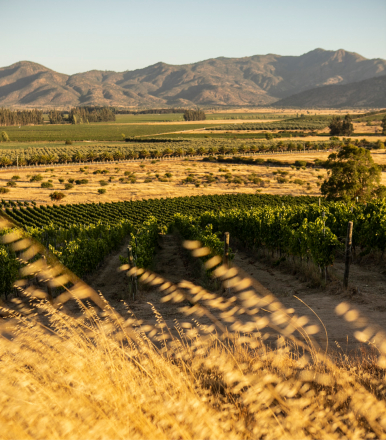
At Viña Los Vascos, late February is all about anticipation. The tanks are nearly empty, with just a handful still full of wine, the rest already moved to concrete vats. But at 3:00 a.m. on 27th February 2010, an 8.8-magnitude earthquake struck near Concepción, its shockwaves rippling through the vineyard with enough force to rattle steel.
The winemaker, Max Correa, was in Santiago, nursing a football injury—a stroke of fortune in hindsight. The next day, he returned to chaos. ‘It looked like a scene from a film’ he said. The highway was riddled with open cracks, the bridges were crumbling, dust hanging in the air.
Barrels and tanks had toppled in the cellar, wine running down the floor and into the walls.
At the vineyard, panic was mingling with rumour: the dams might break, water could flood the fields. Some fears proved real. The Isla Redonda and Santa Lucía reservoirs burst, with water reaching the winery, rupturing several tanks, sending wine into a neighbouring cornfield. The crop was lost.
No one entered the winery until Monday. When they did, it was in firefighting gear, aftershocks still rolling in. Barrels had toppled in the cellar, wine soaked into bricks. The smell lingered for a year. The main house, its wine cellar emptied by the quake, was sealed and ventilated, but in the end, the floor had to be rebuilt. Shops in town were empty. ‘I remember eating more meat than ever that week: to avoid losing what was defrosting we had barbecues every day,’ Max recalled.
After the earthquake, millions of liters of wine were lost.
Workers slept in tents and prefab houses on the lawn. The guard who was on duty during the quake said he could still hear the tanks crashing into each other. Ten days later, harvest began, with aftershocks still rattling nerves and equipment. Over a million litres of wine were lost. The tanks were bolted down, the reservoirs rebuilt. ‘We’re going to get through this,’ they told each other. They did, and even though the sound of steel on steel lingered, there were silver linings, like the 2010, which emerged as one of Le Dix’s finest vintages.
Chablis, 2023: the relentless frost
In Chablis, threats arrive quietly, on clear spring nights. The valley, always prone to cold, has seen its frosts change. Where once there were ‘white frosts’—soft, late, minus two or three degrees in May—you now get ‘black frosts’, earlier, sharper, sometimes dropping to minus eight or nine. The new schedule means the team at Domaine William Fèvre must be ready before dinner, not just before dawn.
The early frosts, more damaging, are called ‘black frosts’ in the vinyards.
Water spraying system on the vines at Domaine William Fèvre. When the temperature drops below zero, the water freezes on the surface of the buds, forming a protective layer of ice that keeps the temperature of the plant tissue above 0°C.
On 10th April 2023, the sensors in the vineyard—digital sentinels scattered amongst the vines—began to go off. Temperatures were dropping. ‘You don’t need Netflix,’ said Didier Séguier, Technical Director. ‘The suspense is in the vines.’ By 8 p.m., the team was already outside, headlamps carving through the darkness.
The protections are layered: aspersion systems from the 1970s spray water to coat buds in ice, keeping them at zero degrees. ‘It’s like walking on a tightrope,’ Didier explained. ‘If you stop, you fall.’ Candles—hundreds per hectare—burn paraffin, now vegetable-based. ‘After a night with the candles, you look like a chimney sweep,’ one worker joked. Electric cables, installed in March 2004, heat the vines automatically, but only on the most valuable plots.
Every decision is costly. ‘A night of candles is expensive per hectare,’ Didier said. ‘You don’t light them unless you have to.’ Teams are woken up in batches, depending on which sensors go off. ‘It’s all about humidity and wind,’ Didier noted. ‘More humidity, more risk. If there’s wind, you’re lucky.’ Some nights, twenty people work through the cold, checking candles, unclogging sprinklers, monitoring the cables. By morning, when the temperature finally climbs, they gather for coffee and croissants, faces blackened by soot and fatigue. ‘There’s camaraderie,’ Didier said. ‘You see your neighbours around their own fires. It’s not the party you’d choose, but it’s the one you get.’
Shandong, 2024: snow farming
At Domaine de Long Dai, the vineyard spreads across a patchwork of terraces in the hills of Shandong. Winters are cold and dry, and when fortune smiles, blanketed in snow. The snow benefits the vines, insulating their roots and conserving moisture. Shandong is one of the few wine-growing regions in China where vines do not need to be buried for protection, thanks to its proximity to the Bohai Sea, which brings maritime influences and keeps winters cold but not harshly frosty.
For the workers though, it’s another matter. Shao Li, Vineyard Manager, put it plainly: ‘Snow is good for the wines, but it makes work difficult. You can’t see the soil. The ground is frozen. Planting posts becomes a sport.’
Snow is good for the wines, but it makes work difficult.
The main winter job is setting posts and wires for the coming season. When the snow is heavy, the soil is hidden and hard as stone. ‘It’s very hard to get to the depth we want,’ Shao said. By midday, the sun turns the snow into slush, and the vineyard becomes a skating rink. ‘Either slippery or too wet,’ Shao added. ‘It’s a challenge.’
In December 2024, as the snow came in, two workers—Haiming and Chuanping, both in their forties and ‘young, by our standards’ as Shao noted—became the team’s go-to men. They drove the tractors, set the posts and joked about inventing a ‘picket sledge’ to make the work easier. ‘By noon, the mud was like glue,’ Haiming complained. ‘You lose a boot, you just keep walking.’ There’s a kind of humour in it, the resigned laughter of people who know the weather can’t be argued with.
The workers needed to protect themselves from the cold, yet they were able to laugh at the absurdity of farming on a frozen slope.
At lunch, the team drank hot tea and bet on who would fall next. The snow protected the vines, but the workers needed their own kind of protection: layers, boots and a willingness to laugh at the absurdity of farming on a frozen slope.
Sometimes, the rhythms of vineyard life are broken. The earth shakes, the frost bites, the snow buries the posts. But the work resumes. And the vines, indifferent to drama, keep on growing.
Read also
Gone With the Winds
Assemblage
In our cellars, we blend grape varieties; in our Journal, we blend ideas. This time, it's a rather airy lexicon. The winds make the weather fair or foul. But do they also make the wines? Here's an overview of those that blow over our vineyards, from the tramontane to the typhoon.