The Journal / Shores
Between two tides
Between two rivers and two crises, Entre-deux-Mers, a wine region with a mosaic identity, is finding in its diversity the means to reinvent itself.
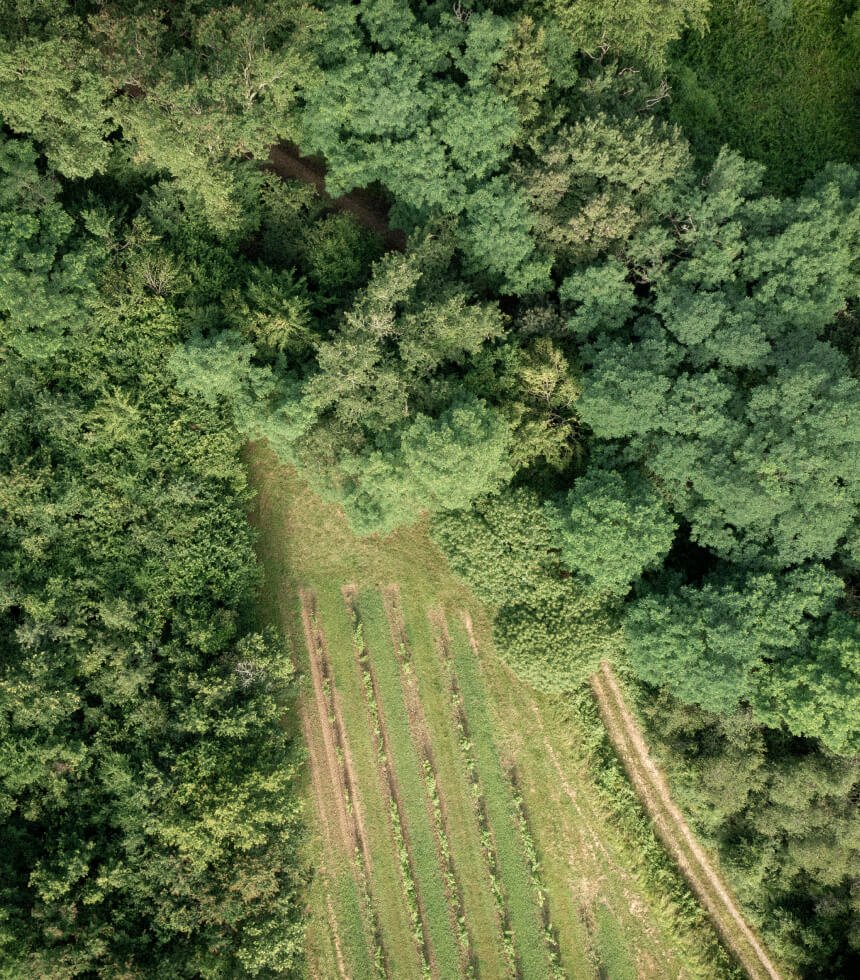
Between two rivers and two crises, Entre-deux-Mers, a wine region with a mosaic identity, is finding in its diversity the means to reinvent itself.
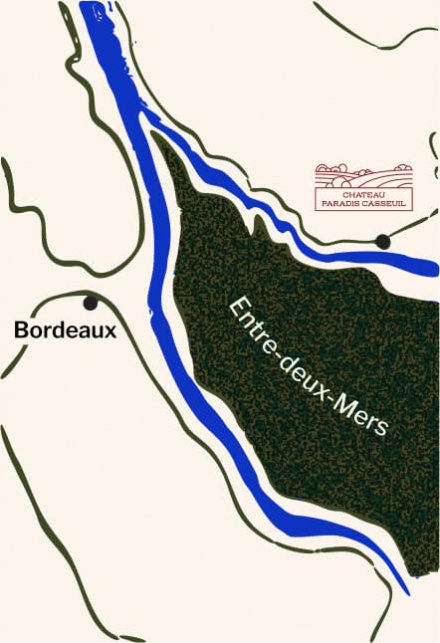
In Bordeaux, lesser-known vineyards are bearing the brunt of the crisis. Wedged between the Garonne and Dordogne rivers since the Middle Ages, Entre-deux-Mers is paying a particularly heavy price. Yet this vast, varied plateau, long regarded as a region without a clear identity, may find in its geological disorder and rediscovered way of life a rather promising hand to play.
Entre-deux-Mers. The name is misleading. Despite what the French word mers (‘seas’) might suggest, there is no sea here, but two rivers: the Garonne and the Dordogne, whose waters meet further north to form the Gironde estuary. The most common explanation is that the tide travels so far inland, even producing the tidal bore known as the mascaret, that these waterways long seemed more like arms of the sea.
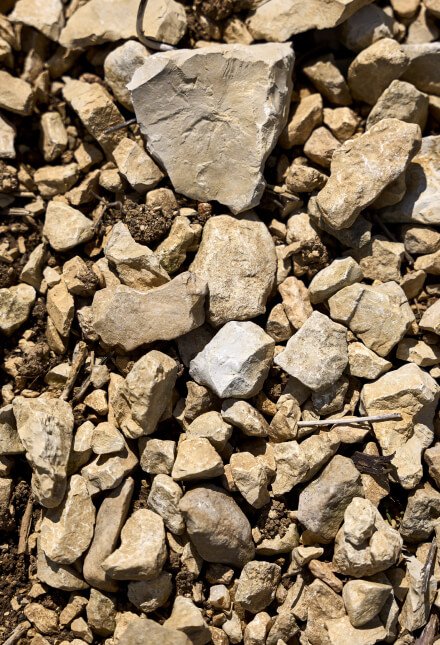
Here, the landscape rises and falls, rolling like Tuscany, shaped more by ancient upheavals than by any continuous human hand. Entre-deux-Mers does not have the geological legibility of Pauillac or Pomerol. At Château Paradis Casseuil, part of Domaines Barons de Rothschild Lafite since 2013, one soil type gives way to another: sandy clay here, fossil-rich limestone there, and further on, clay soils scattered with small limestone pebbles.
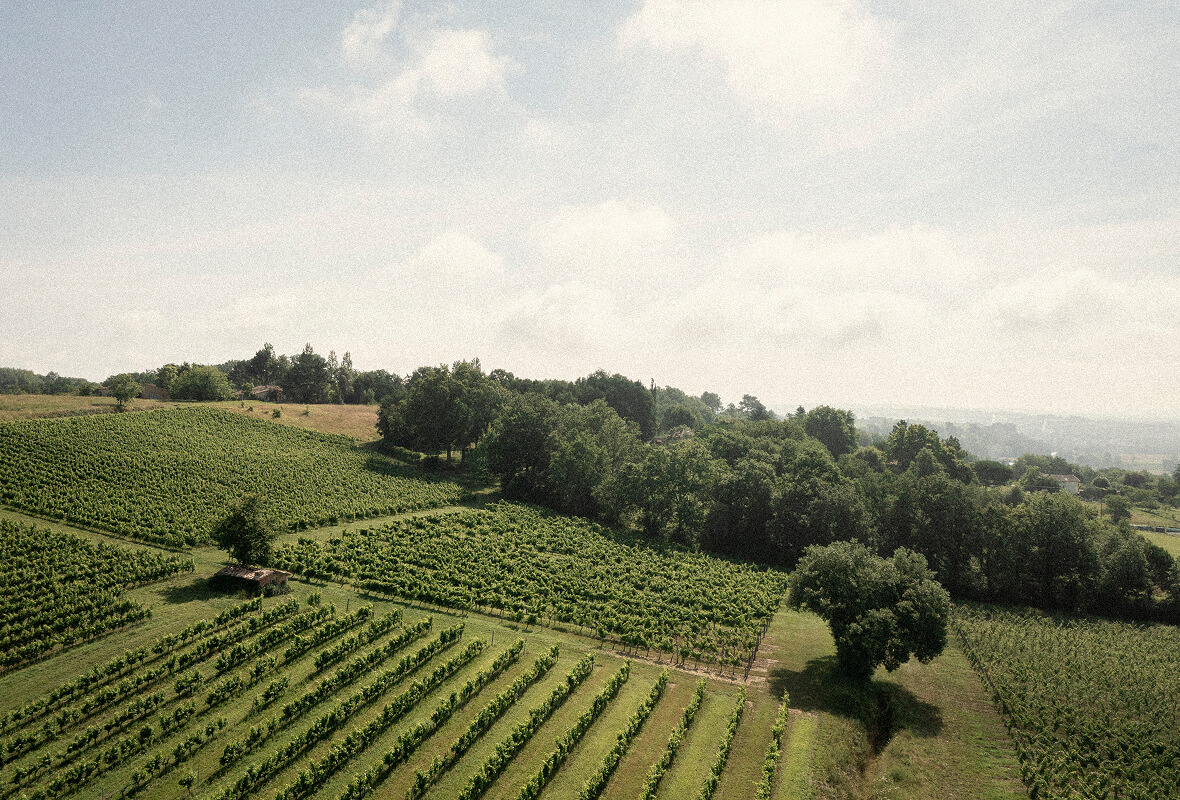
For a long time, this diversity worked against the region. Without a single, concentrated geological foundation, and without a historical anchor as powerful as the abbeys that built Saint-Émilion’s reputation, Entre-deux-Mers never quite managed to engrave its name in the consumer’s mind. The appellation, established in 1937, is now reserved for dry white wines, leaving most of the region’s reds to be sold under the broader Bordeaux or Bordeaux Supérieur labels. Strict specifications, yet an identity that remains blurred.
Fresh, seductive wines
Across this varied landscape, both reds and whites charm with their freshness.
Among the whites, Sauvignon dominates, supported by Sémillon and Muscadelle, producing taut, lively wines shaped by the ocean air that travels inland along the two rivers. Their profiles range from citrus to white flowers, sometimes with touches of exotic fruit or boxwood depending on terroir and ripeness, but always with freshness as their backbone, the signature of the terroir.
For the reds, Merlot leads the dance, accompanied by Cabernet Sauvignon and Cabernet Franc. The clay-limestone soils give them that same extra degree of freshness: supple, fruit-driven wines made more for the table than the cellar.
At Château Paradis Casseuil, this broader character takes on a particular dimension. The estate’s sixty-three hectares extend across four communes, Sainte-Foy-la-Longue, Casseuil, Caudrot and Saint-Martin-de-Sescas, forming a mosaic of terroirs in which generous, limestone-flecked clays alternate with free-draining gravel.
At Château Paradis Casseuil, this broader character takes on a particular dimension. The estate’s sixty-three hectares extend across four communes, Sainte-Foy-la-Longue, Casseuil, Caudrot and Saint-Martin-de-Sescas, forming a mosaic of terroirs in which generous, limestone-flecked clays alternate with free-draining gravel.
The château owes its distinctive character to the soft Agenais sandstone typical of the Entre-deux-Mers plateau, and to the calcaire à Astéries, or fossil-rich limestone, that reaches the surface at the lieu-dit “Le Paradis”. Sandstone limestones, marls and clays create a porous structure that anchors the roots firmly while preserving freshness in the soil through the hottest summers.
The white, a blend of Sauvignon, Sémillon and Muscadelle vinified together, draws from this a clean, fresh nose, generous texture on the palate and a subtle touch of oak that gives it breadth. Typical of Entre-deux-Mers, it combines Sauvignon’s lively tension with the generosity of Sémillon, in a style made as much for the table as for the apéritif.
Red is at the heart of the estate. Merlot, Cabernet Sauvignon and Cabernet Franc come together in a wine of ripe red fruit, gentle spice and silky tannins, shaped by a rolling landscape that alters the exposure from one plot to the next.
In the glass as in its landscapes, Entre-deux-Mers has plenty going for it. Château Paradis Casseuil is proof of that.
And making the most of those strengths matters in a region undergoing profound restructuring. Between 2023 and 2025, around 18,000 hectares of vines were uprooted across Bordeaux, reducing the vineyard area by 15%, supported by €73 million in public funding. The cause: structural overproduction that the market can no longer absorb.
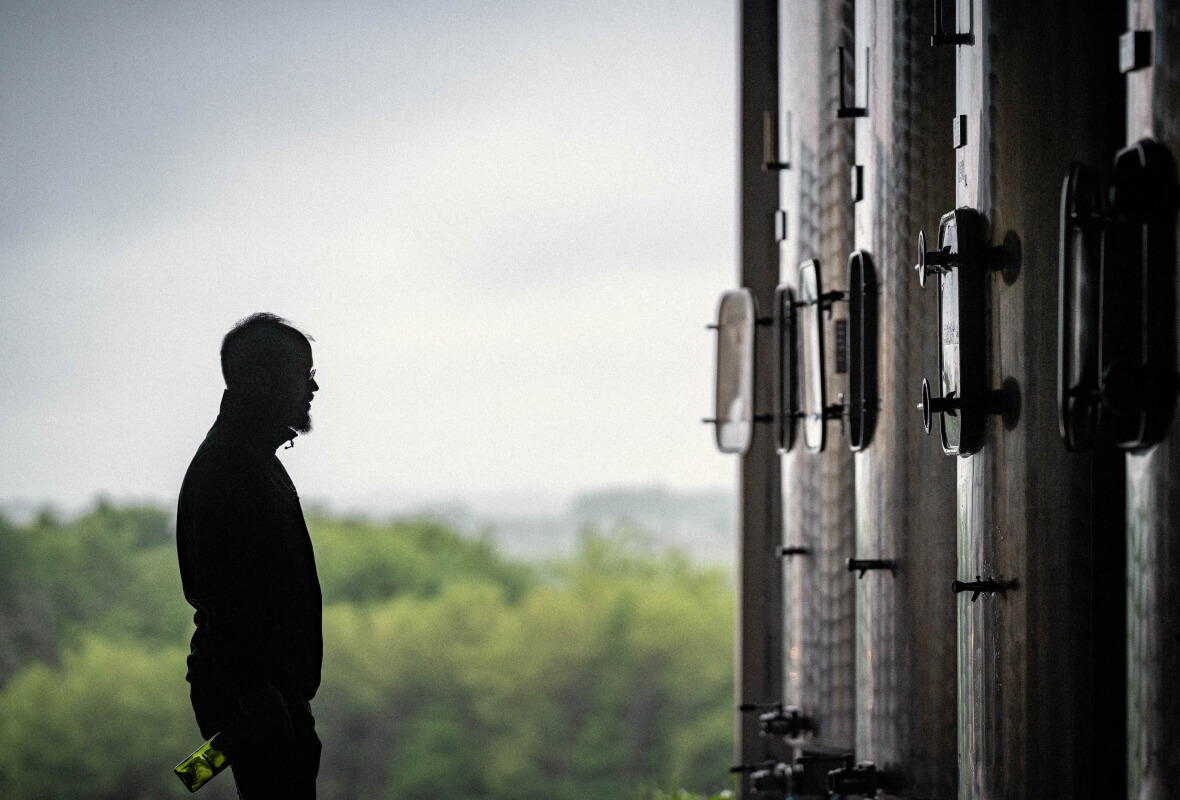
Generic appellations, without the prestige of a famous name to defend or an established base of loyal customers, are the most exposed: Bordeaux, Bordeaux Supérieur and part of Entre-deux-Mers among them. It is hardly the first time the region has faced such turbulence. As far back as 1934, 126 winegrowers came together to form a cooperative in response to another crisis of overproduction. The region has a long history of reinventing itself in the face of such cycles.
At Château Paradis Casseuil, that reinvention has recently taken the form of acquiring new plots and an existing winery, allowing each lot to be vinified with individual care, staying as close as possible to the expression of each terroir.
Climate changes the equation
There is reason for hope in a terroir long considered unremarkable. The clays that make up much of the plateau retain water, keeping the vines hydrated as summers grow hotter and drier. What once counted against these soils, their tendency to become waterlogged in winter, is becoming an advantage.
The geological mosaic itself has benefits. Limestone, silt, sand, clay with carbonate nodules: a palette of terroirs, each responding differently to heat and drought.
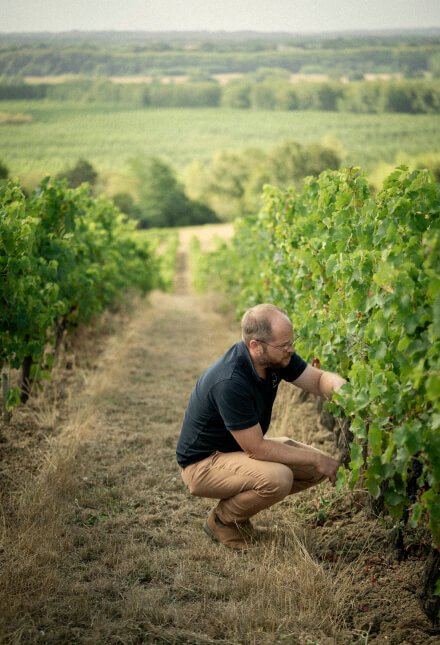
Lower pressure on land also gives winegrowers greater freedom to experiment: grape varieties resistant to fungal diseases, replanting under the Vin de France designation, trials that the great names of Bordeaux’s two prestigious banks cannot afford to undertake.
Polyculture, long seen as a symptom of a second-rate terroir, may also offer one answer to the crisis. ‘It shows winegrowers a possible path towards diversification,’ says Louis Wicke, Vineyard Manager at Château Paradis Casseuil.
The owls and bats nesting in the stone buildings of Paradis Casseuil already know a thing or two about the vineyard’s hospitality. (On that subject, see our article ‘Batman and other wild nights’.) Now it’s the rest of the world’s turn to discover it.
‘There’s a real movement developing in the Entre-deux-Mers around guinguettes (informal open-air bars and restaurants by the rivers), with winegrowers putting on evenings in spring and summer to promote their wines. Entre-deux-Mers isn’t a flat sea of vines. It’s beautiful, wooded, rolling countryside and we need to make the most of it,’ explains Louis Wicke.
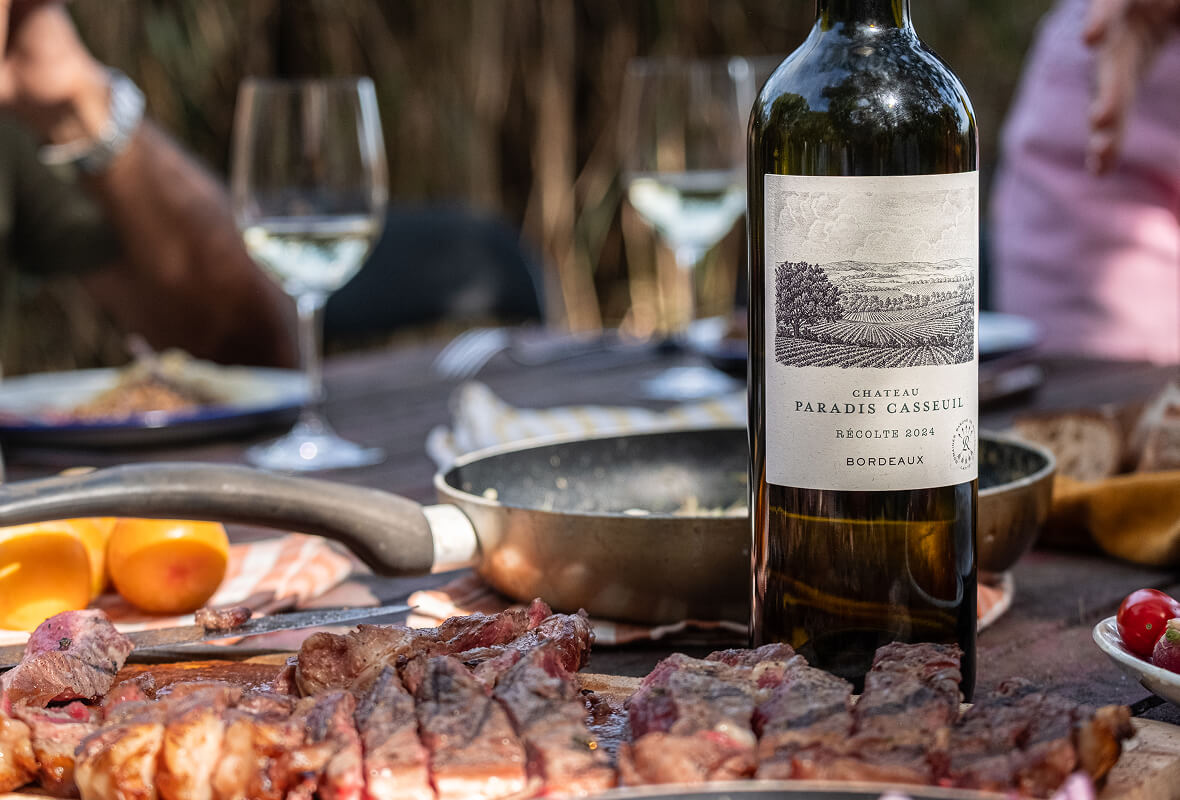
From Château du Grand Verdus to Château Thieuley, by way of Château La Freynelle’s guinguette near the Dordogne, each estate is inventing its own version of a summer evening: wooden tables, music, local produce.
This appeal may prove to be Entre-deux-Mers’ trump card in emerging from the shadows: a living, varied landscape to be explored, rather than simply tasted.
Entre-deux-Mers has never been a terroir in the classical sense: a homogeneous geological signature carried by a handful of great names. Perhaps that is precisely what allows it to reinvent itself today, just as the Bordeaux model is undergoing transformations of its own.
Château Paradis Casseuil, with its diversity of soils and wines, embodies that path: a terroir that has turned diversity from a weakness into a strength.
A hydrographic guessing game. Can you identify the river, sea or ocean behind seven Domaines Barons de Rothschild Lafite estates?
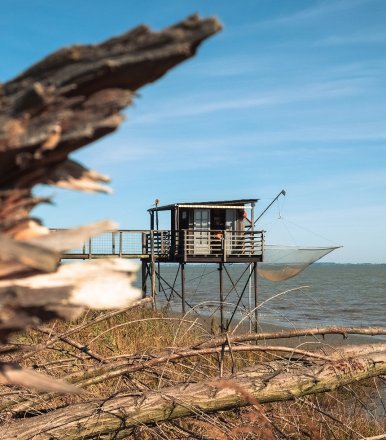
A day in a carrelet on the banks of the Gironde, some rather elusive prawns and two white wines to console ourselves: Blanc de Duhart-Milon 2024 and Château Paradis Casseuil Blanc 2024.
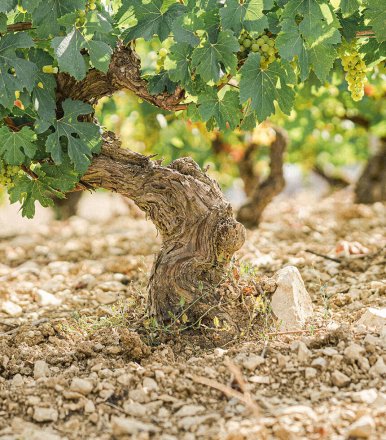
From the Kimmeridgian soils of Chablis to the gravel of the Gironde, each of the Domaines Barons de Rothschild Lafite terroirs carries, in its own way, the memory of ancient seas.

Welcome to the curious case of grape varietals.
A quiz that takes you on a journey through the grape varieties of Domaines Barons de Rothschild Lafite—from South America to China via Bordeaux and the Corbières.