A day in a carrelet on the banks of the Gironde, some rather elusive prawns and two white wines to console ourselves: Blanc de Duhart-Milon 2024 and Château Paradis Casseuil Blanc 2024.
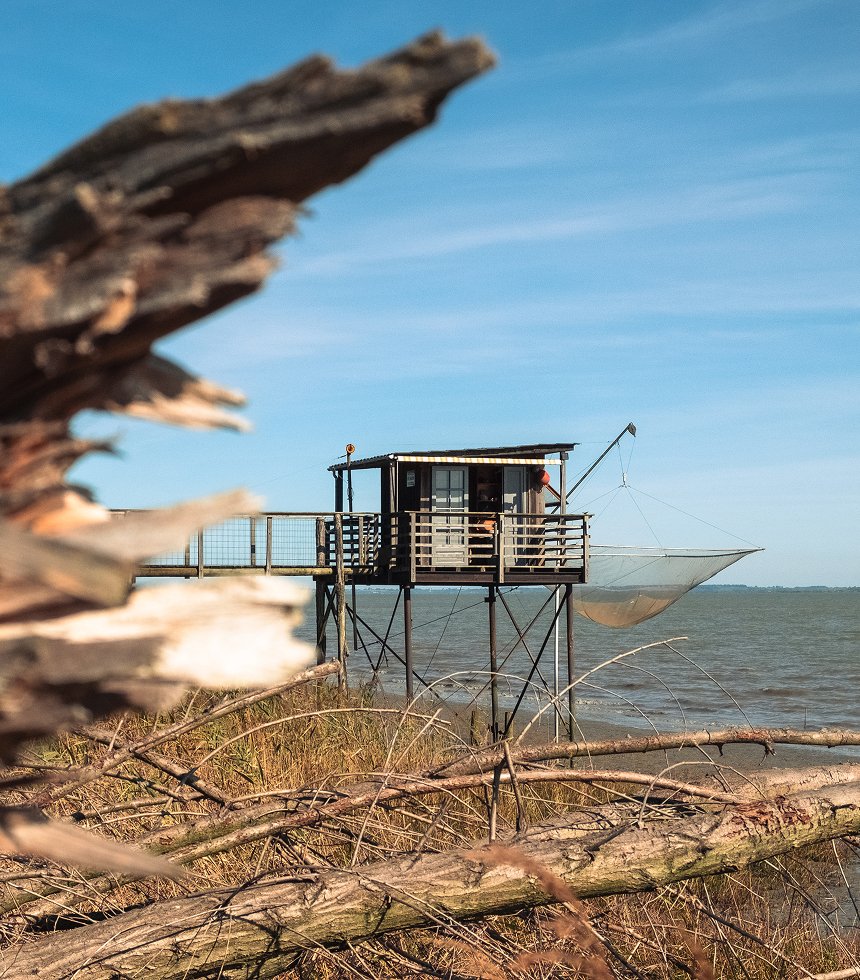
At the end of a forest track, a carrelet, a traditional fishing hut on stilts, stands over the Garonne. On its walkway, we meet Monsieur Virgile, his son-in-law Jérémy, Head of Maintenance at Château Lafite Rothschild, Christophe Costa, President of the Gironde Estuary Carrelet Fishing Association, and our editorial team. On the menu: elusive prawns, a barbecue fuelled by vine shoots from Château Lafite Rothschild and two white wines to accompany the day’s haul.
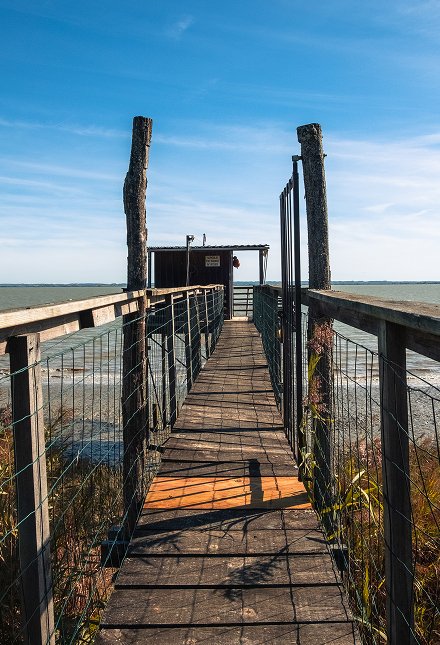
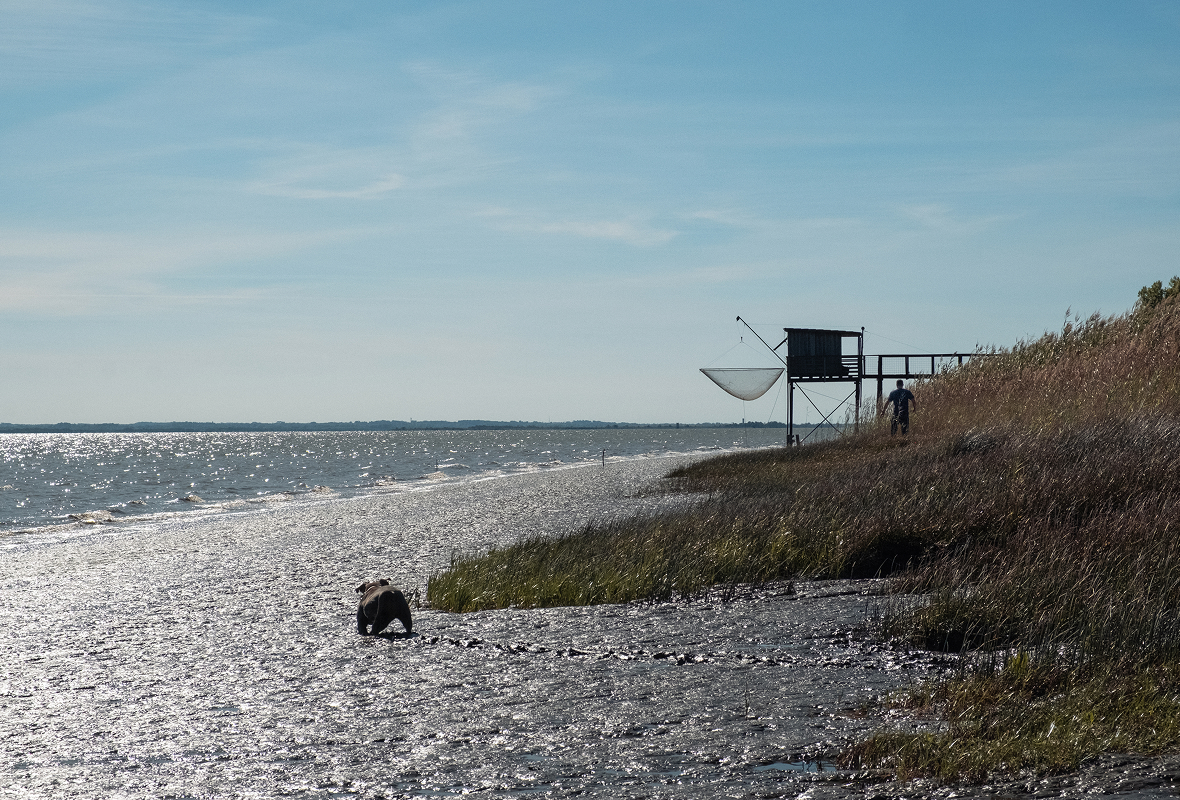
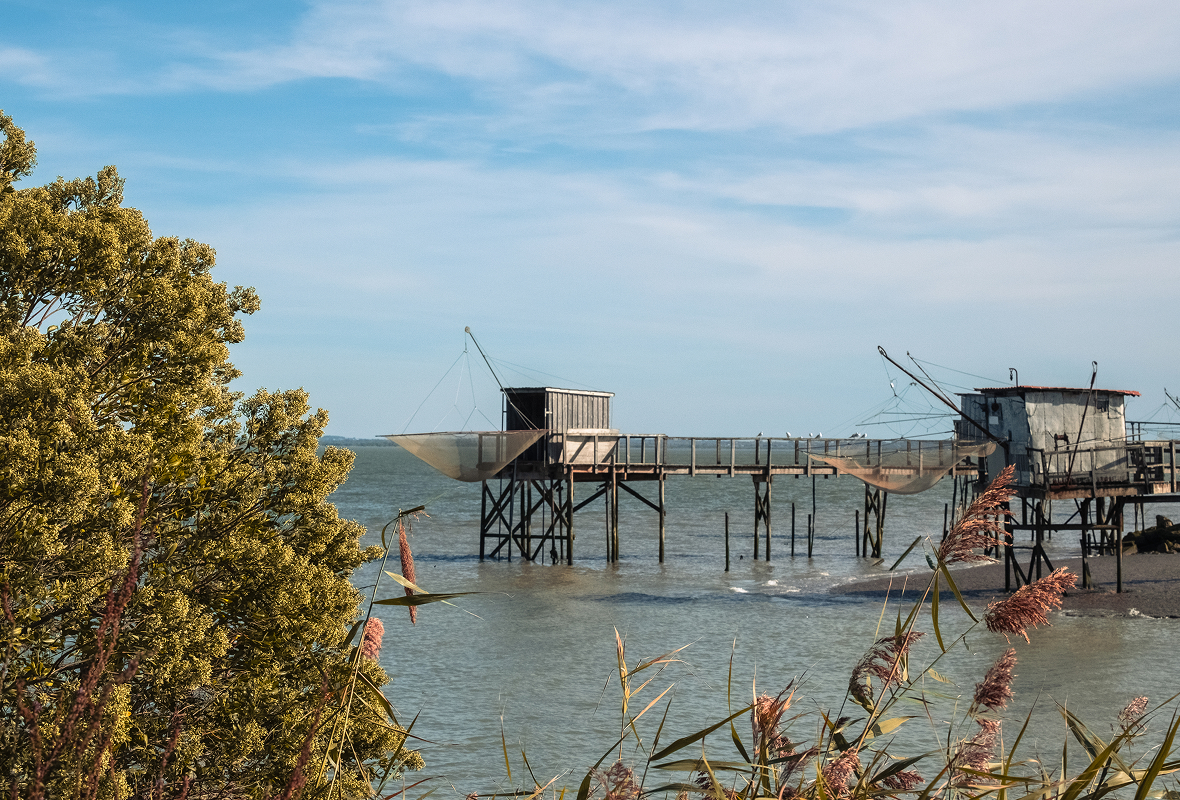
It’s half past ten. At the end of a forest track, a carrelet awaits its visitors. A fishing hut on stilts, a wooden walkway and a large square net ready to plunge into the Gironde. The sort of place that immediately makes you want to stay a while.
The track is bumpy, its ruts filled with broken roof tiles to make it passable. The car stops a little short of the end. We cover the last few metres on foot.
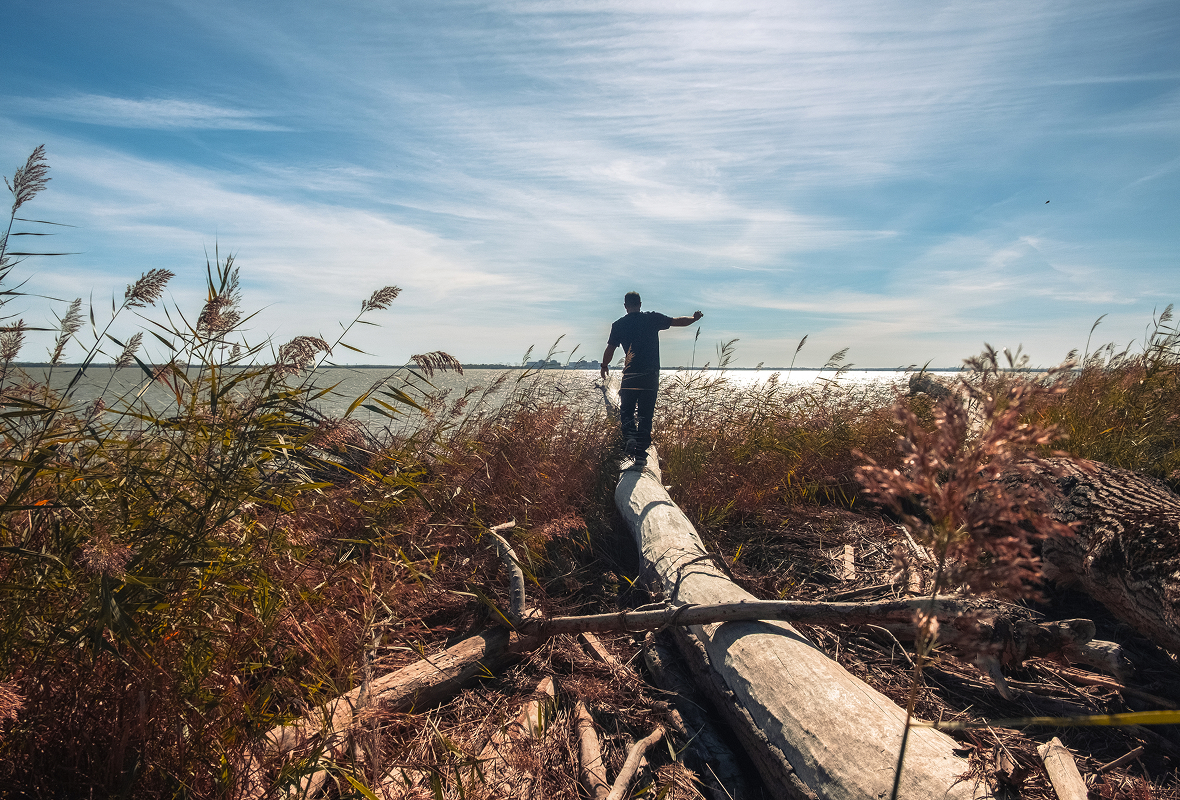
Before long, a familiar sound catches our attention. One we know well from the Atlantic coast, but hardly expect to hear on the banks of the Garonne. The further we walk, the clearer it becomes. The river has waves.
A proper rolling swell accompanies us for the final stretch.
Then the trees give way to a clearing. The carrelet is still closed. Beyond it, the Garonne catches the full morning light. Sunshine strikes the water, draping its clay-brown surface in silver reflections. It brings to mind the Côte d’Argent, a few dozen kilometres further west. The river, it seems, has borrowed a little something from the ocean.
All aboard, without going anywhere
A large van pulls into the clearing. Its sliding door opens to reveal an interior packed with tools. The first to arrive is Monsieur Virgile.
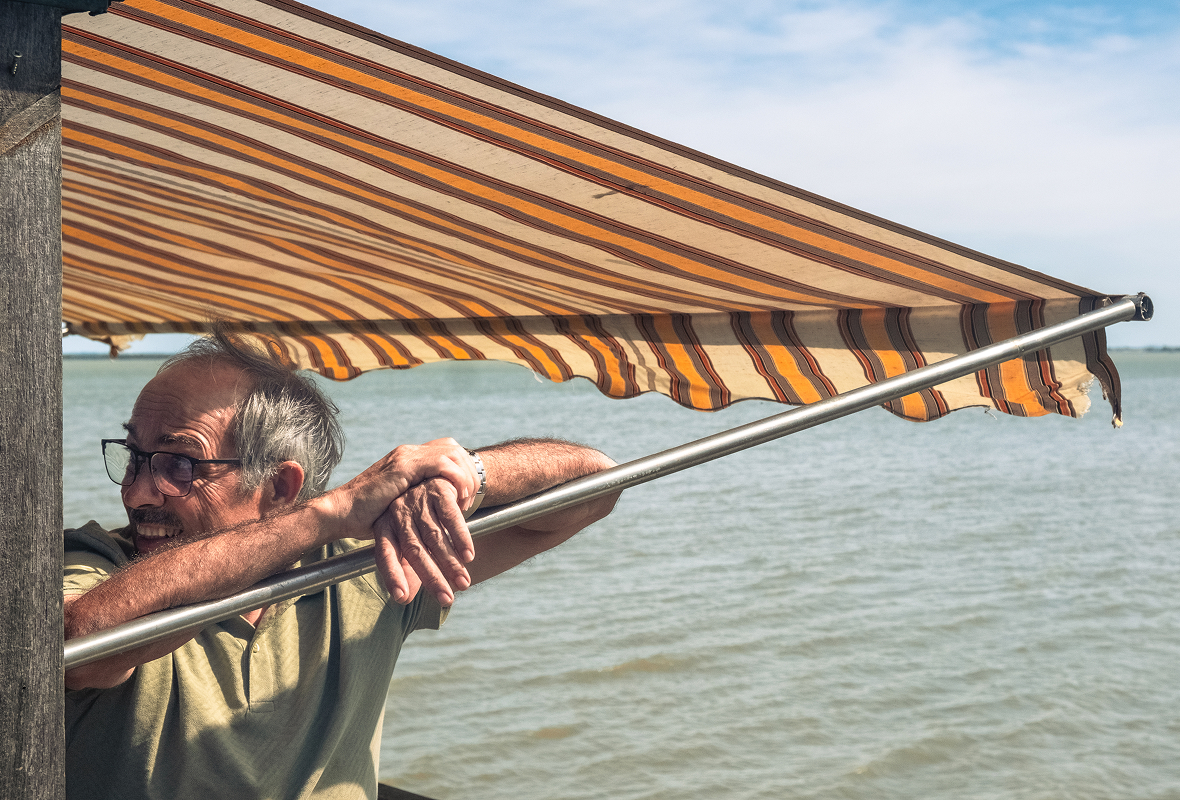
Glasses perched on his nose, a smile already on his face. He opens the carrelet, answers our initial questions, then notices a few swans approaching. He reaches into his supplies for a handful of dry pet food and tosses it their way. They clearly know the spot.
The tour begins along the walkway. The wooden planks have turned grey with age. At the far end, the door opens onto a rather Spartan interior. Stacked chairs, ropes, a few landing nets and an old wasps’ nest tucked into a corner.
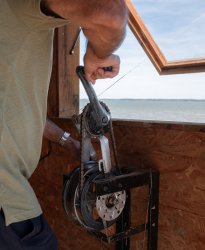
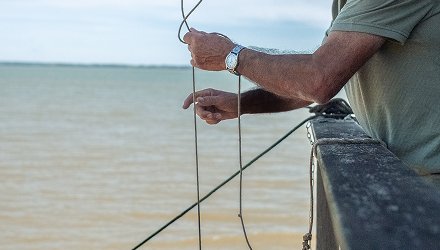
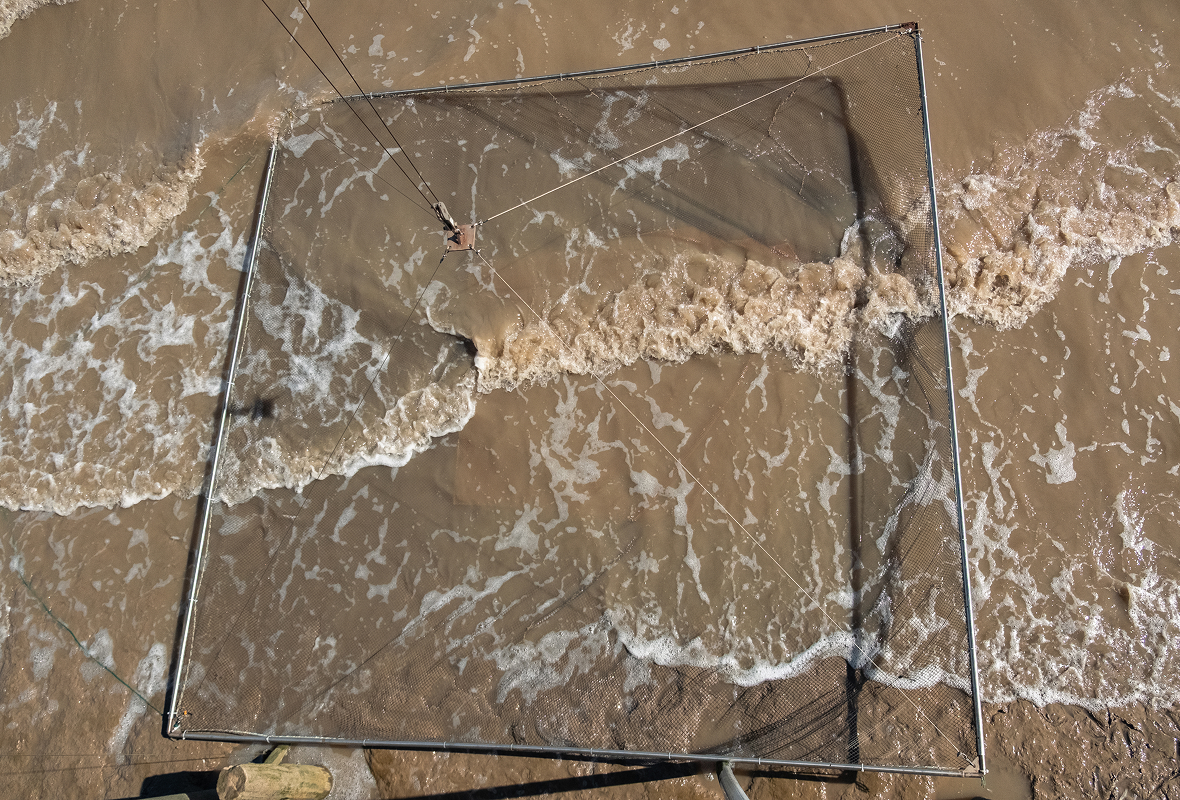
At the centre, a mechanism operates the large fishing net. Monsieur Virgile explains how it works as he shows us around. An accidental touch of the pedal brings the demonstration to an abrupt end: the net drops with an almighty crash. The system works perfectly. Point taken.
Then the others arrive.
Roxy first. A placid, slightly clumsy dog who immediately sets about inspecting every corner.
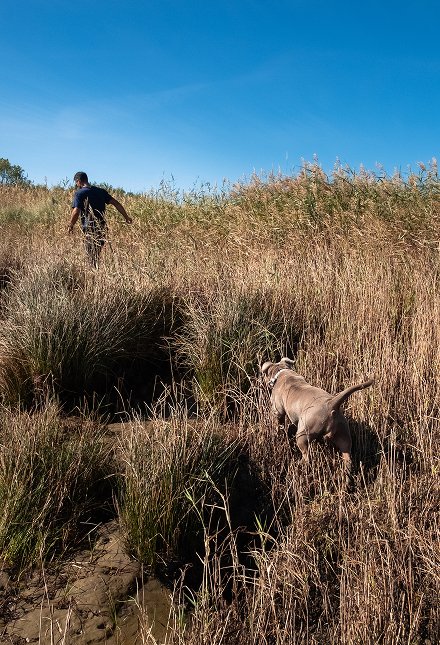
Jérémy and Roxy on the banks of the estuary.
Jérémy follows, sunglasses on and a broad smile across his face. Head of Maintenance at Château Lafite Rothschild and Monsieur Virgile’s son-in-law, he has the sun-kissed complexion of someone who spends his days outdoors. It takes only a few minutes to realise that he and his father-in-law share a fondness for anything that can be taken apart, repaired or repurposed.
Christophe Costa arrives next. Everyone shakes hands. And it is at this point that Monsieur Virgile becomes Pierrot. Well, only to Christophe, who is the only person to call him that. To everyone else, he’ll remain Monsieur Virgile for the rest of the day.
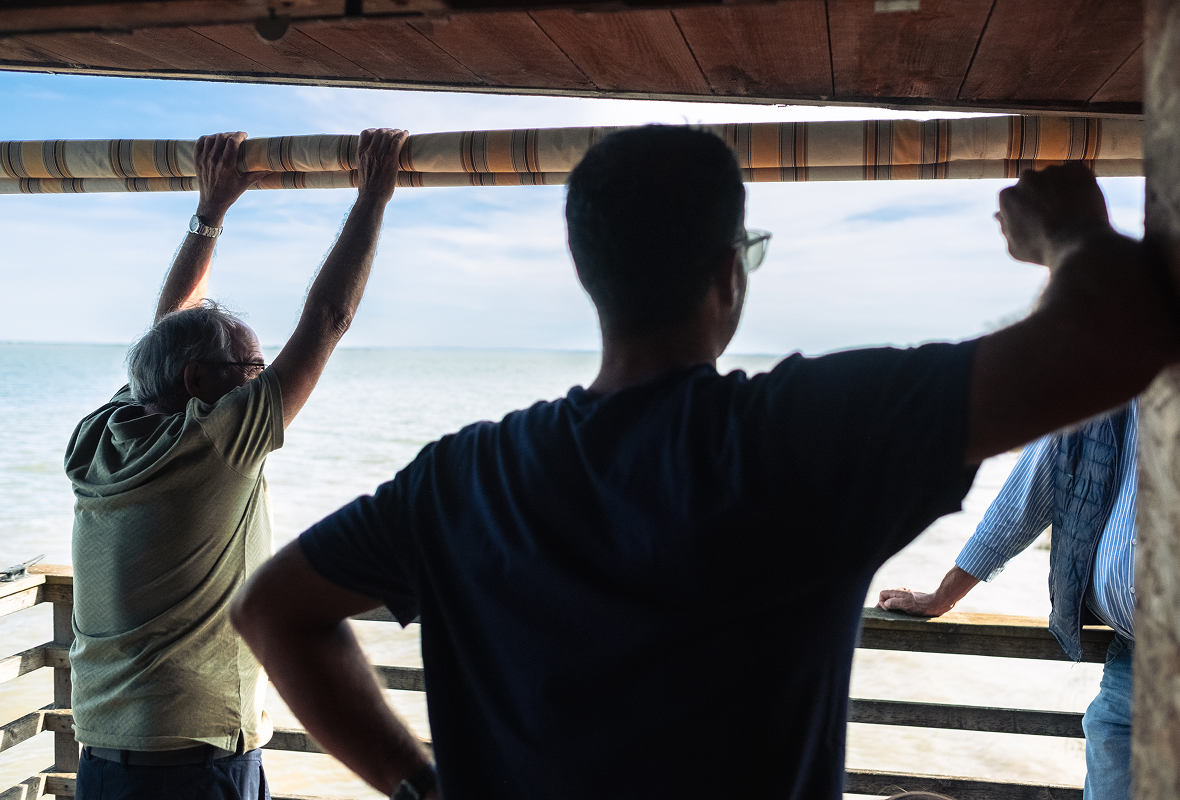
As President of the Gironde Estuary Carrelet Fishing Association, Christophe knows many of the fishing huts in the area. He mentions some 620 carrelets scattered along both banks of the Gironde estuary, and the hundreds of fishermen represented by his association. It’s immediately clear he could happily spend the entire day talking about them.
His gaze is already drifting towards the opposite bank.
The carrelet is as much a place for gathering and unwinding as it is for fishing.
Monsieur Virgile, owner of the carrelet.
Meanwhile, the river has risen. The mudflats where Monsieur Virgile was throwing food to the swans have disappeared beneath the water. The carrelet now has its feet firmly in the Garonne.
Christophe sums up the sensation in a sentence: it feels as though you’ve boarded a boat, without ever casting off. No rolling, no pitching. Just the sound of the waves keeping the illusion alive.
Time to fish.
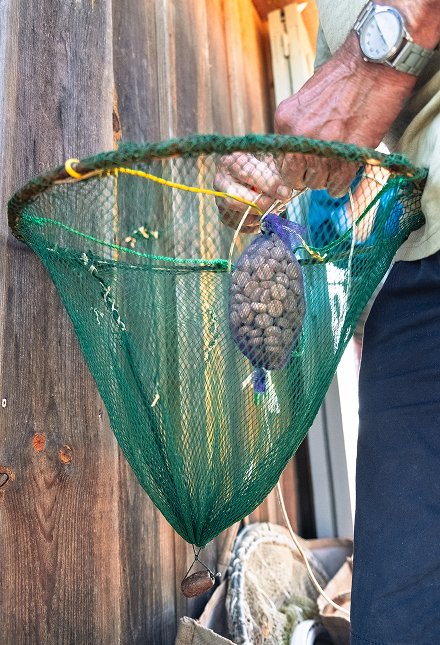
The balustrés, ready with their bait.
The balustrés, small nets used to catch prawns, are baited with the same dry food as before. Everyone gathers to watch the large square net descend.
This time, nobody accidentally touches the pedal.
The frame lowers until the net disappears into the brown water. The balustrés follow. Now all we can do is wait.
Just as well. The apéritif has arrived.
Empty nets and bad luck
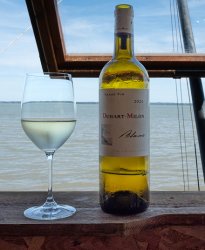
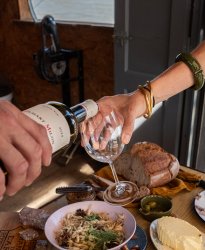
A small table is set up inside the hut. Olives, rillettes, grenier médocain, a local cured pork speciality, and prawns caught the day before. Jérémy opens a Le Blanc de Duhart-Milon 2024.
Today, the nets are coming up almost empty. Yesterday, apparently, the prawns were everywhere. Naturally, on the one day the cameras turn up, they’ve decided to take the day off.
We begin looking around for whoever brought the bad luck. Every time a net comes up, the commentary starts again.
‘Panouille,’ Jérémy announces, hauling up another desperately empty net. Translation: still nothing.
There’s teasing, accusations, and attempts to reposition the balustré at another corner of the hut. Christophe reminds us that luck plays a rather large part in all this. Some fishermen pride themselves on their powers of observation. He puts it more simply: ‘It’s completely unpredictable.’
The fish pass by, or they don’t. The net comes up at the right moment, or it doesn’t. Today, the Garonne has made its choice.
The conversation flows. We learn that the word carrelet comes from the square shape of the net and can refer to the fishing apparatus, the hut that houses it and even a type of fish.
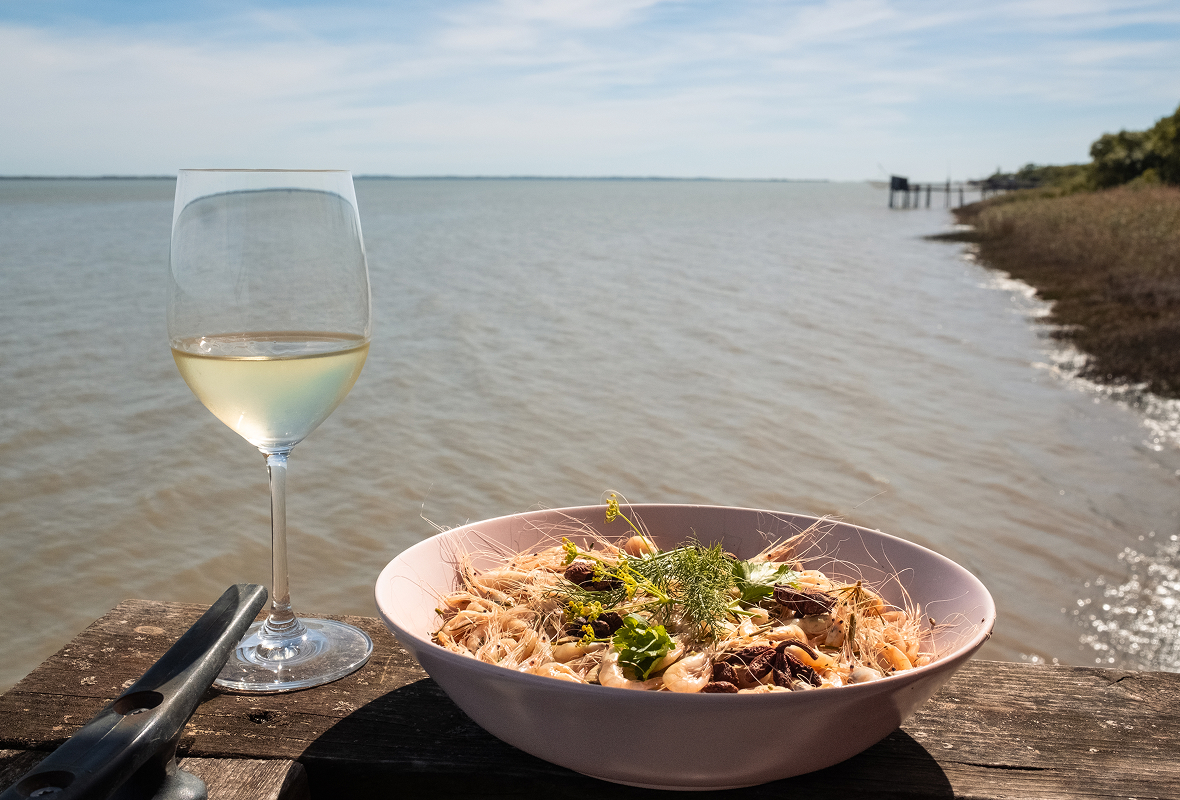
In our glasses, the Blanc de Duhart-Milon 2024 offers some consolation for the disappointing catch. Predominantly Sémillon, it retains a freshness of white flowers, verbena and peach. With the star-anise prawns, the pairing is spot on.
The recipe belongs to Monsieur Virgile. When we ask Jérémy how he likes his prawns, the answer comes without hesitation: the way Monsieur Virgile makes them, with star anise. The family verdict is unanimous.
With the large net submerged and the smaller ones doing their work, everyone has time to look around.
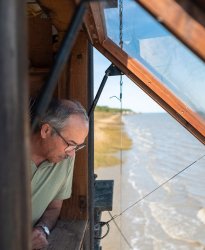
From a carrelet, the riverbank presents itself in a rather unusual way. It’s a few metres behind you. Simply turn around and you can see what’s growing along the water’s edge, what’s disappearing and what’s gaining ground. Christophe points out details that would be easy to miss from dry land.
First, the reedbeds: the strips of reeds lining the bank. As the tide rises, fish leave the deeper water and move towards them to feed. Small tidal channels, known locally as estheys, fill and empty with the tides. Their ebb and flow carries insects and plant matter, while young fish find shelter from some of their predators. A carrelet positioned near these areas benefits directly from all this movement.
Christophe then points to a shrub growing on the bank: false cottonwood. Introduced nearly two centuries ago, it is steadily encroaching on the reeds. Fishermen watch its advance with concern, knowing that it changes the entire reedbed habitat.
The tides dictate where the fish move. The vegetation feeds and protects them. Prawns travel through the estuary in search of favourable conditions, particularly the right salinity.
Someone hauls up another balustré. Still very little. Another accusation of bad luck makes the rounds, the small net goes back into the water, and the conversation picks up exactly where it left off.
Then our attention turns across the river.
On the opposite bank, the same fishing nets have a different name. Here, they’re called balustrés. Over there, trulottes. Just a few kilometres of water have been enough to preserve different words, customs and even languages.
In the past, Christophe explains, the river genuinely separated communities. ‘It was an impassable barrier.’ Few people owned boats to cross it. On the opposite bank, people spoke Gabaye. Here, it was Gascon, a form of Occitan.
Even today, the landscape bears traces of those differences. The riverbanks don’t all look alike. Currents shape them differently, erosion eats away at the edges, and every carrelet must adapt to its particular exposure to the river.
A carrelet never quite belongs to the person who maintains it. Built on public land, it is tied to a temporary occupancy permit and a specific location. When the permit holder gives it up, the spot can be allocated to another fisherman.
Barbecue et sarments prêtés
Lunchtime approaches. Jérémy takes charge of the barbecue, with an extra pair of hands to help.
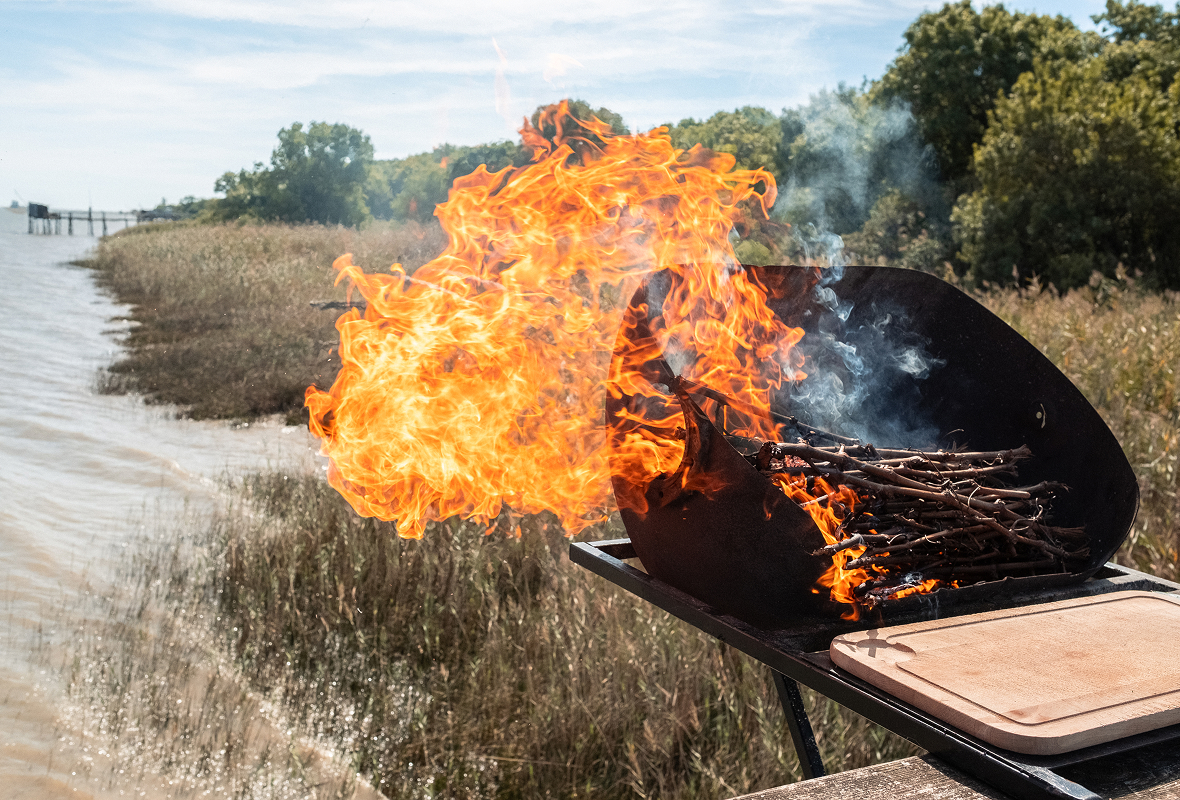
It’s mounted directly onto the railing. Originally, it was a salvaged pressure-booster tank that Jérémy cut open. Monsieur Virgile then added a welded mechanism allowing it to rotate with the wind, swing from one side of the walkway to the other and tip over for cleaning.
The contraption has undergone several improvements. Its two inventors now declare themselves satisfied. Christophe is impressed.
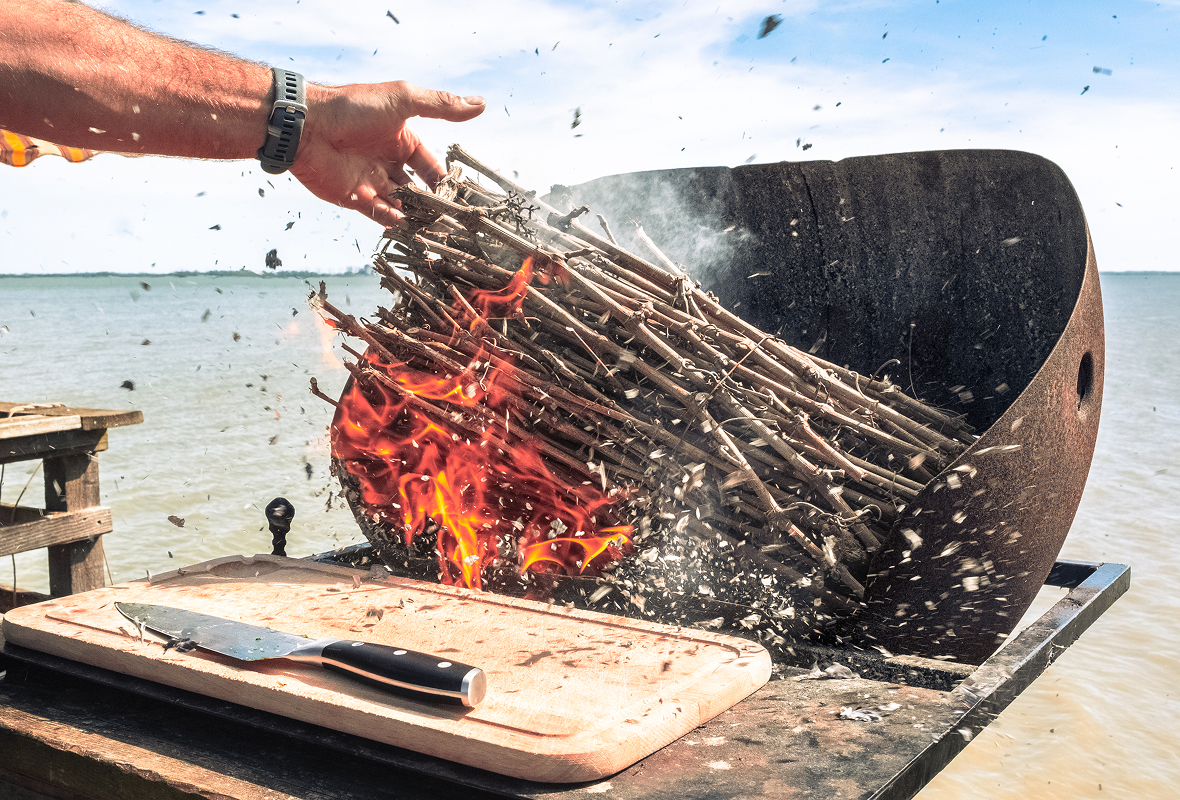
A small bundle of vine shoots from Château Lafite Rothschild goes into the barbecue.
The wind decides to make things difficult.
We improvise a human windbreak while Jérémy battles to get the fire going. Several attempts, a piece of yesterday’s newspaper and a great deal of determination later, the vine shoots finally catch.
There are worse places to tend a fire.
The ribeye steaks need only a few minutes over the flames. While the meat cooks, the last balustrés are hauled up. They’re as reluctant to give up their catch as ever.
The group leaves the walkway and heads back to the clearing.
The table immediately catches our eye. Its top is an old door from Château Lafite Rothschild, recognisable by the distinctive Bordeaux red of the estate’s buildings. Jérémy reveals the legs: staves salvaged from a large oak wine vat, which he has assembled himself.
First the barbecue made from an old tank, now the table. With Jérémy, every object seems to have enjoyed a previous life before finding its place at the carrelet.
The food is laid out. Lentil salad, bread and ribeye steaks fresh off the grill. Now to do something with our prawns.
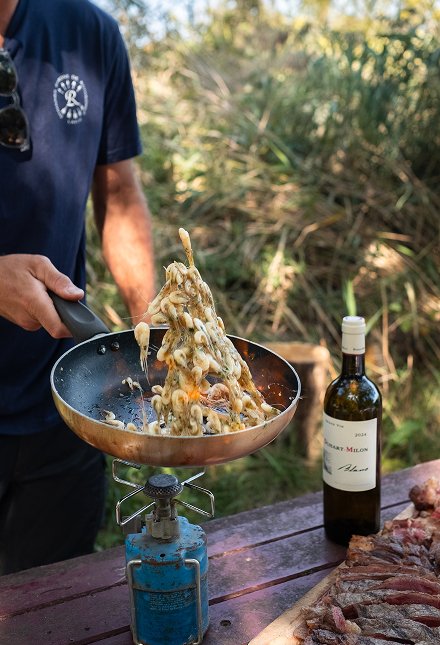
The day’s catch may be meagre, but it still deserves a place at the table. The gas hotplate is taking too long to heat up for Jérémy’s liking. He disappears and returns with an old camping stove.
This time, the prawns really begin to sizzle. A splash of whisky, an impressive flame, and everyone gathers round.
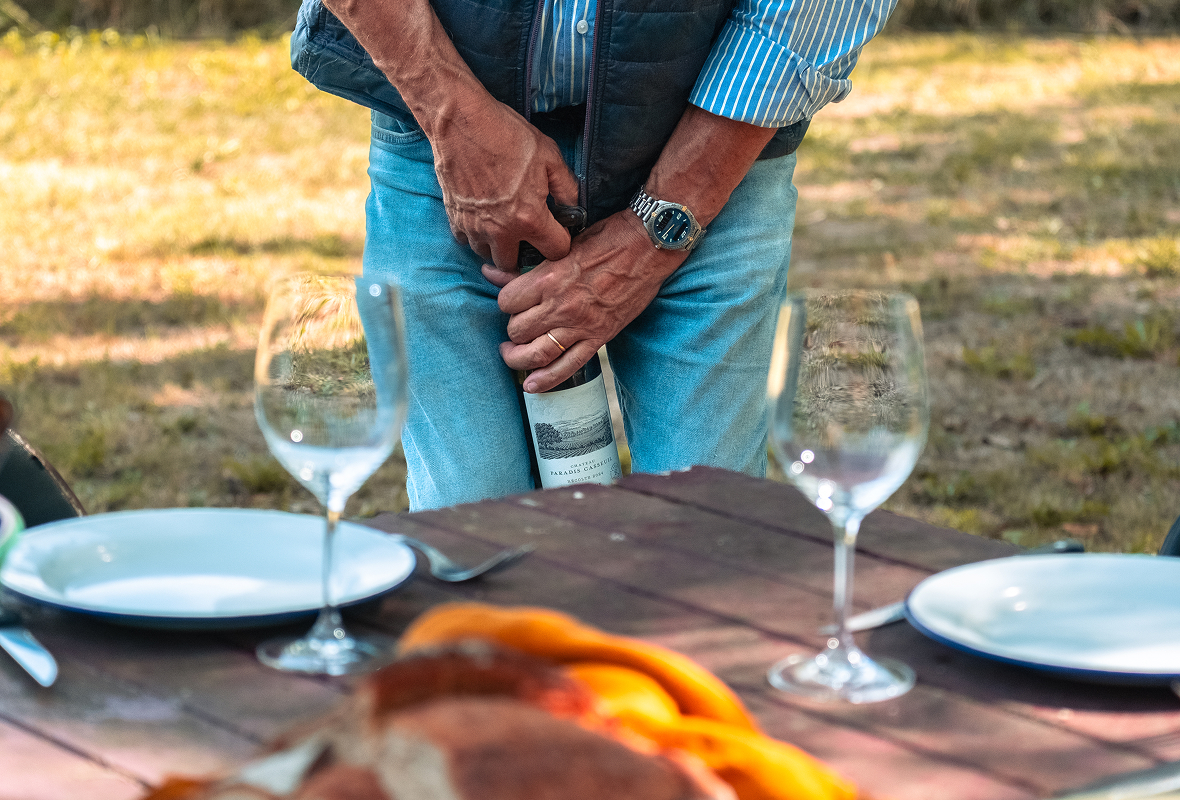
Christophe Costa is nominated to open the Château Paradis Casseuil Blanc 2024. The estate joined DBR Lafite in 1984. Located in Entre-deux-Mers, between the Garonne and Dordogne rivers, it seems particularly at home in this waterside setting. (To discover more about this mosaic of terroirs, read ‘Between Two Tides’i n this issue.) The 2024 is a blend of 90% Sauvignon Blanc and 10% Sémillon. Its citrus and white-fleshed fruit notes work beautifully with the prawns in parsley and garlic. And with the ribeye steaks, for that matter.
The conversation returns to the carrelet and the great wooden posts that must withstand the movement of the water. Traditionally, they’re made from acacia.
Christophe clarifies: black locust, or false acacia, a remarkably resilient wood.
The detail brings us back to the vineyard. The same wood is used for vine stakes. So much so that fishermen sometimes struggle to find the long sections they need. Seven- or eight-metre lengths are of little interest to suppliers cutting timber for vineyards.
So vines and carrelets have a few pieces of wood in common.
Glasses are refilled, dishes passed around. Nobody seems particularly eager to return to their normal day.
On carrelet time
Lunch over, everyone helps put things back in order. The table is cleared, belongings gathered, everything cleaned. The bottles leave with us.
Soon, the carrelet will welcome other friends, other meals and probably a few luckier fishermen. Monsieur Virgile and Jérémy maintain this place for the pleasure of sharing it with family and friends. After every visit, everything must be ready for the next.
Before saying goodbye, we all head back along the walkway for one last attempt. The Garonne has risen since morning. The water is now lapping against the wooden posts.
It’s hard to believe that everything began at half past ten. Behind the car, the tide is already turning. And the prawns, apparently, always come back tomorrow.
Recipe: Monsieur Virgile’s prawns
Bring a large pan of water to the boil with a generous handful of coarse salt, rosemary, a few bay leaves, star anise and fennel stalks. The fennel can be picked by the roadside: wherever it’s been cut, it grows back green.
No pepper.
Add the prawns. Wait for the water to return to the boil, then cook for six minutes.
Serve cold, garnished with star anise, and eat with your fingers. Heads on or off, according to taste.
Read also
The Don Quixotes of Brixham
A fishing trip off the coast of South Devon, a haul of scallops, and two bottles of William Fèvre Chablis Grand Cru to wash them down.
RECIPE - From market stall to table: where the sea meets the cellar.
In each edition of The Journal, we share recipes that bring flavours and stories together. This time, the journey takes us to Bordeaux and Chablis, where Olivier de Butler and Mathieu Crosnier reflect on the fruits of their labour at Bonne Mer. They create a dialogue between the briny depth of black mullet, the crisp freshness of R de Rieussec, and the saline tension of William Fèvre’s Grands Crus.