From the Kimmeridgian soils of Chablis to the gravel of the Gironde, each of the Domaines Barons de Rothschild Lafite terroirs carries, in its own way, the memory of ancient seas.
From Chablis to Pomerol, by way of Pauillac and Entre-Deux-Mers, the same question arises: what remains of the ancient seas that once passed through these landscapes? Sometimes their presence is visible in the rock and fossils. Sometimes it can only be read in the contours they shaped millions of years ago. The imprint of the sea tells its own story of the diversity of the Domaines Barons de Rothschild Lafite terroirs.
At Chablis, the sea written into the rock
In some vineyards, the sea is still there, written into the rock, fossilised on the surface or buried underground. In others, it simply shaped the landscape before retreating.
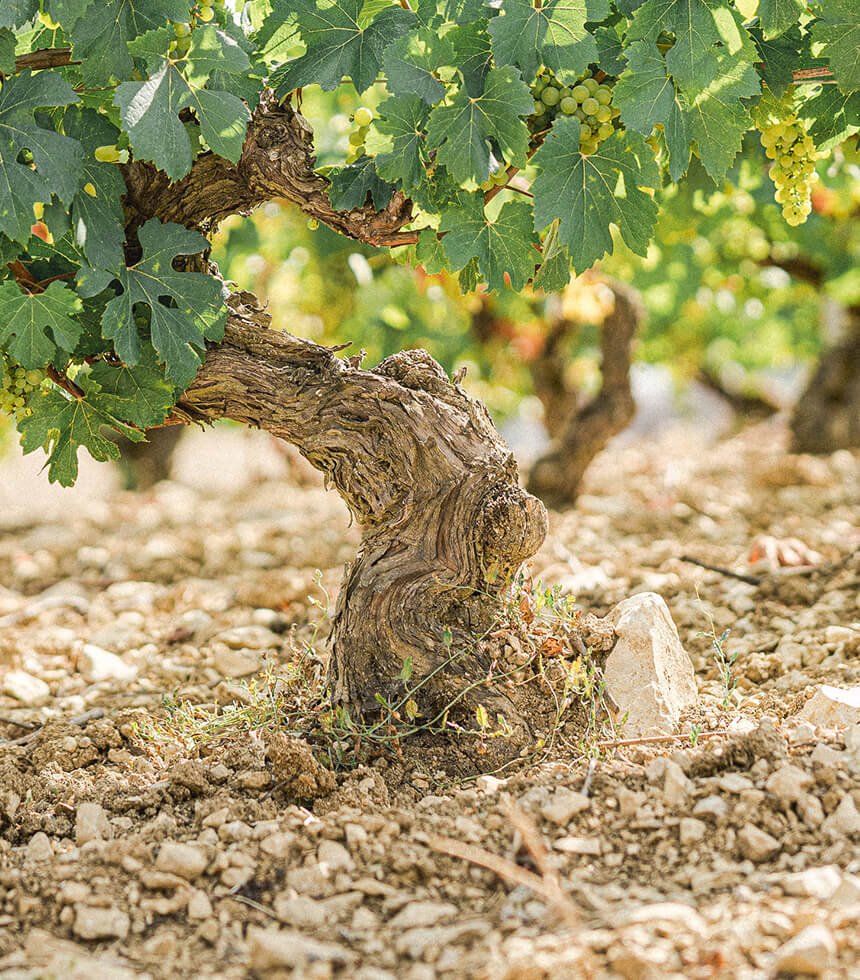
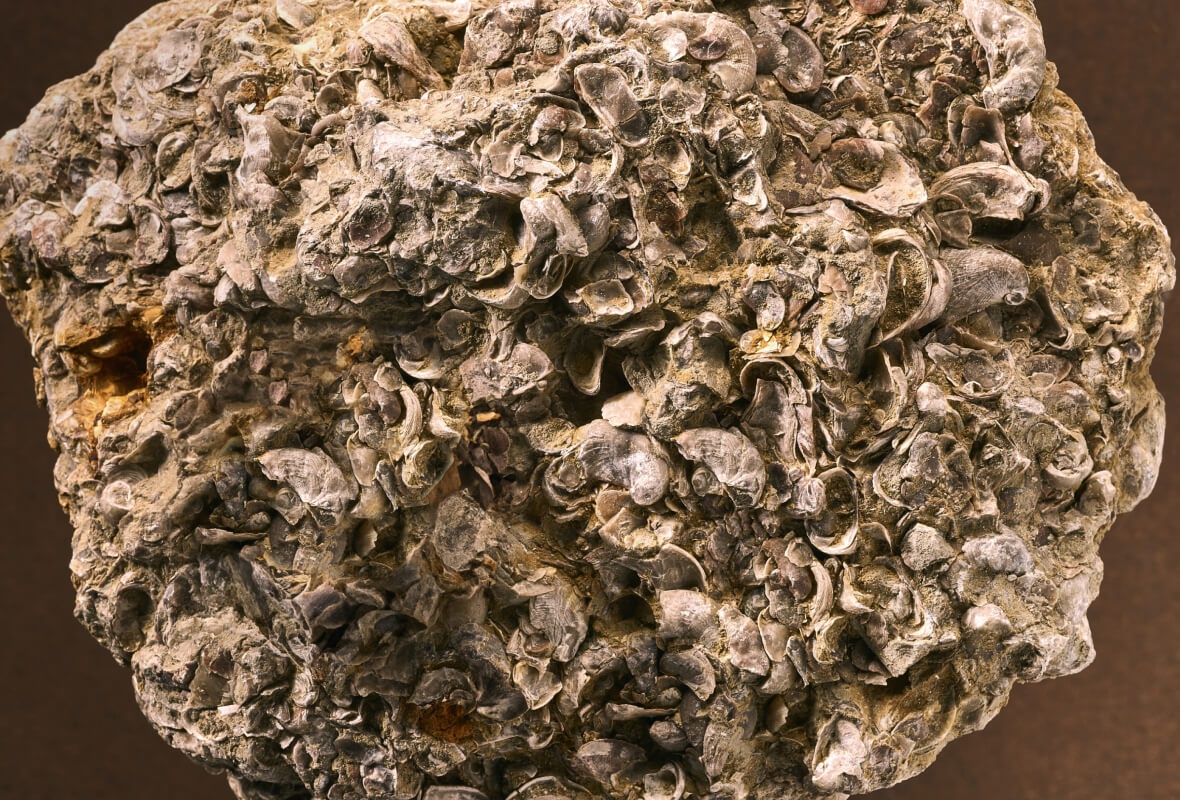
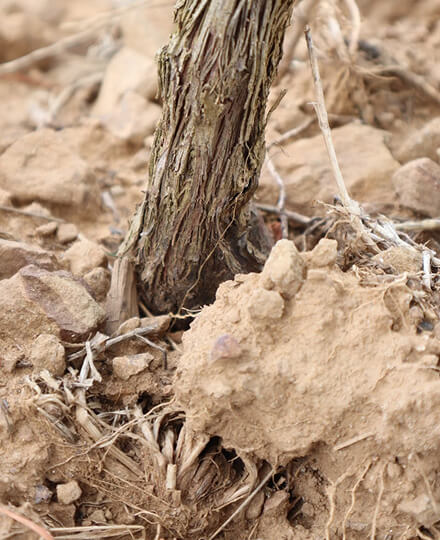
At Chablis, the sea is in the rock: visible and fossilised. In the plots of Domaine William Fèvre, the grey-beige marl reveals, to the attentive eye, tiny spiral forms barely a few millimetres across. These are Exogyra virgula, oysters some 150 million years old. They lived in a shallow tropical sea at a time when the European continent had yet to assume its present shape.
Over millennia, their decomposition enriched the soil with calcium carbonate and clay. This mineral density is a hallmark of the Chablis terroir, giving Chardonnay, a grape variety that has conquered latitudes from Australia to California, an expression unlike any other. Connoisseurs can recognise it blind: a taste that goes beyond the simply rich and buttery towards something closer to umami, at once rounded and saline.
Exogyra virgula found in the plots of Domaine William Fèvre.
This geological period comes with a small irony of its own. The Kimmeridgian takes its name from the village of Kimmeridge in Dorset, England, where nineteenth-century geologists first identified these formations. That one of the most quintessentially French appellations should owe its geology’s name to an English village does not seem to trouble Didier Séguier, Technical Director of Domaine William Fèvre. He is more interested in what the rock does to the wine.
Chablis Premier Cru Vaulorent reveals the Kimmeridgian soil through Chardonnay.
“Chardonnay planted on Kimmeridgian soils draws its substance from the ground. It takes on its salinity, its minerality and the ageing potential that sets these wines apart from anything produced elsewhere from the same grape variety.”
Here, Chardonnay acts as a revealer, capturing what the soil transmits without a filter. According to Séguier, it is partly this transparency that explains the success of Chablis in Japan.
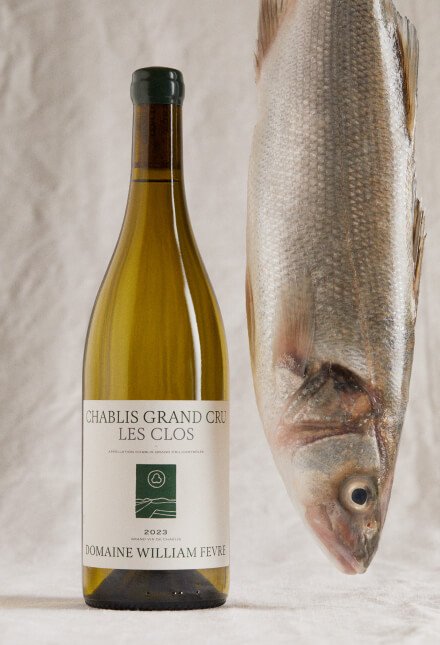
“The Japanese coined the word umami for a taste they also recognise in Chablis, born from the meeting of Chardonnay and Kimmeridgian soil. This saline, mineral dimension makes Chablis a natural partner for seafood and raw fish.”
Aussières: a memory of sediments
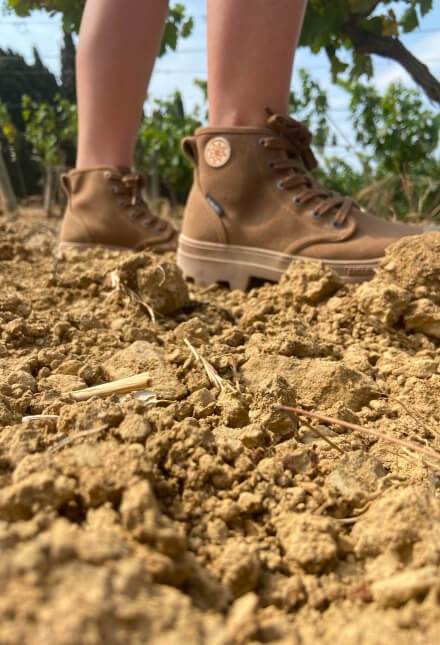
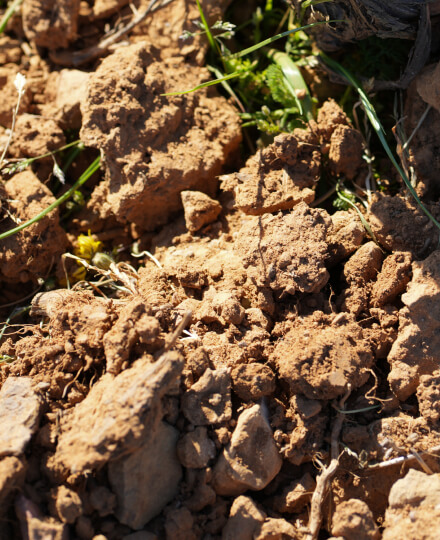
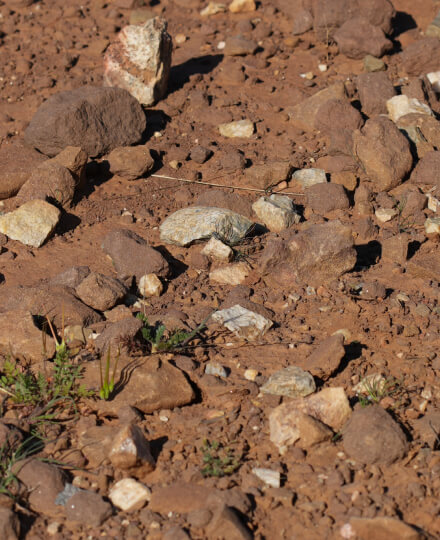
At Domaine d’Aussières, near Narbonne, the sea has left a different but equally legible trace. The estate’s plots lie on sandstone dating back around 80 to 85 million years, formed beneath warm marine waters during the Turonian-Santonian period. The sandstone varies in composition: sometimes iron-rich and red, sometimes micaceous and glittering, sometimes paler and more calcareous.
The sandstone soils of Aussières, from iron-rich reds and glittering, micaceous rock to paler, more calcareous formations.
The sandstone soils of Aussières, from iron-rich reds and glittering, micaceous rock to paler, more calcareous formations.
The sandstone soils of Aussières, from iron-rich reds and glittering, micaceous rock to paler, more calcareous formations.
Between the plots, three streams descend from the surrounding hills. Over time, they have filled the estate’s natural depression with alluvium and gravel. On the Barthe plateau, old Carignan vines grow among white quartz pebbles, remnants of an ancient alluvial sheet dating back two million years. Here, history is stratified like a book: each layer, another age.
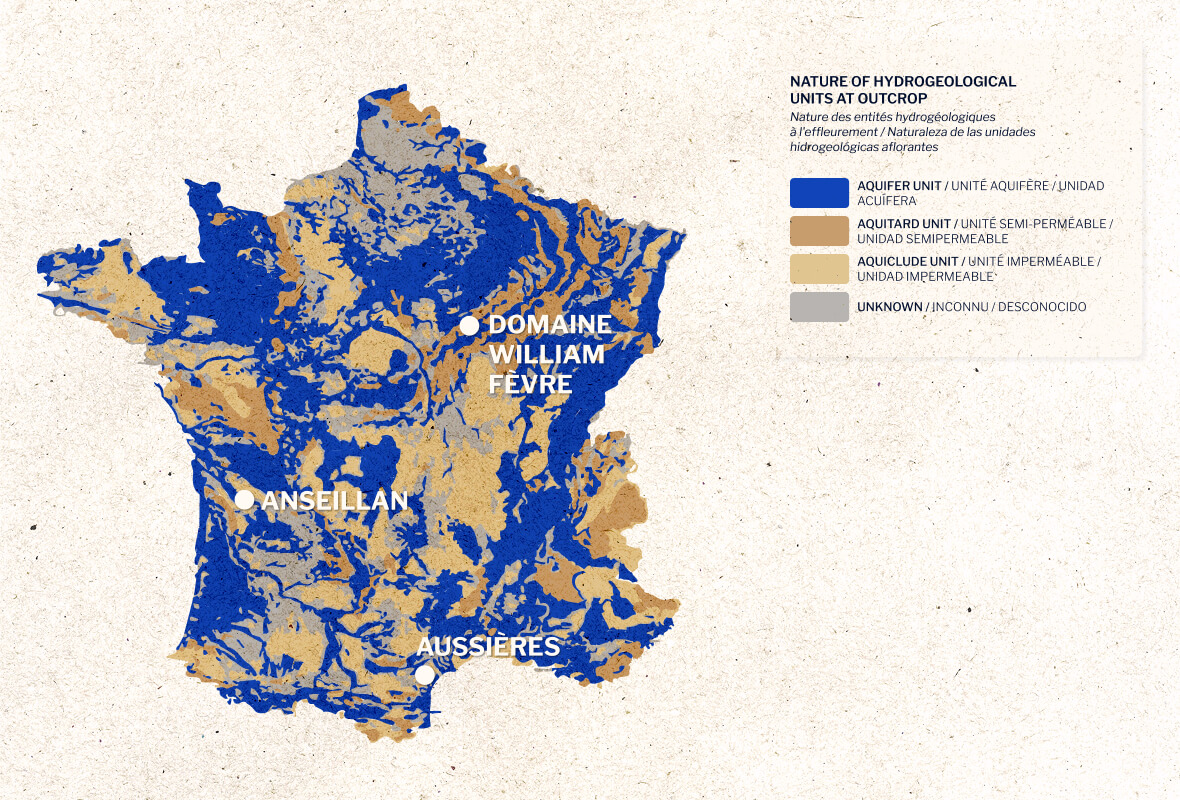
Three terroirs shaped by ancient seas, rivers and streams.
What the sea did not write in stone
But not all the family’s terroirs rest upon marine archives. Here, two stories that are often confused need to be untangled.
The gravel of Lafite and Château Duhart-Milon didn’t come from the sea. These rounded stones, a mixture of granite, feldspar and sandstone, were torn from the Pyrenees and the Alps during the glacial periods of the Quaternary, less than two million years ago. Water and glaciers carried them for hundreds of kilometres. The longer the journey, the smaller and rounder the stone became. This is why the gravel of Pauillac is fine and light, while that found on the slopes of the Pyrenees remains angular and coarse.
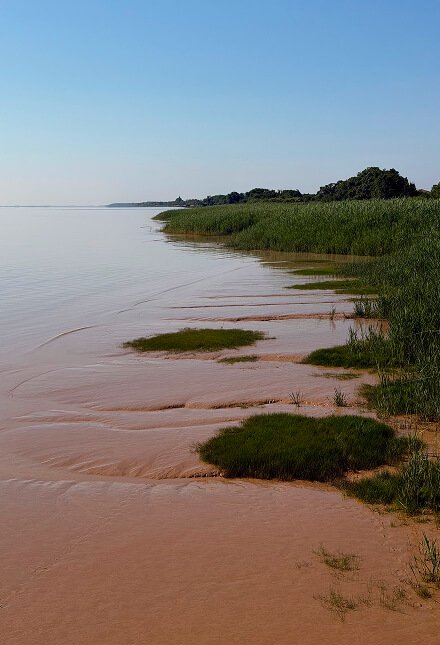
The Gironde estuary in Pauillac.
What the sea did at Pauillac is subtler, but no less decisive. As it gradually retreated through successive marine transgressions and regressions over 30million years, it opened up the space into which the Gironde could deposit these materials. It shaped the landscape, carved out valleys and directed the waterways. The sea is not in the rock here, but in the shape of the land.
There is one notable exception, and another expression of Lafite’s terroirs: Anseillan. Beneath the gravel of its plots lies marine limestone forming the bedrock of part of the plateau. Where it approaches the surface, roots descend differently, drainage changes, and so too does the profile of the Cabernet Sauvignon. Proof that even within the same appellation, the sea does not write with the same hand everywhere.
At Château L’Évangile, on the Pomerol plateau, the landscape was likewise sculpted by the repeated advance and retreat of marine waters. At the surface, there are no fossils in the estate’s clay. The marine influence is instead present in the configuration of its rises and plains, rather than in the visible mineralogy of its soils. Today, these same deep clays retain moisture, providing the vines with a precious reserve of water through increasingly hot summers.
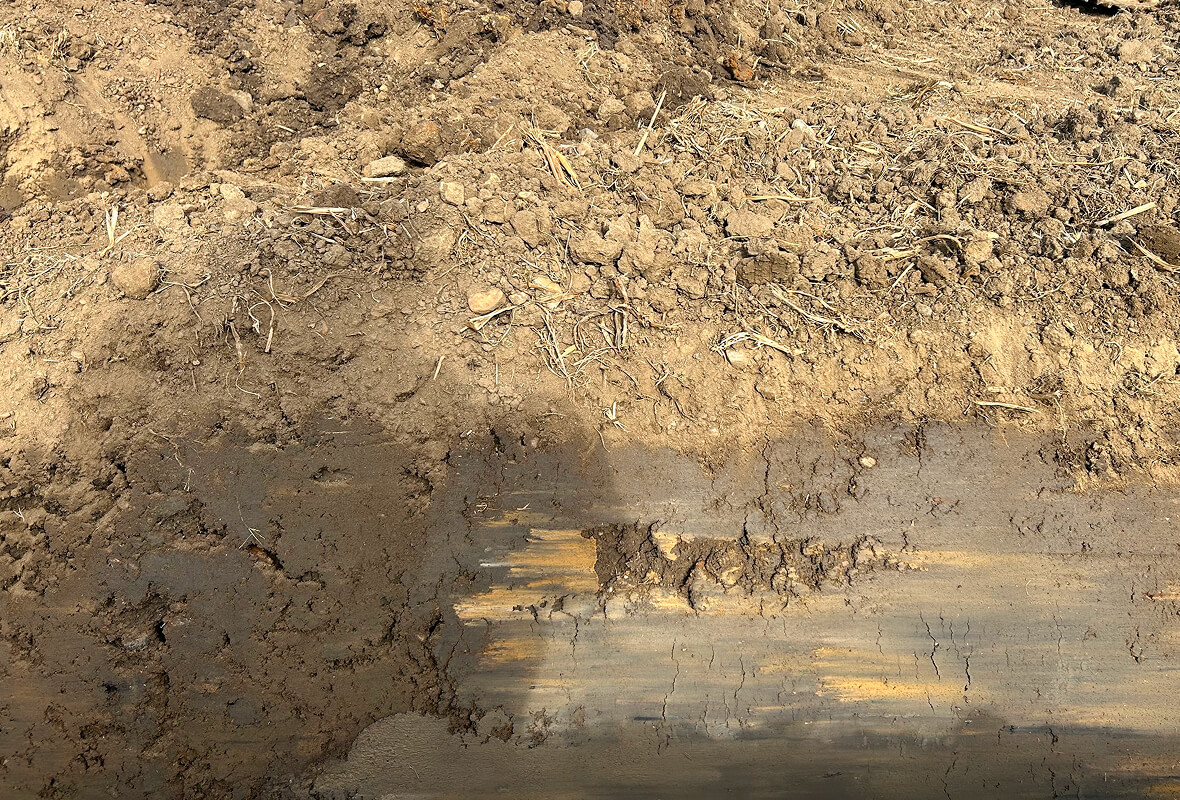
The blue clay in the soils of Pomerol at Château L’Évangile is particularly effective at retaining water and coolness.
In Entre-Deux-Mers, at Château Paradis Casseuil, the name of the place is enough to tell its geography. Wedged between the Garonne and the Dordogne, the estate lies in a corridor shaped by two rivers whose successive floods deposited more recent alluvium. The sea is far away. But once again, it is water that built everything.
Beneath the ground or at the surface, water shapes the vine
The influence of the sea on a terroir is not binary. It is not simply a question of whether marine fossils can be found there. It is about understanding the many ways in which the movement of water, over tens of millions of years, has drawn landscapes, selected the underlying rock and determined the depth of the soils.
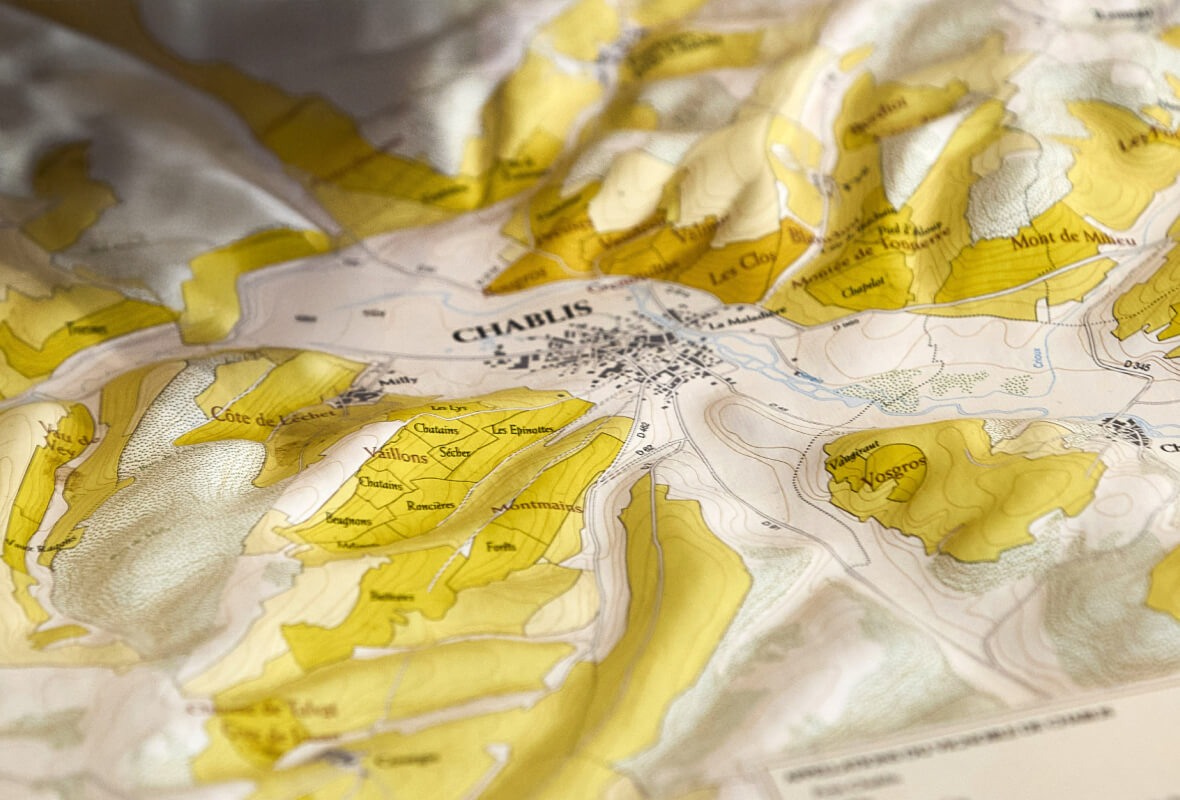
The Domaine William Fèvre vineyard map in Chablis, composed of its different terroirs.
In Chablis, at Domaine William Fèvre, the sea is written into the very grain of the rock. At Domaine d’Aussières, it surfaces in the Turonian-Santonian sandstone, sometimes iron-rich, sometimes glittering with mica.
In the gravel soils of Lafite and Château Duhart-Milon, it has left the material behind and survives instead in the shape of the land: the corridor that took the Gironde 30 million years to open.
At L’Évangile, it retreated more discreetly still, sculpting the rises and plains of Pomerol without ever revealing itself in the clay. And even at Château Paradis Casseuil, where the sea gave way to rivers, it continues, through water, to write the landscape.
Beneath the vines, there’s always a shore.
Read also
A fruitful encounter
RECIPE - From market stall to table: where the sea meets the cellar.
In each edition of The Journal, we share recipes that bring flavours and stories together. This time, the journey takes us to Bordeaux and Chablis, where Olivier de Butler and Mathieu Crosnier reflect on the fruits of their labour at Bonne Mer. They create a dialogue between the briny depth of black mullet, the crisp freshness of R de Rieussec, and the saline tension of William Fèvre’s Grands Crus.
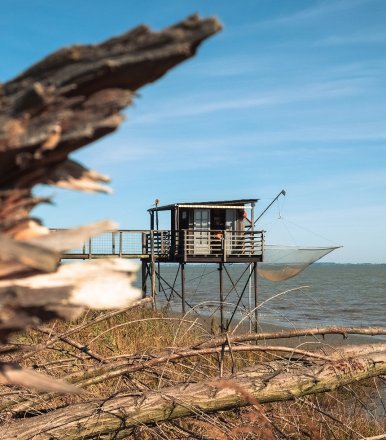
A day in a carrelet on the banks of the Gironde, some rather elusive prawns and two white wines to console ourselves: Blanc de Duhart-Milon 2024 and Château Paradis Casseuil Blanc 2024.
Adapting our understanding of terroir for a warming climate.
Olivier Trégoat, Technical Director for Domaines Barons de Rothschild Lafite, argues for a more flexible understanding of terroir, one freed from rigid dogma, to adapt to the realities of climate change.