The Journal / Fruit

Fermentations: The invisible revolution

An interview with philosopher Anne-Sophie Moreau.

Philosopher and journalist Anne-Sophie Moreau explores, in her latest book, Fermentations, the deeper reasons behind today’s passion for micro-organisms.

Scroll down

Philosopher and journalist Anne-Sophie Moreau explores, in her latest book, Fermentations, the deeper reasons behind today’s passion for micro-organisms. In her investigation, which weaves together history, ecology and philosophy, she asks what our fascination with fermentation—this ancient process now making a comeback—reveals about our times.

‘Too much cleanliness weakens us; it is microbial otherness that protects and strengthens us.’

To begin, Anne-Sophie, could you talk us through how our relationship with microbes has evolved, from the age of hygiene to the recognition of bacteria’s role?

For a long time, microbes were seen as invisible enemies, synonymous with disease and decay. This suspicion became entrenched in the 19th century with the rise of hygiene, especially after Pasteur’s work, which showed both the pathogenic power of bacteria and their fundamental role in fermentation. We then tried to sterilise everything: food, living spaces, even our bodies. But in recent decades, there’s been a reversal. We’ve discovered that some bacteria are essential to our health, especially through our microbiomes. The biologist Marc-André Sélosse even speaks of ‘clean dirt’: too much cleanliness weakens us; it is microbial otherness that protects and strengthens us. This new appreciation of bacteria goes hand-in-hand with the renewed popularity of fermentation.

What, in your view, are the most striking signs of today’s fermenting frenzy?

Fermentation has certainly taken over our plates and kitchens. There are countless kefir or kombucha workshops, supermarket shelves are packed with ‘live’ products, and sourdough exchange groups are thriving on social media.

But its reach goes far beyond food. Probiotics are now used in cosmetics, urban composting is becoming widespread, and the potential of mycelium is being explored in architecture and textiles.

Even our funeral rites are changing, with some advocating for ‘humusation’. This fascination with the fermented, even the ‘rotten’, reflects both anxiety about the end of abundance and a desire to reconnect with the living world.‘Too much cleanliness weakens us; it is microbial otherness that protects and strengthens us.’

Bodegas CARO, behind the scenes of the harvest: The grapes arrive in the sorting room, the unpressed berries begin to ferment, and fermentation then continues in the vats.

‘Wine embodies the idea that life is born from decomposition, that the death of the fruit is the condition for something new to emerge.’

Wine holds a special place in the world of fermentation. How would you define it?

Wine fermentation is probably one of humanity’s oldest rituals for transforming living matter. Through fermentation, wine embodies the idea that life is born from decomposition, that the death of the fruit is necessary for something new to emerge. There’s a powerful symbolism here: resurrection, the return of spring, the transformation of raw matter into something meaningful and memorable. Fermented wine carries within it the memory of its terroir and a kind of humility before the power of micro-organisms, which are only partly under our control.

Devatting of the new wines after alcoholic fermentation, Château Lafite Rothschild.

‘Our current fascination with fermentation is less about making a clear choice and more about a heightened awareness of our own fragility, and the need to rethink, through the living world, how we inhabit the earth.’

Would you say we’ve entered a ‘fermentation society’? What tensions does this reveal about our relationship with the future and food sovereignty?

Absolutely. I think the ‘fermentation society’ mirrors our contemporary ambivalence. On one hand, it reflects a quest for inner and collective renewal: we value microbial diversity, dream of a restored symbiosis with nature, celebrate the non-commercial exchange of ferments as an act of resistance, and see self-sufficiency as a response to the vulnerability of global supply chains, even to the point of the state launching programmes like ‘Ferments of the Future’ to ensure food sovereignty.

But there’s another, more techno-solutionist trend, which sees fermentation as a technological lever: cultivated meat, bio-based materials, space projects based on mycelium. Here, fermentation becomes a promise to transcend earthly limits, even to repair life through innovation.

Between these two poles, perhaps our current fascination with fermentation is less about making a clear choice and more about a heightened awareness of our own fragility, and the need to rethink, through the living world, how we inhabit the earth.

Noble rot at Rieussec.

At William Fèvre, fermentation drives vineyards vitality

By François Ménin, Head of Viticulture at Domaine William Fèvre

Fermentation: the engine of vineyard vitality

At Domaine William Fèvre, fermentation isn’t just something that happens in the cellar. It’s at the heart of our approach. Here’s a summary of our three main uses of fermentation in the vineyard:

Fermented bread solution applied to soils and composts

Kanne: fermented bread for our soil

We make bread from organic flour, yeast and rainwater, which we let ferment for a long time. This bread is then diluted in rainwater and ferments for a month, acidifying the solution (pH drops from 7 to 3–3.5).


This ferment, rich in lactic acid bacteria, is applied to the soil and compost to stimulate microbial life and help the vines defend themselves naturally.

Nettle decoction and alfalfa extract

We prepare a nettle ‘purin’ (heated then fermented) to give the vines a boost at the start of the season, thanks to its nitrogen and iron content.
We also produce a fermented alfalfa extract, rich in nutrients and micro-organisms, which revitalises the soil and supports vine growth.

Harvesting nettles, and a field of alfalfa to be used in fermented preparations for the benefit of the vines.
Application of a plant decoction in the vineyard using a backpack sprayer.

Compost tea

We brew compost with rainwater, molasses, basalt and sea salt, then aerate the mixture for 24 hours. This ‘tea’ is sprayed on the leaves to strengthen the plant against climate stress and energise soil life, especially after the harvest.

All these fermentations, applied from soil to plant, are at the core of our agro-ecological approach: they foster resilience, health and vitality in our vineyard.


Read also

A very eloquent nose

An interview with assemblage expert Alexandre Schmitt.

Alexandre Schmitt made a dramatic shift from the world of haute parfumerie to another field equally bound to aroma: wine blending. He shares the essence of his sensory-driven approach—and explains why training your nose is essential to tasting wine.

Château Rieussec is breaking the Sauternes mould

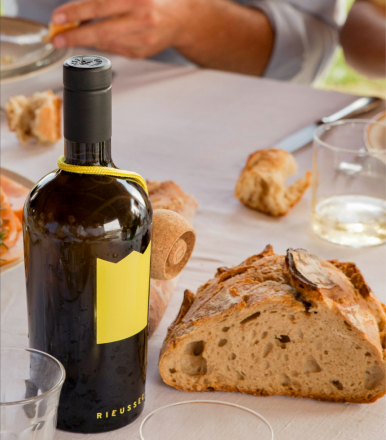
Rieussec is flipping the script on everything you thought you knew about Sauternes. Here, four easy pairings – no foie gras or roquefort in sight.

Not a fan of Sauternes? Maybe you’ve written off this sweet classic as the culprit behind your holiday hangover… or , just an obligatory pairing with foie gras, Roquefort or dessert. Think again.

Pleasure, Principled: rethinking the body of wine-writing

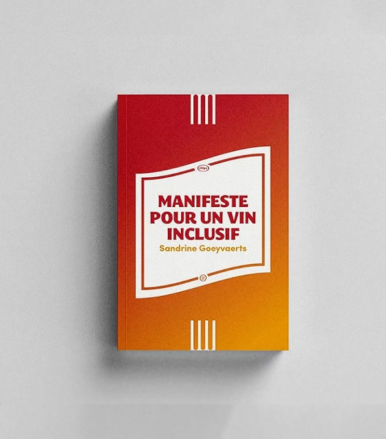
Interview with Sandrine Goeyvaerts, author of 'Manifesto for Inclusive Wine' (Nouriturfu, 2021)

Meet the family...
Unfortunately you cannot enter this website as you are not of legal drinking and purchasing age.