There was, for a time in the 19th century, a rather elaborate way of improving a Bordeaux wine. You took a perfectly good barrel, put it on a ship and sent it nearly 20,000 kilometres around the world. Down the Atlantic coast. Around the Cape of Good Hope. Across the Indian Ocean. Perhaps to the ports of Calcutta, Madras, Bombay or Pondicherry (now Kolkata, Chennai, Mumbai and Puducherry). And then all the way back again.
The wine crossed the equator, endured months of rolling seas and tropical weather, and returned to Bordeaux having experienced just about everything a cellar was designed to protect it from. It should have, by any reasonable logic, come back worse. But no, it came back better. This is the story of Retour des Indes.
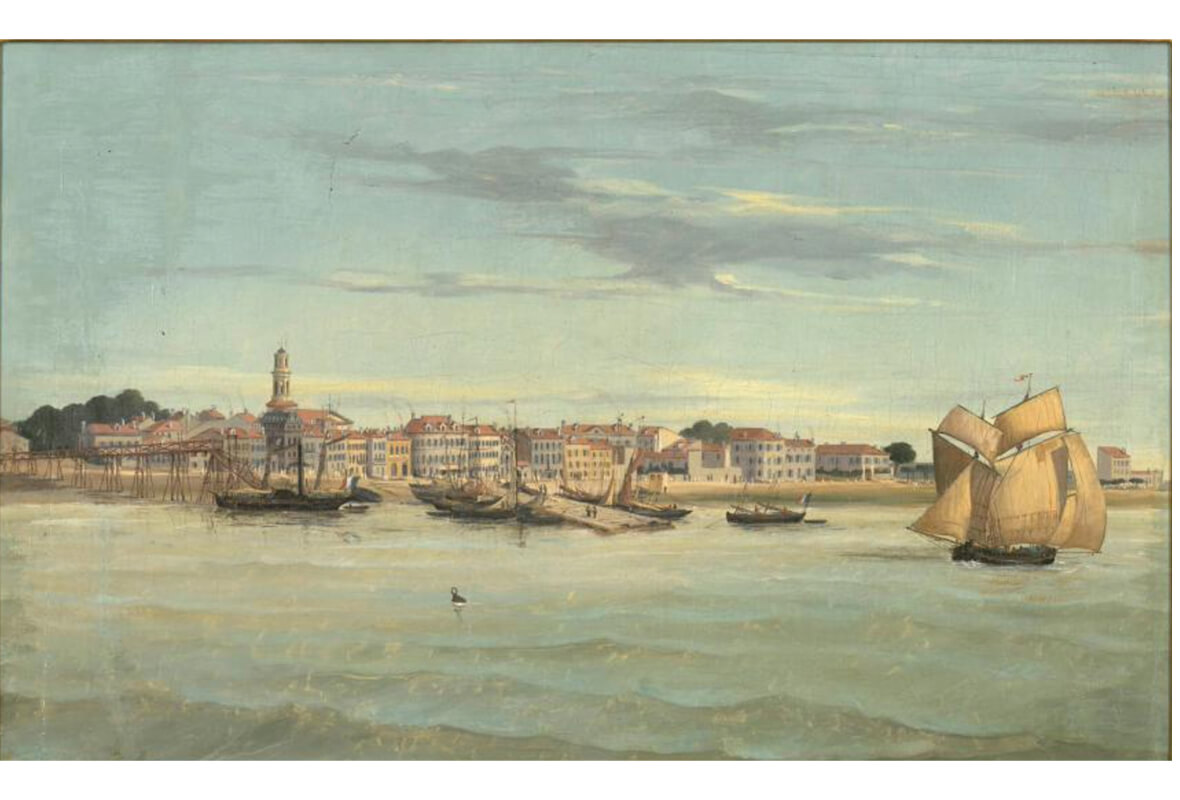
Tableau des quais de Pauillac, 2ème moitié du XIXe siècle.
Return to sender
It all began as a commercial failure. During the first half of the 19th century, the wine merchants and estate owners of Bordeaux sent barrels to trading posts and markets across Asia. Inevitably, not every shipment found a buyer. Rather than abandon the unsold wine, sailing ships brought certain lots back to Europe.
When the wines returned, they were tasted. Something had happened. They had become softer. Their tannins seemed to have melted away. Their aromatic bouquets had developed more quickly than they would have done sitting in a traditional cellar.
The wine had gone to India looking for a customer and returned with a new character. The phenomenon became known as Retour des Indes. Return from the Indies.
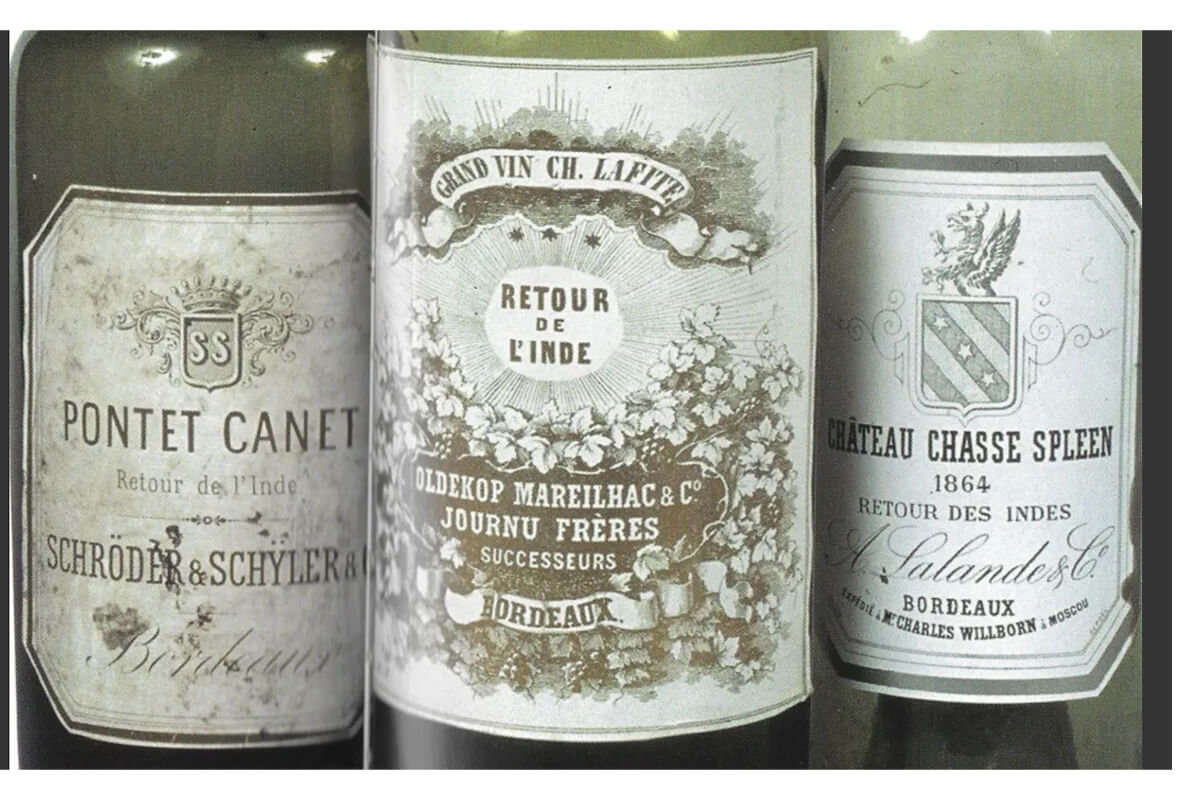
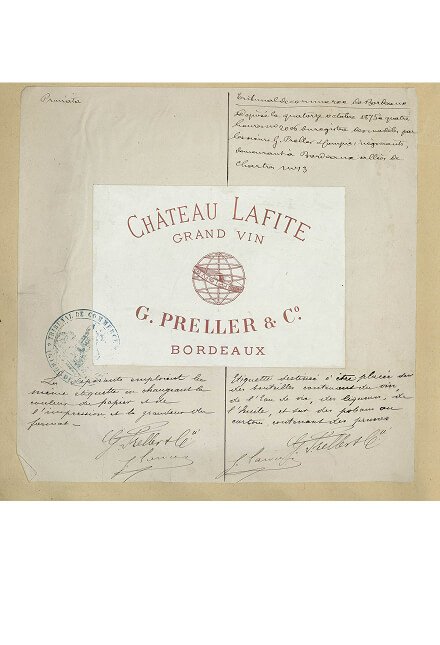
Medoc wine labels stamped with “Retour de L’inde”
A happy accident
What had begun by chance became a deliberate ageing technique. Winemakers began chartering ships specifically to send barrels on round trips, turning thousands of kilometres of ocean into a rather elaborate extension of the cellar. For once, taking the long way round was precisely the point.
Cellars on waves
What was happening inside those ships? The voyage subjected wine to a peculiar combination of conditions. There was the constant rolling and pitching of the vessel, gently agitating the wine for months at a time. There were dramatic changes in temperature as ships moved from temperate waters into tropical heat and back again. And there was the distinctive humidity of the hold.
Together, these conditions were thought to accelerate ageing. Movement helped soften the tannins. Temperature changes encouraged the development of aromas. The humid environment reduced evaporation through the wood of the barrels. Wines returned with notes that might otherwise have taken much longer to develop: cocoa, tobacco, sweet spices and candied fruit. The sea was both carrying and ageing the wine.
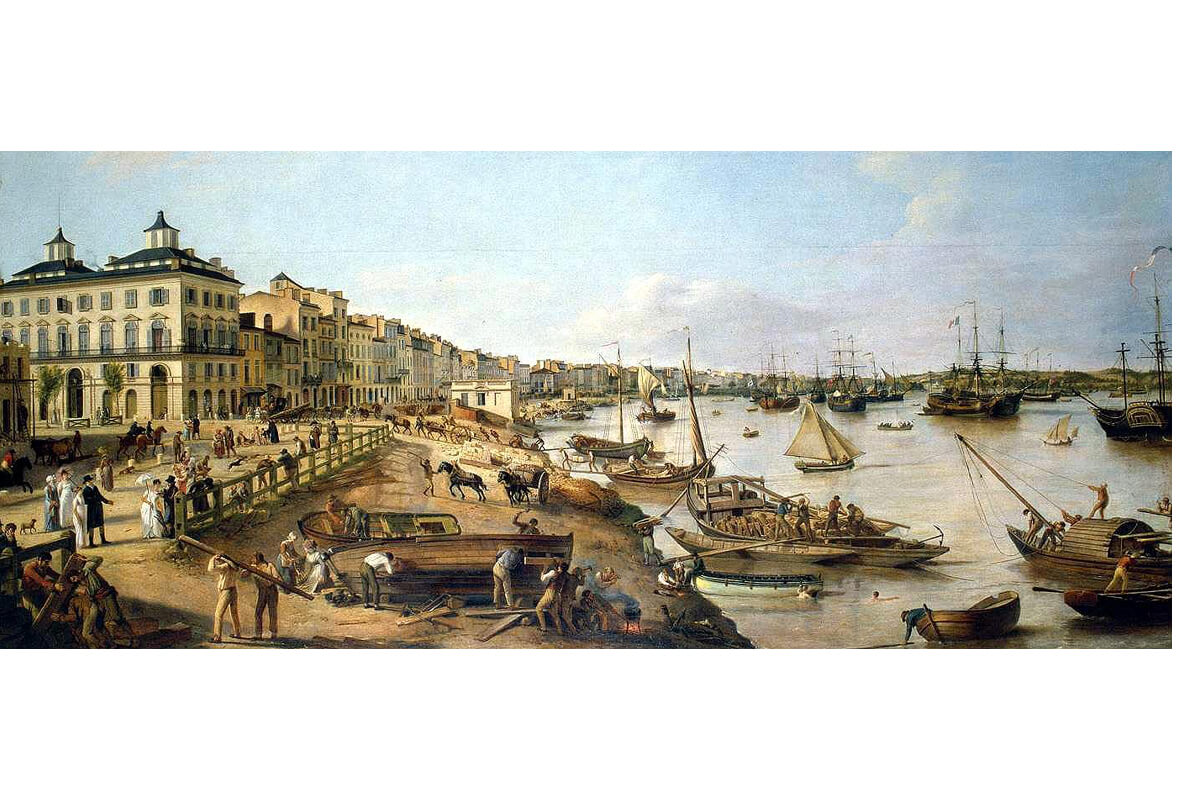
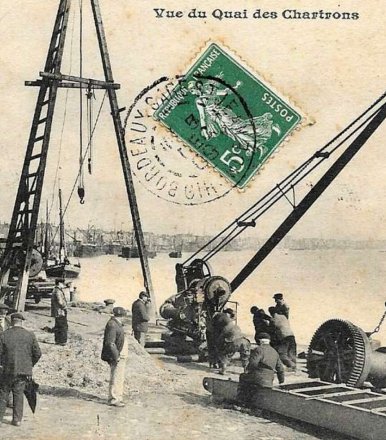
Engraving of the banks of the Garonne in the 19th century.
The people who made the world smaller
None of this would have been possible without Bordeaux’s wine merchants. By the 19th century they had built sophisticated networks capable of moving Bordeaux wine across the world.
Schröder & Schyler regularly shipped barrels and cases of classified growths to the Indian subcontinent via the Cape of Good Hope, eventually formalising a commercial range under the Retour des Indes name. Barton & Guestier’s networks stretched through the British Empire. Cruse & Fils Frères helped internationalise the great Médoc wines, while Nathaniel Johnston & Fils consigned wines on long-distance voyages across the world. The château made the wine. The négociant gave it a passport.
Lafite goes to India
Lafite was already part of this travelling world surprisingly early. According to an announcement in the Madras Courier on 23 April 1806, Lafite had reached the port city aboard an American vessel called the Juliana. Bordeaux’s négociant network would continue shipping barrels of Lafite to British India throughout the century.
Ships returning from Calcutta and Madras became news back in Bordeaux. Regional and commercial newspapers carried notices announcing their arrival and public sales of their cargoes. And eventually, returning itself became something worth advertising.
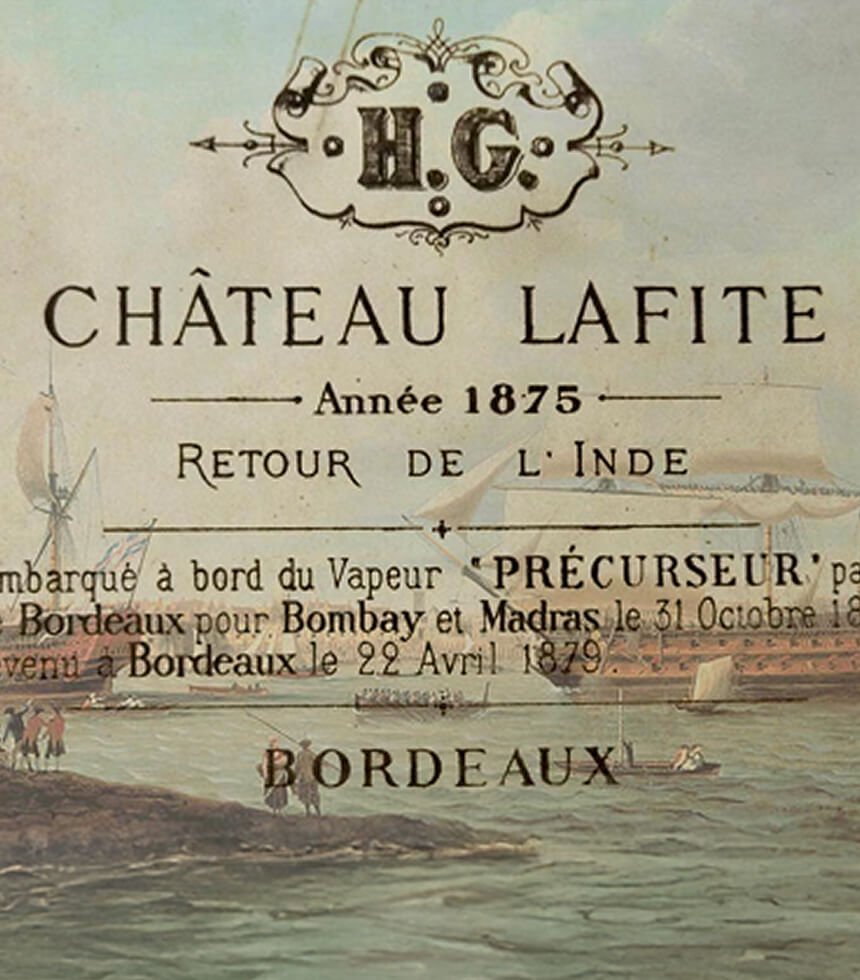
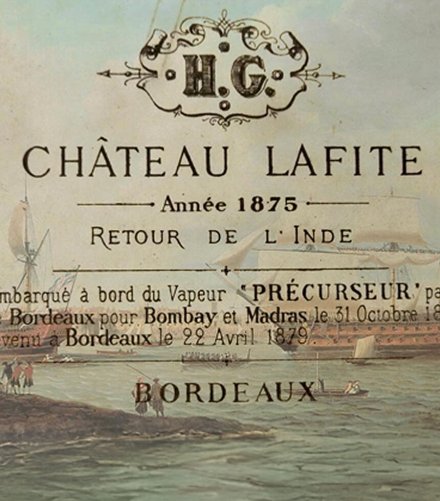
Back label of a wine from Château Lafite, travelling to Bombay and Madras
Miles become a mark of prestige
The designation Retour des Indes told drinkers that the wine in front of them had a story standard Bordeaux could not offer. The words, or abbreviations such as ‘R.D.’ and ‘R.I.’, could be stamped or printed onto labels and back labels. Corks, too, could carry markings identifying wines that had made the voyage.
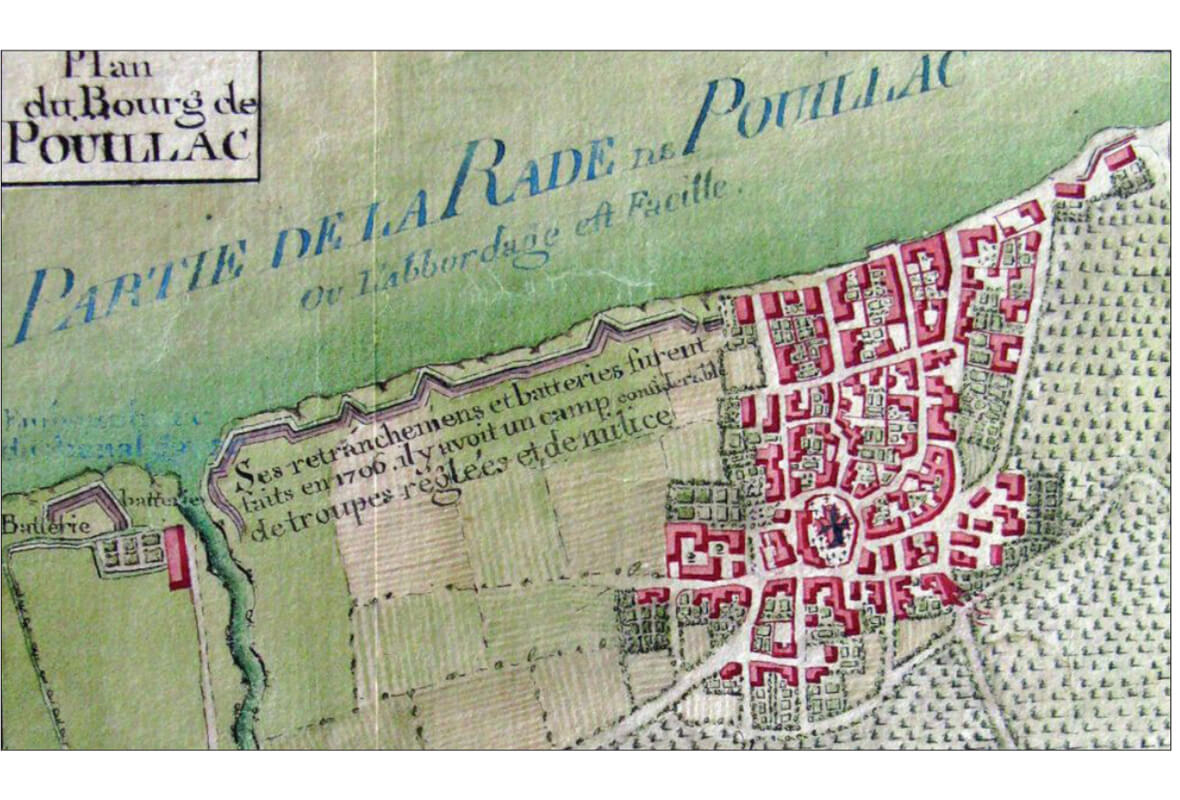
Détail de la carte du Cours de la Garonne, 1759.
The journey had become a mark of provenance and prestige, and returned wines commanded considerably higher prices than their more ‘local’ counterparts. They appeared on elite tables in Paris and London as objects of conspicuous luxury. It is an appealingly absurd proposition: the same wine was worth more because it had travelled thousands of kilometres only to end up back where it started.
And then the world got faster
The practice contained the seeds of its own demise. For centuries, merchants had been trying to make sea travel faster and more reliable. Eventually, they succeeded.
Steam replaced sail. A journey that had taken around four months could be completed in a matter of weeks. For commerce, this was progress. For Retour des Indes, it was a problem. The wine simply wasn’t spending enough time at sea to undergo the same transformation.
Other pressures followed. Phylloxera devastated European vineyards in the 1870s and 1880s, making wine scarce and expensive. Later, appellation regulations and the increasing requirement for château bottling made sending barrels around the world increasingly impractical. By the late 19th and early 20th centuries, Retour des Indes was disappearing.
The long way home
There is something wonderfully circular about the whole episode. For most of wine’s history, travel has been a problem to overcome. Every advance in transportation has attempted to make the journey shorter, safer and less consequential. The ultimate goal is now to have a bottle arrive on the other side of the world tasting exactly as it did when it left.
Retour des Indes briefly turned that logic upside down.. The journey itself was part of what made the wine desirable.
For one curious moment, the best way to improve a wine was to send it around the world. And wait for it to come home.
Read also
Assemblage: the travelling wine
A meandering journey of rivers, ports and people who carried wine through history.
How did a Louis XV privateer come to give his name to one of Pauillac's greatest wines? Historian Laurent Chavier discovers an answer in the Lafite archives.