Adapting our understanding of terroir for a warming climate.
Olivier Trégoat, Technical Director for Domaines Barons de Rothschild Lafite, argues for a more flexible understanding of terroir, one freed from rigid dogma, to adapt to the realities of climate change.
In Bordeaux at the turn of the millennium, the word ‘terroir’ was both a selling point and a decoy. Back then, Olivier Trégoat, now Technical Director for Domaines Barons de Rothschild Lafite, was completing his agronomy engineering thesis.
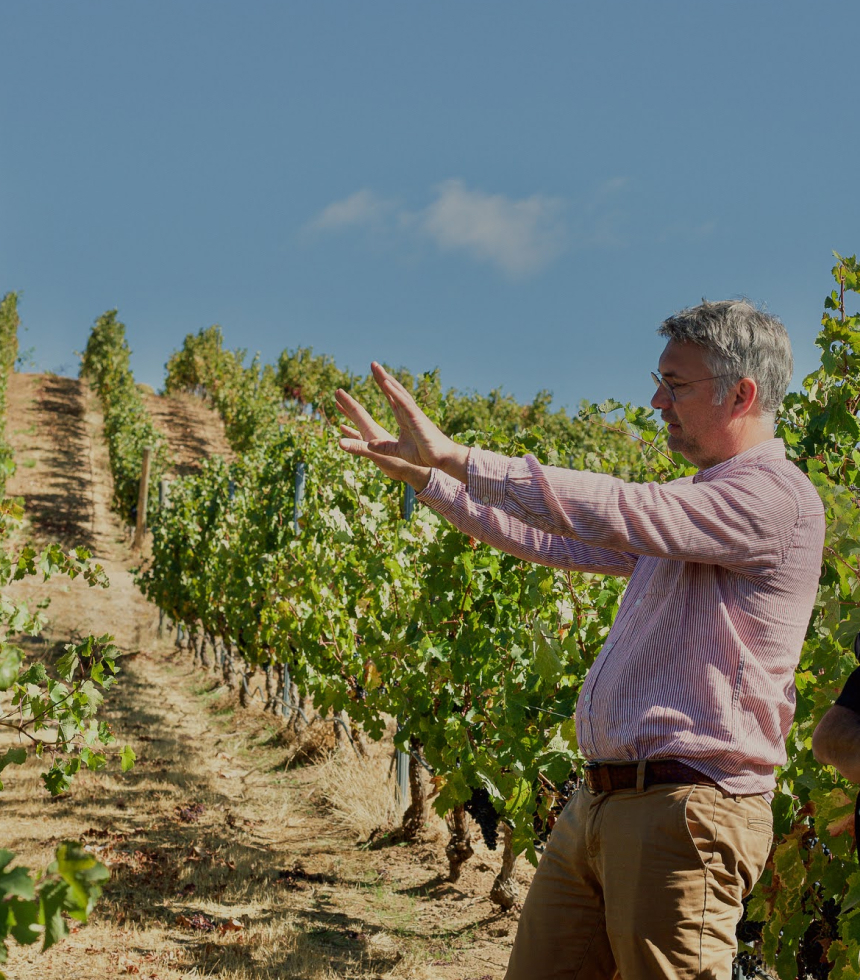
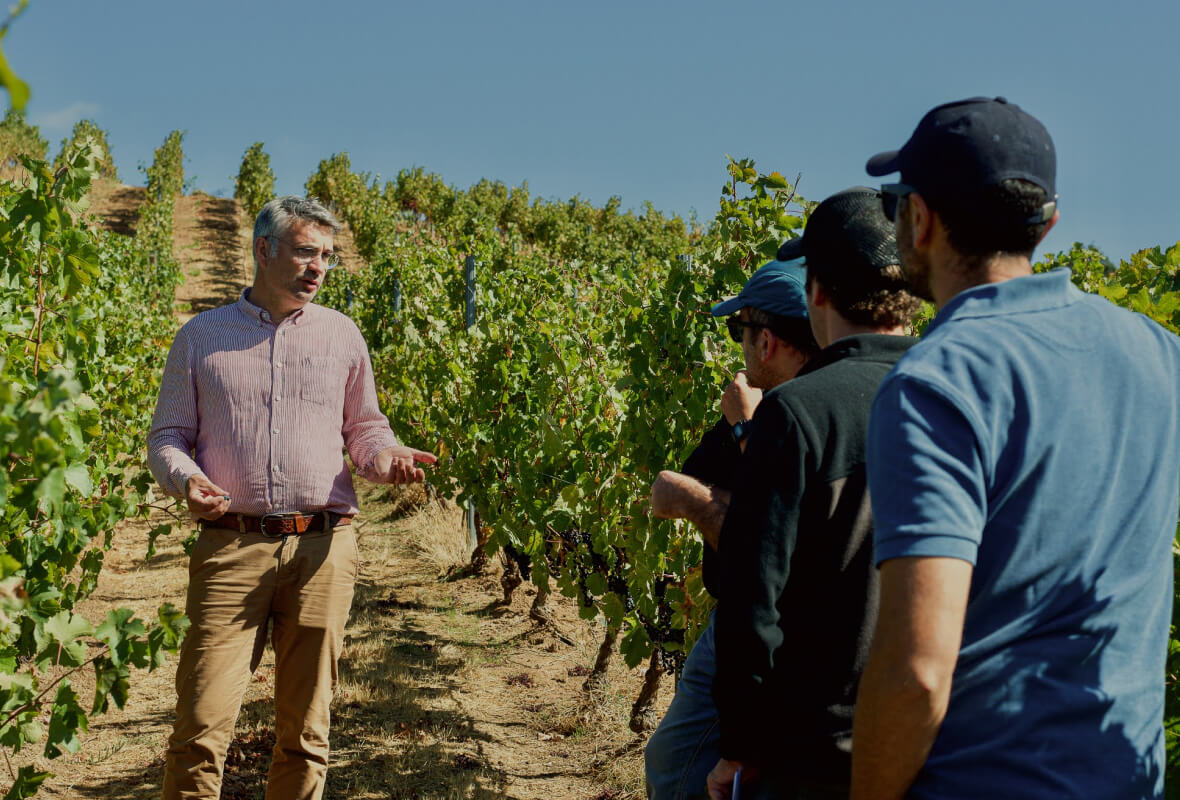
At the Viña Los Vascos vineyard, Olivier Trégoat, Technical Director for Domaines Barons de Rothschild Lafite, meets Max Correa, oenologist, and agronomists José Luis Ortiz and Joaquín Ortiz to exchange views on the future of the vineyard.
Twenty-five years later, Olivier has lived through three distinct cycles: the interventionist exuberance of the 1990s, the revolution in soil mapping at the dawn of the 2000s, and today’s era of climate adaptation. His conviction is simple: terroir is not a fixed belief but a living reality. Soil and climate come first. The role of the winemaker is to accompany them with a light touch.
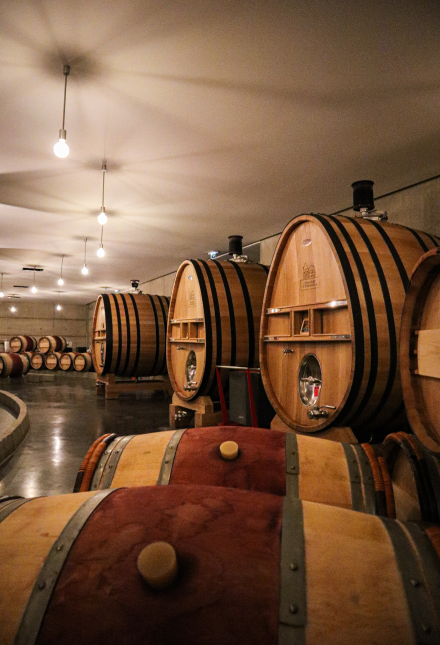
Letting the vine speak in the cellars of Château L’Évangile.
The 1990s: when the cellar reigned
In the 1980s and 1990s, the cellar held sway. Wines were shaped through concentration, heavy extraction and new oak, often pulling them away from the character of the place they came from. Terroir was frequently invoked, yet the resulting styles sometimes masked the vine’s true expression, impressive in their youth but quick to fade.
From the beginning of his career as a consultant in oenology and viticulture, Olivier pushed back against this approach. For him, a wine is most authentic when its freshness and tension reflect the place it comes from.
The 2000s: the vineyard reclaims centre stage
Gradually, a shift took place as scientific and geological knowledge entered the cellar. Olivier’s doctoral thesis—funded by the Club des Huit, an informal circle of Bordeaux’s great wines (the five First Growths of the 1855 classification along with Petrus, Cheval Blanc and Ausone)—mapped the subsoils of individual vineyard parcels in remarkable detail.
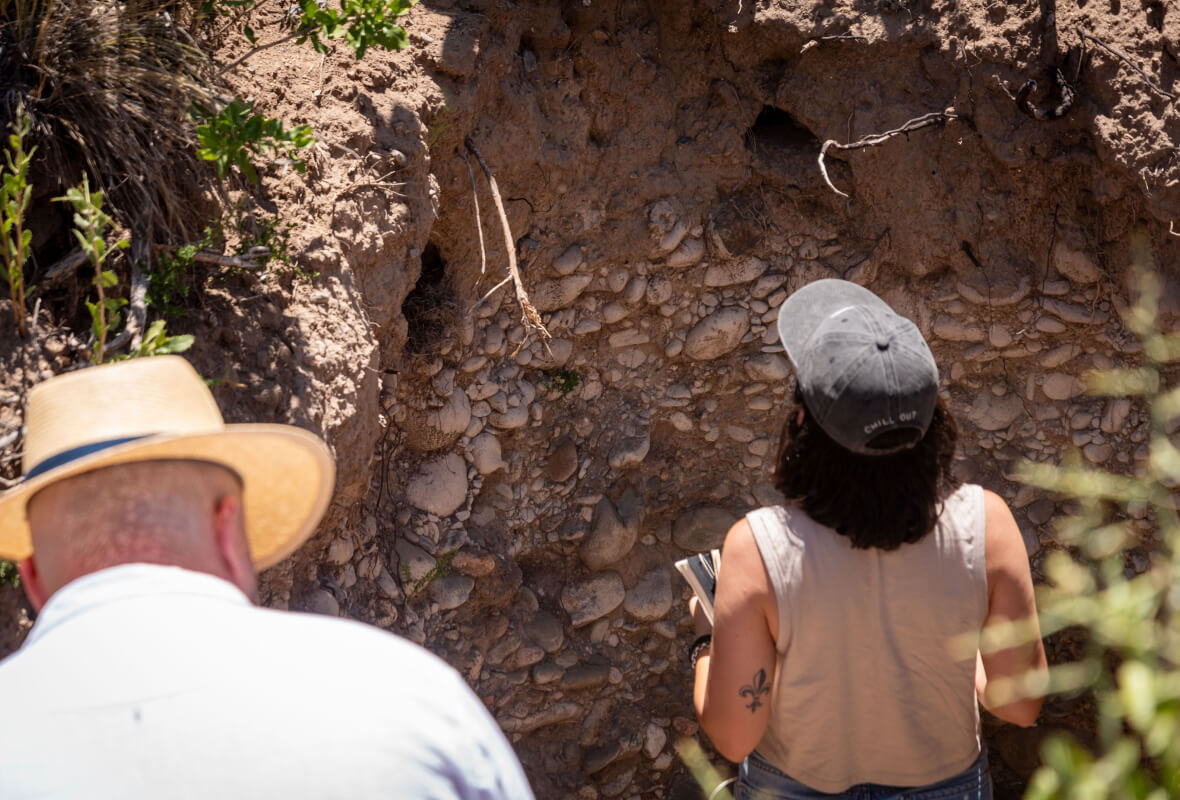
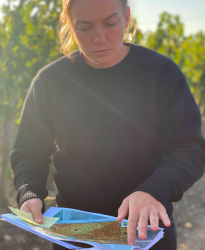
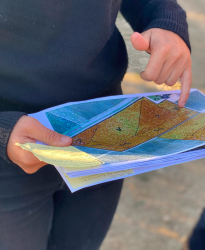
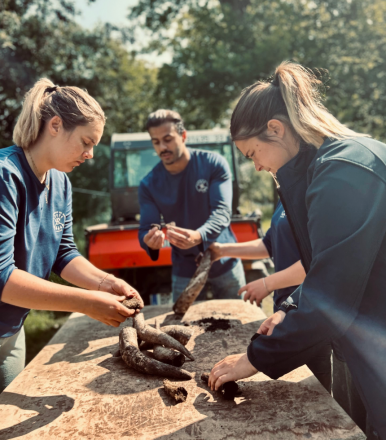
Comprehensive soil studies at Bodegas CARO.
Comprehensive soil studies at Bodegas CARO.
Comprehensive soil studies at Bodegas CARO.
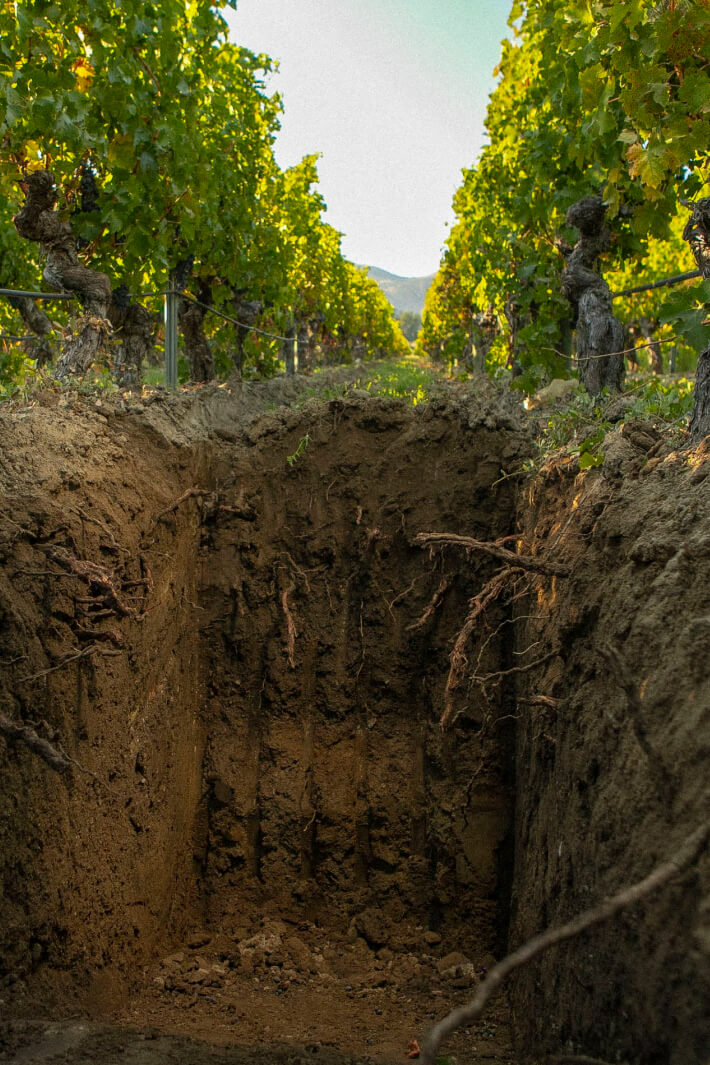
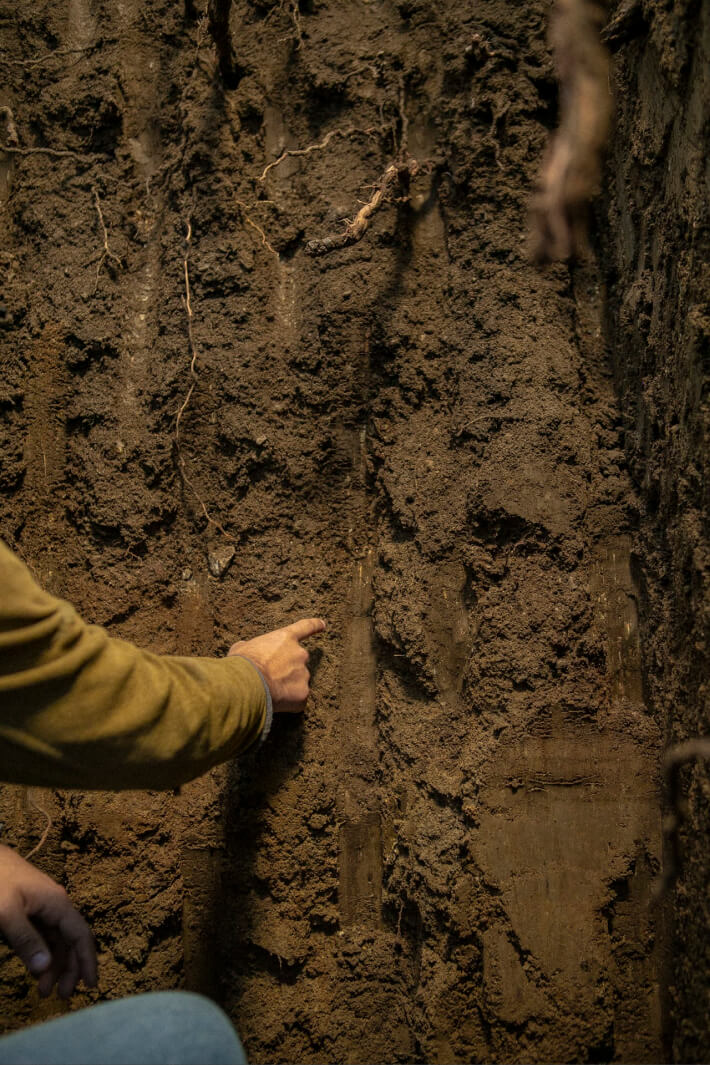
Olivier observed that, within a given estate, the key differentiating factor was not so much microclimate as the soil’s water regime. ‘A-soils’, which place greater constraints on water availability, tend to produce smaller berries with tighter phenolic structures. ‘B-soils’, with greater water supply, lead to different balances.
Empirical observation was now reinforced by scientific analysis: soil pits, measurements and detailed maps. Winemakers were learning, once again, to listen to the land.
Yet this new understanding faced a fresh challenge. Europe is warming faster than the global average, and in Bordeaux, the past decade has been the hottest and driest ever recorded. Some terroirs that were once considered ideal—gravel soils that dry quickly, Merlot planted close to its ripening limit—are beginning to show their limits.
In Pomerol, parcels that historically contributed only to second wines are gaining prominence thanks to their greater water reserves.
At Château L’Évangile, Olivier and Estate Director Juliette Couderc are making careful adjustments to reduce water stress: lowering canopies to limit transpiration, planting winter cover crops, and installing sensors to monitor the vine’s water balance.
Juliette Couderc, Estate Director of Château L’Évangile, adapts vineyard practices each year to the changing conditions.
Planting choices, meanwhile, are an exercise in projection. In thirty years’ time, the vineyards of Pomerol may well include more Cabernet Franc and Cabernet Sauvignon—varieties better suited to warmer conditions—grafted onto more vigorous rootstocks designed to cope with drought.
Climate demands a living definition of terroir
The underlying principle remains constant: climate leads, the soil remains and humans adapt.
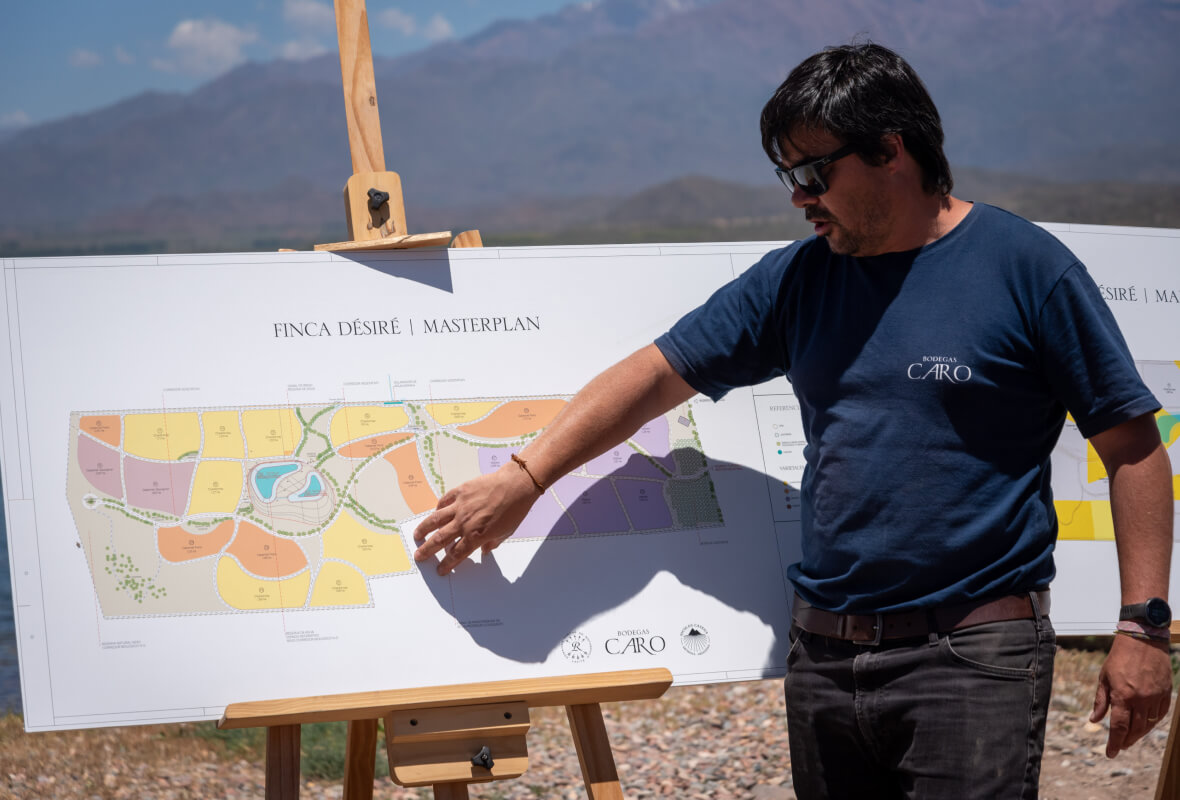
Matías Cazorla, Agronomist, presents the master plan for Finca Désiré.
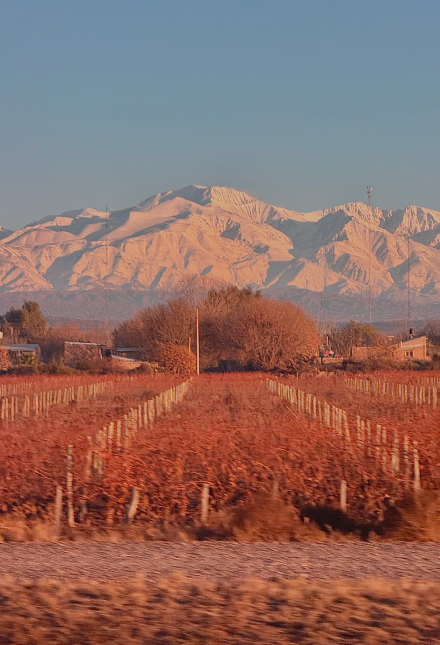
In Argentina, at Bodegas CARO, the new vineyard of Finca Désiré has been planted at around 1,400–1,450 metres above sea level. The soils are geologically similar to those found further down the valley, yet the change in climate alone transforms the character of Malbec. At higher altitude, cooler nights and wide temperature swings slow and balance ripening, preserving acidity and aromatic compounds. In a warming world, this creates a promising terroir for the grape. Within little more than an hour’s drive and a few hundred metres of altitude, the climate changes, and with it the character of a variety that often thrives near its limits.
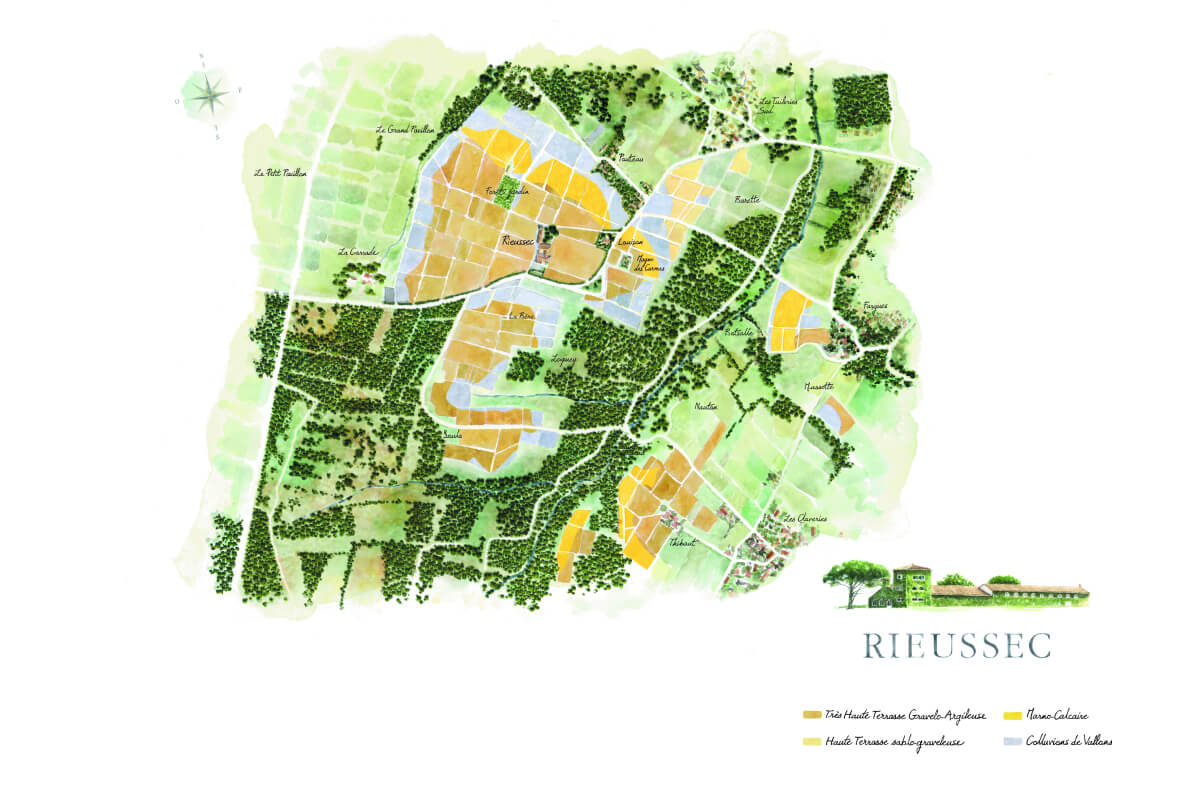
Some terroirs show particular resilience to hydric and thermal extremes, their soil structure buffering climatic shocks. One such example is Rieussec in Sauternes. Mathieu Crosnier, Estate Director, explains: ‘At Rieussec, the real distinguishing feature is the soil’s ability to retain and release freshness. People assume it’s the mist, but in reality it’s the soil that creates the microclimate here.’
Even in very dry years, the vines suffer less because of the soil’s capacity to retain water. As Crosnier puts it: ‘Here, I’d almost say the subsoil matters more than the weather.’ A fortunate advantage at a time of accelerating climate change.
Rieussec benefits from a microclimate that encourages the development of botrytis.
Every estate has its own character. Olivier is convinced that terroir cannot be protected through rigid definitions. It is defended instead through open discussion about adapting vineyard practices: planting density, pruning methods, grape varieties, perhaps even irrigation in the future. It also requires an economic model capable of supporting more sustainable practices, and a long view measured in generations.
A vineyard is planted for fifty years. To refuse to anticipate the future is to jeopardise the story of a place.
Olivier has seen the wine world aspire to a universal style before rediscovering the importance of place. Now he sees it striving to adapt in order to endure.
In a warming world, the winemaker’s responsibility is less about fixing the identity of a terroir than about preserving the conditions that allow it to express itself.
Listening to the land, after all, means accepting that it changes, and being ready to change with it.
Read also
Gone With the Winds
Assemblage
In our cellars, we blend grape varieties; in our Journal, we blend ideas. This time, it's a rather airy lexicon. The winds make the weather fair or foul. But do they also make the wines? Here's an overview of those that blow over our vineyards, from the tramontane to the typhoon.
In conversation with Manuela de Lachapelle, Head of R&D at Domaines Barons de Rothschild Lafite.
As Head of R&D at Domaines Barons de Rothschild Lafite, Manuela de Lachapelle explores what biodynamics, backed by evidence, brings to the resilience of Bordeaux estates and the redefinition of the winegrower’s craft.