The Journal / Shores
The Don Quixotes of Brixham
A fishing trip off the coast of South Devon, a haul of scallops, and two bottles of William Fèvre Chablis Grand Cru to wash them down.
A fishing trip off the coast of South Devon, a haul of scallops, and two bottles of William Fèvre Chablis Grand Cru to wash them down.
In Brixham, South Devon, three divers, an entrepreneur dreaming of changing fishing for the better, and our intrepid editorial team all meet for a day at sea. The result? A magnificent haul of scallops, turned into ceviche and enjoyed with two bottles of William Fèvre Chablis Grand Cru.
The sky above Brixham harbour is slate-grey that morning, as if someone had taken a pencil to the fading splendour of this South Devon town.
There was a time when Brixham was one of England’s most prosperous fishing ports. Today, all that remains of its former grandeur are a few handsome but peeling Victorian façades, alongside houses repainted in bright colours, a little trompe-l’œil for passing tourists.
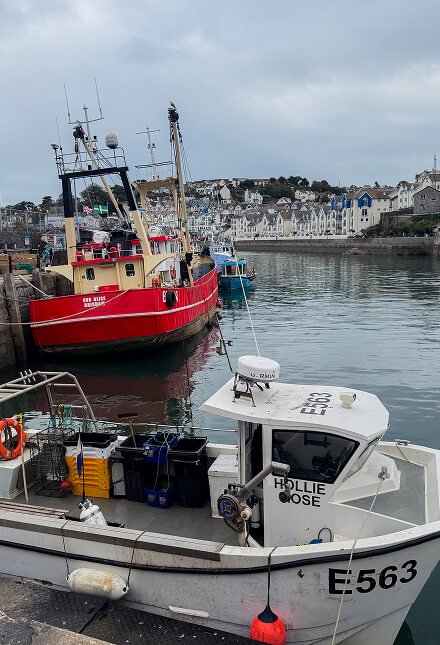
It is against this backdrop, at ten in the morning, that The Journal team, easily identified by our brand-new boots and Breton shirts, meets the crew of the Hollie Rose.
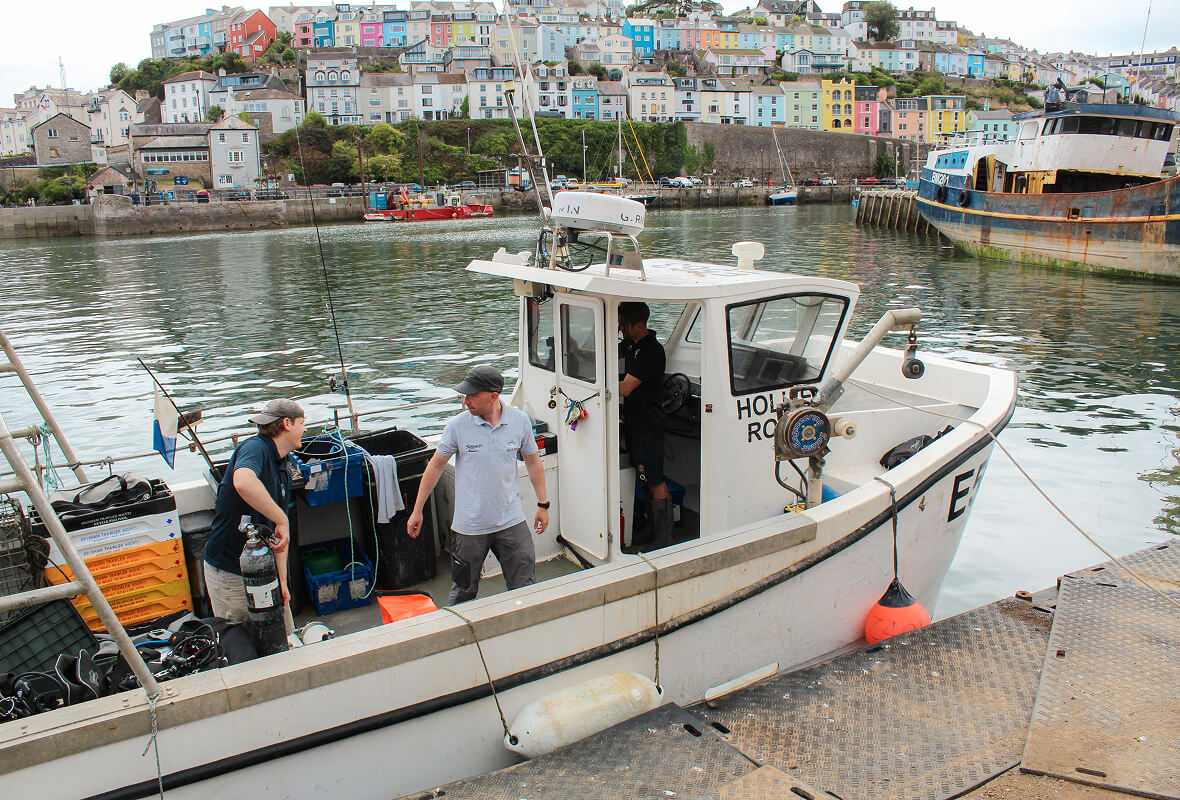
We spot the boat first, down on the quay: ten metres of hull and a small cabin. A rather fragile-looking craft moored beside a trawler more than thirty metres long.
The three divers
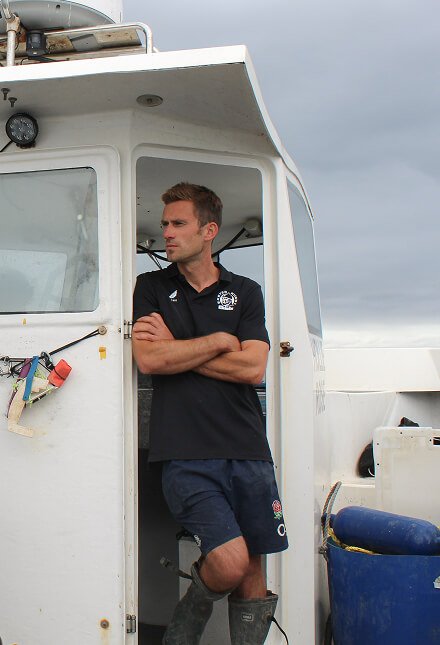
Joe Pike, captain of the Hollie Rose, comes over to meet us and invites us aboard. Handsome, reserved and immediately likeable, Joe is the perfect poster boy for a kind of fishing that remains very much the exception rather than the rule. His parents are farmers in the area, so fishing isn’t something he was born into. He chose it. A keen diver and freediver before becoming a fisherman, he turned his passion into his profession. Joe bought the Hollie Rose two years ago.
For fishermen, there is no such thing as a regular pay cheque. For divers, things are more precarious still. Tides can carry you a mile from where you entered the water, while storms can turn clear seas into pea soup.
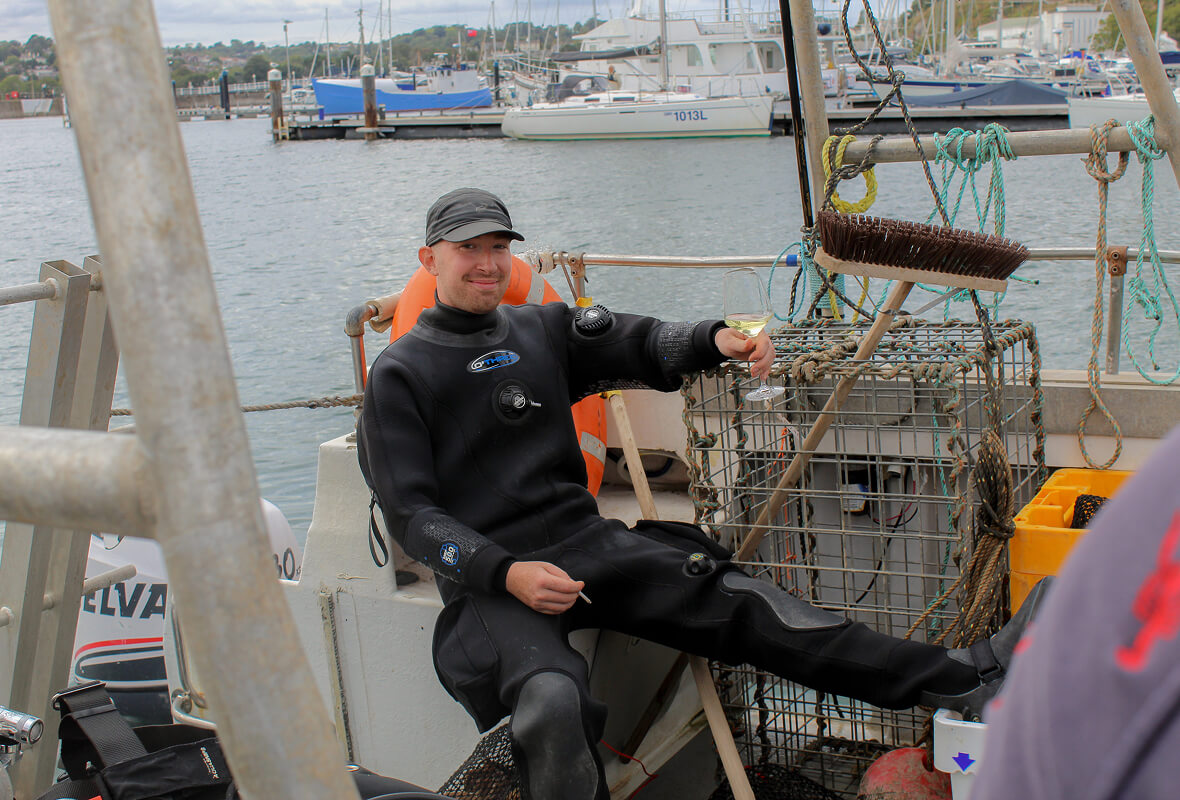
Toby and Dan, the other two members of the crew, are both in their twenties. A born showman, Toby rolls himself a cigarette. ‘To open up the lungs,’ he tells us.
Dan, the youngest of the three, is an affable blond giant who happily answers every question we throw at him.
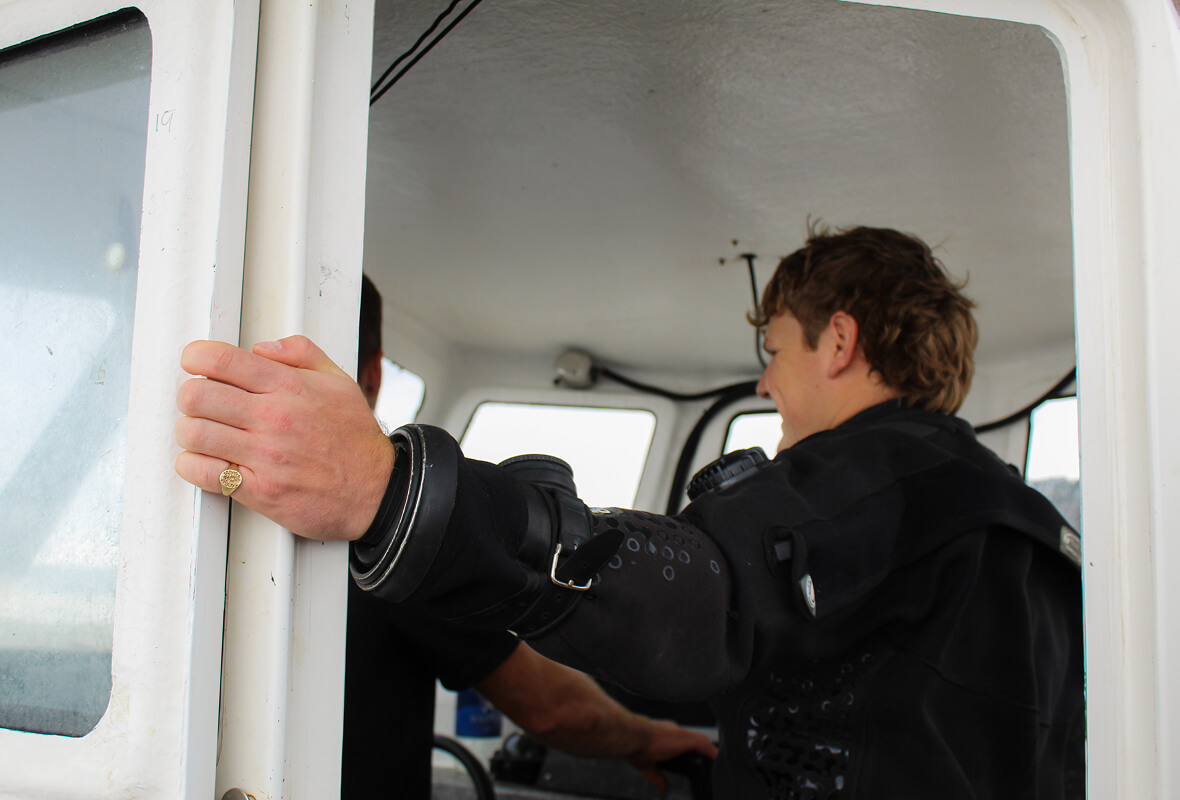
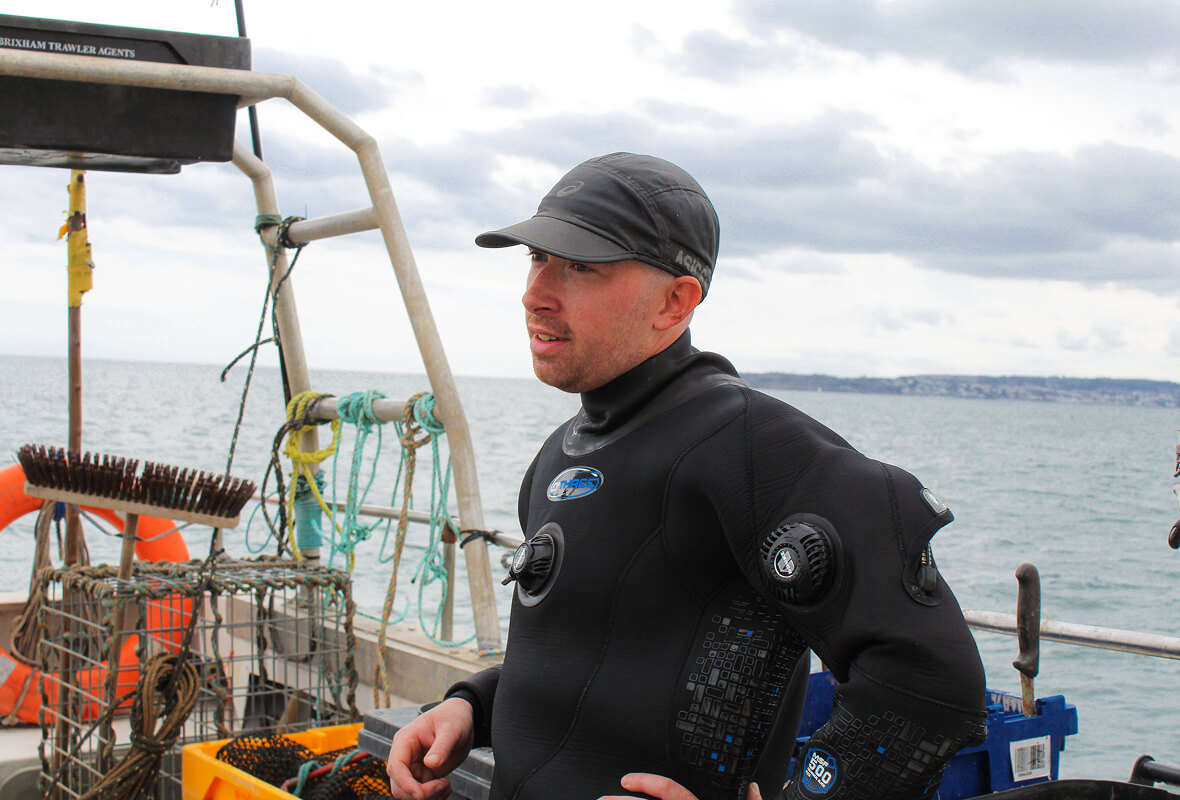
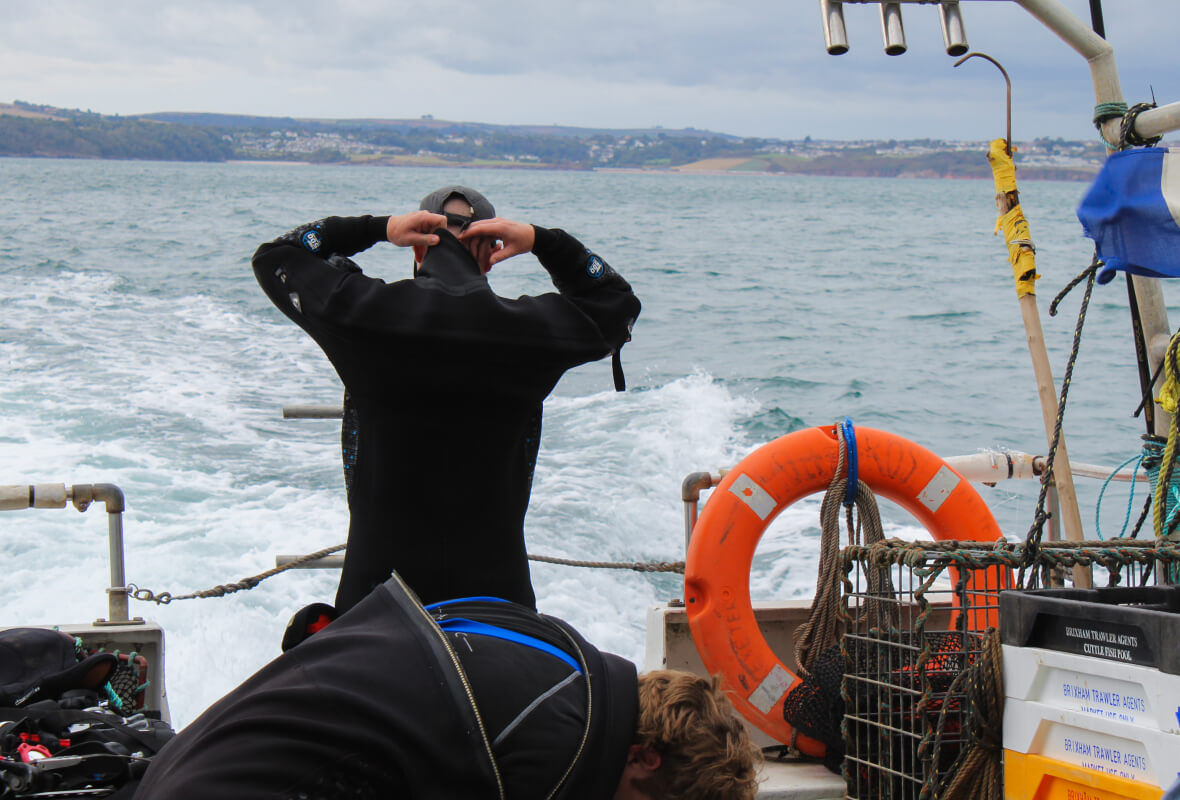
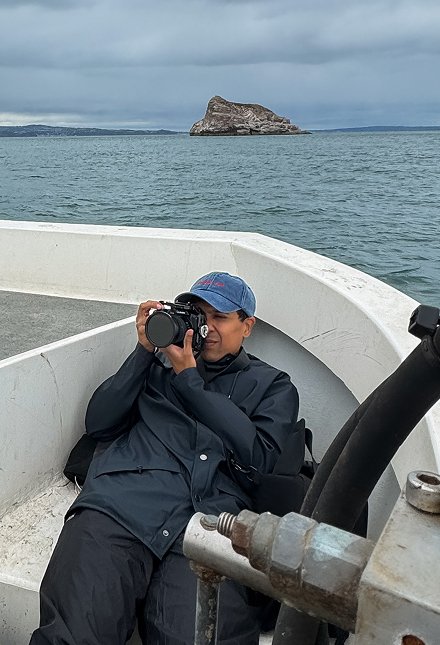
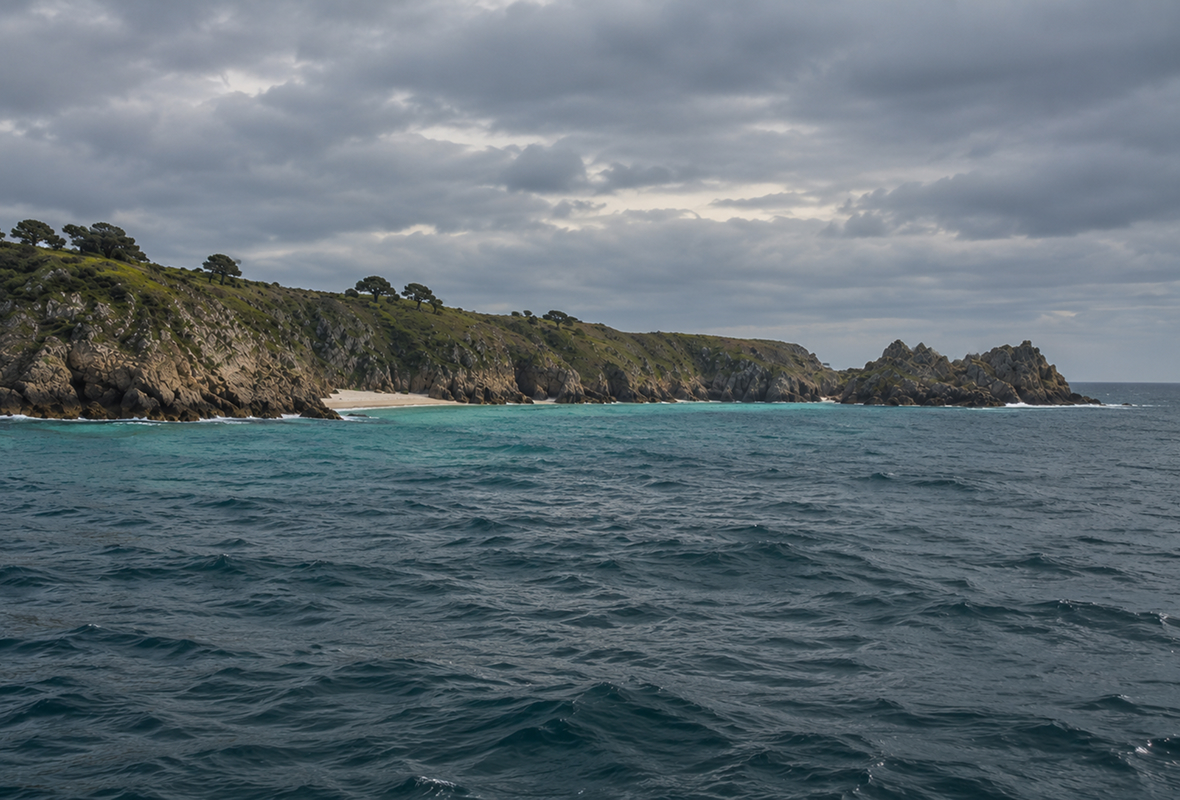
We leave the harbour behind. Ahead lies a rocky islet off Torquay, surrounded by a sandbank that is home to a large colony of scallops. They favour the tranquillity of these sheltered seabeds, protected from the swell. Here they inch their way along, opening and snapping shut their shells to propel themselves forward, staying close to the surface, its light and its nutrients.
Out beyond Brixham, the coastline stretches past the town into a lacework of coves carved into the cliffs. Turquoise water, visible even beneath the leaden sky, holm oaks and hawthorns: it all has the air of a coastal paradise, enough to make us dream of doing absolutely nothing.
Instead, everyone gets to work on deck preparing for the first dive.
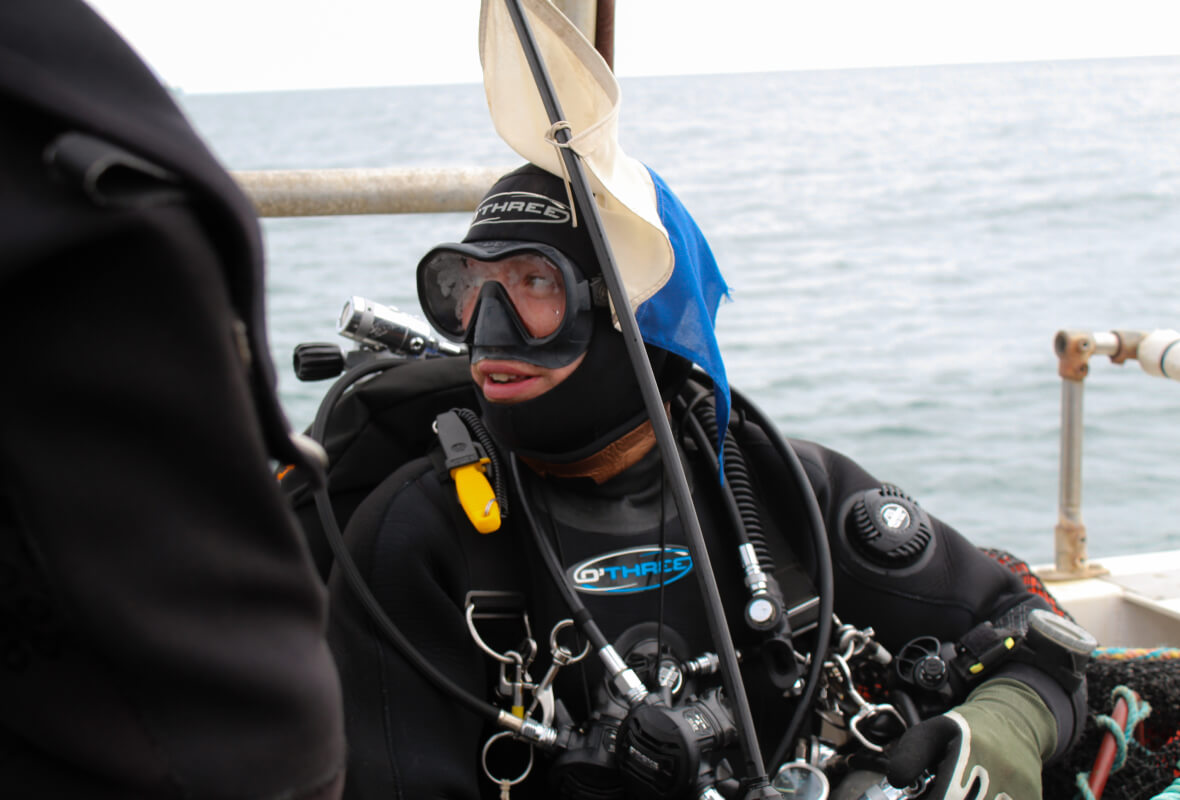
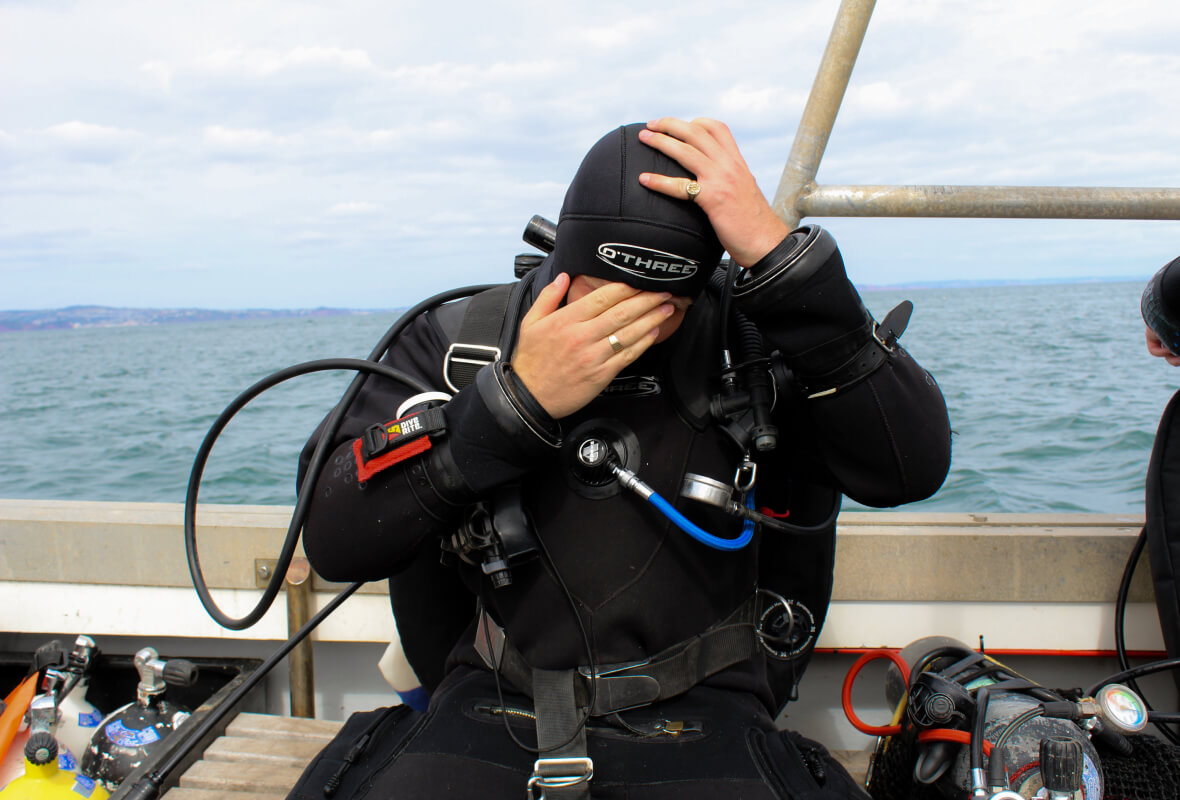
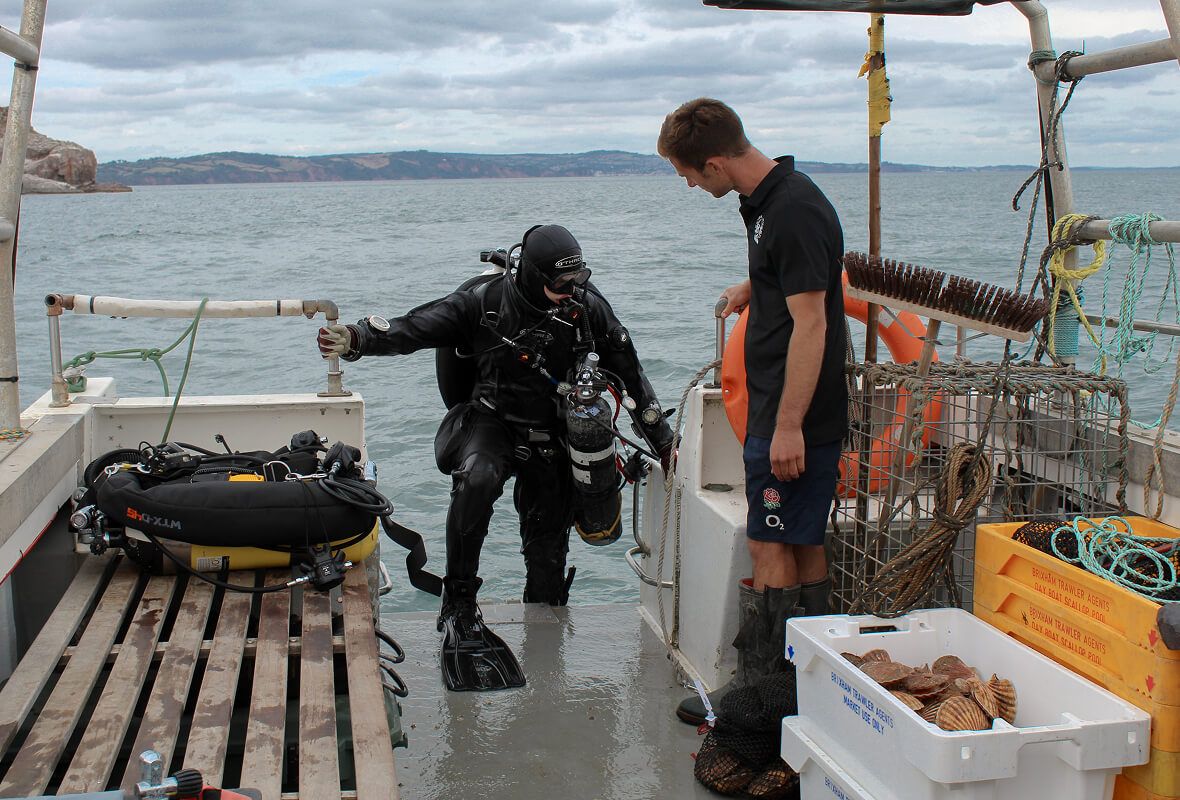
Toby gears up. A triple-layer camouflage wetsuit covers him from head to toe. He straps on a weighted rig carrying two air tanks and slips a knife into the sheath around his ankle, useful if he gets tangled in a stray fishing line. Finally, he clips the nets and buoys he’ll need underwater to his belt.
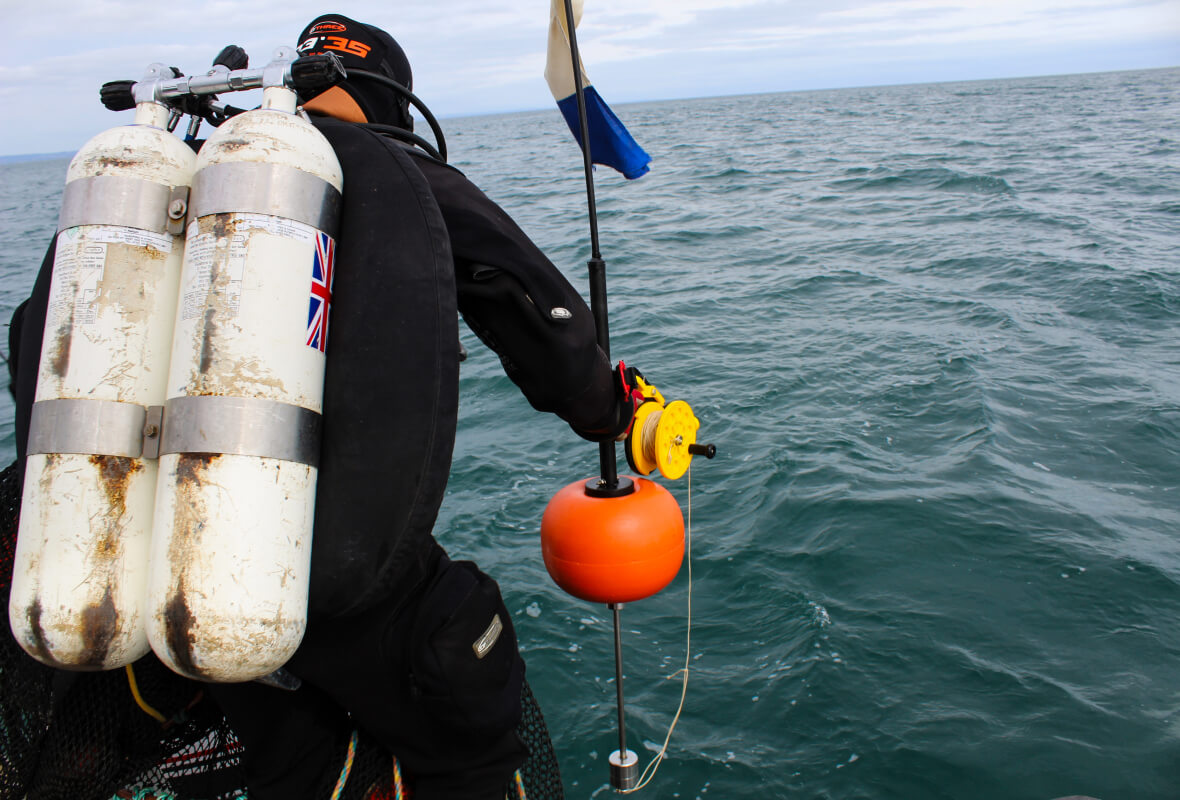
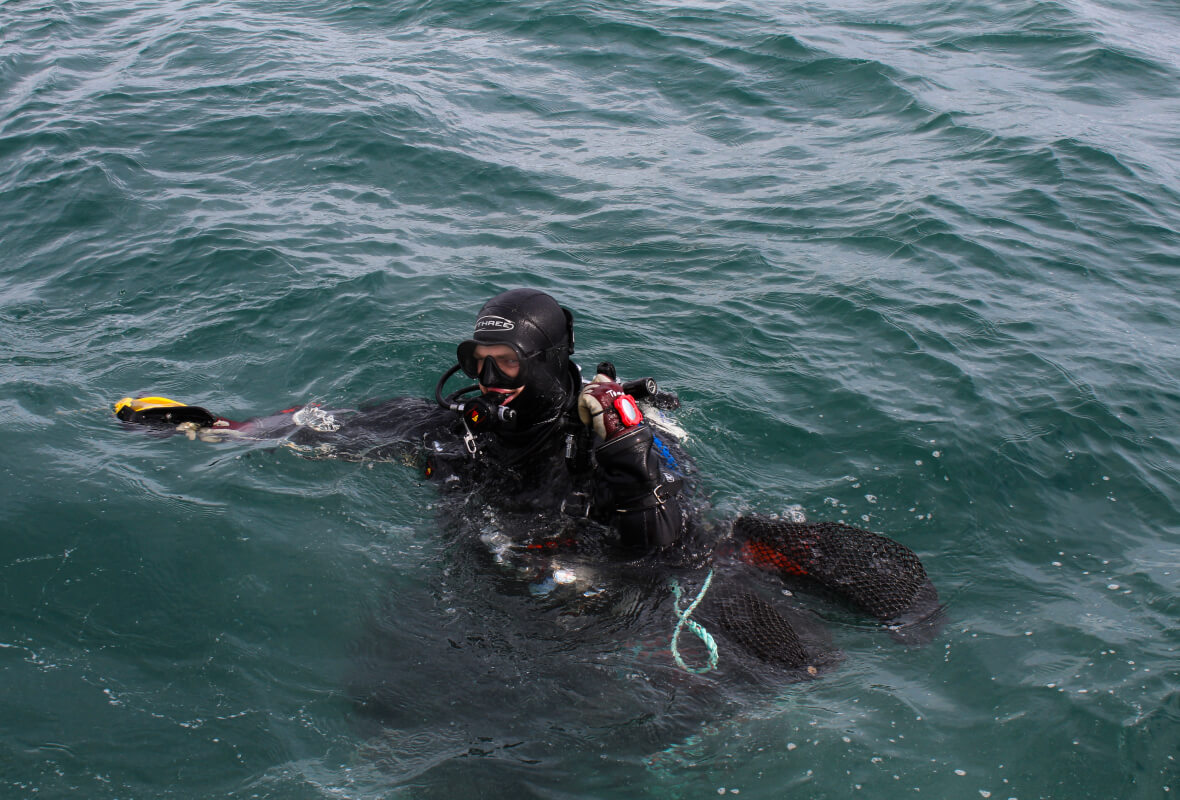
With a small wave to our camera, he disappears beneath the surface for an hour of fishing, twenty metres below.
Throughout the dive, a line connects him to a buoy at the surface, a vital umbilical cord for his safety. At regular intervals, roughly every ten minutes, a bulging net appears at the surface, heralded by an orange buoy that Joe and Dan look out for impatiently.
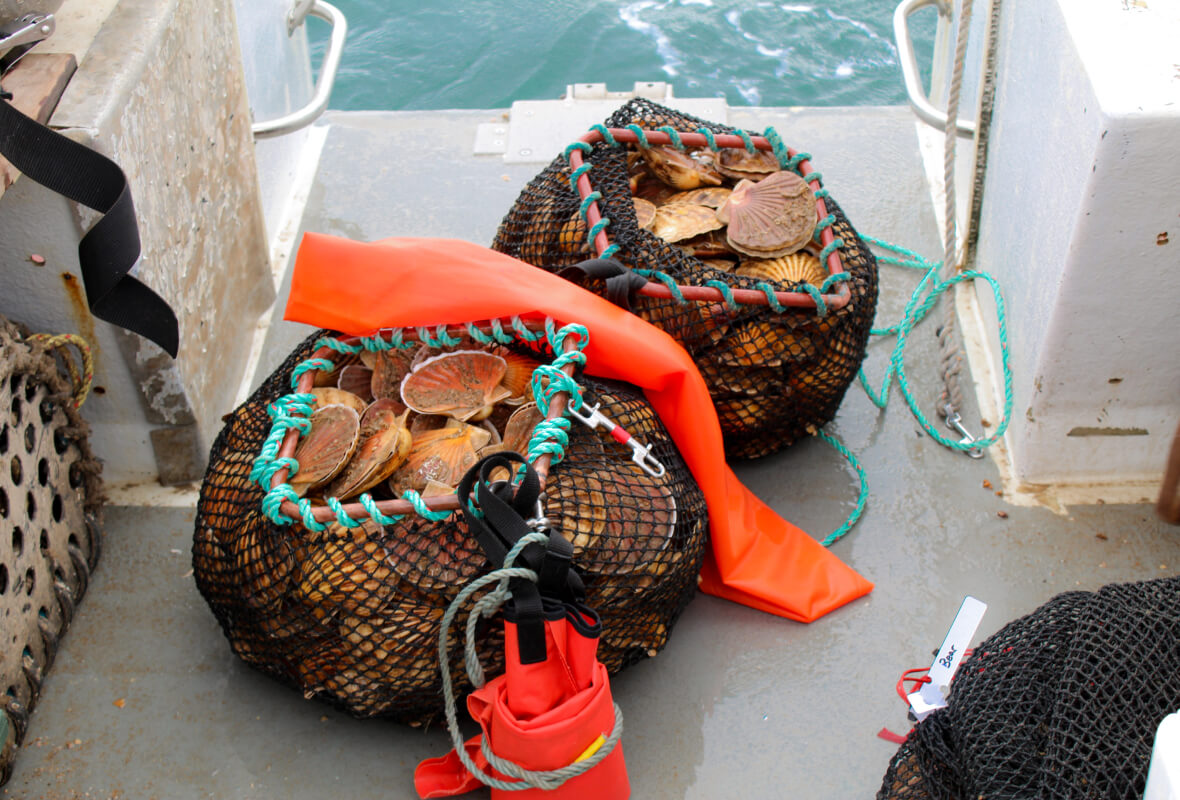
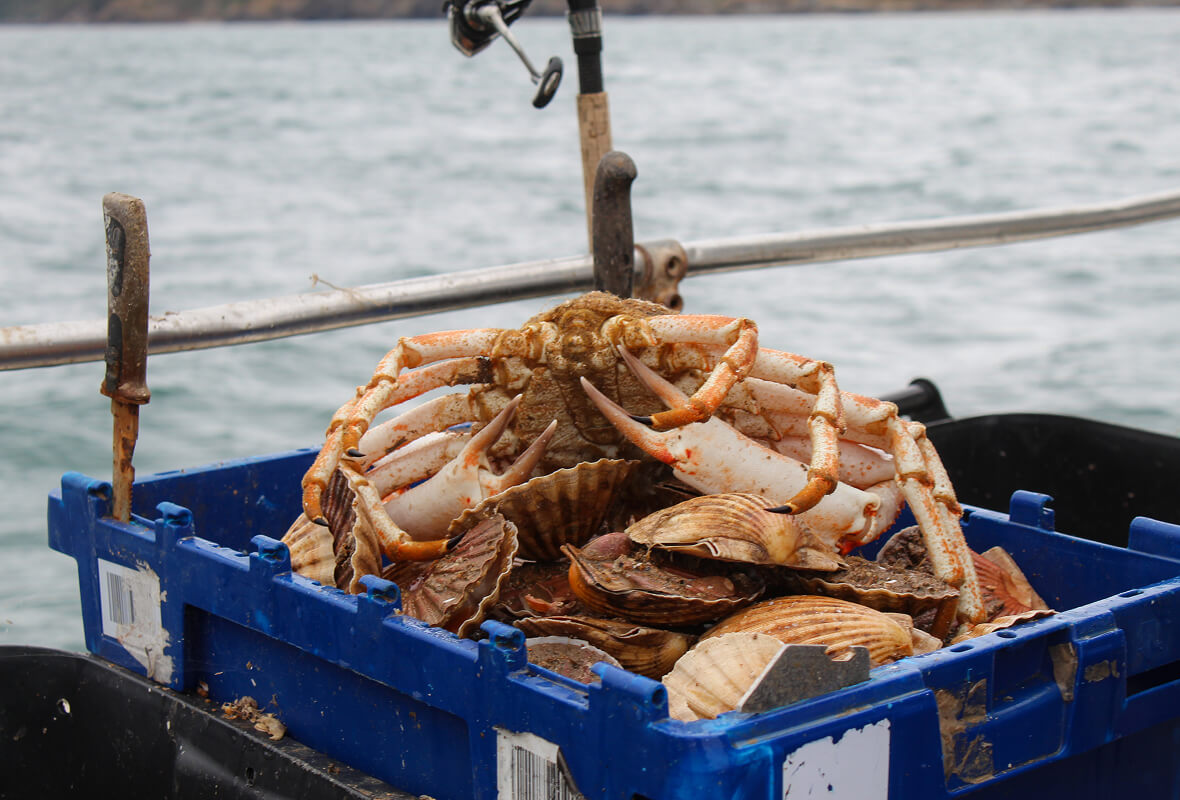
In one of them, Toby has mischievously tucked a spider crab. Worth nothing at the fish market. Worth its weight in annoyance. On deck, its claws force Dan into a painstaking extraction operation before he can get to the scallops.
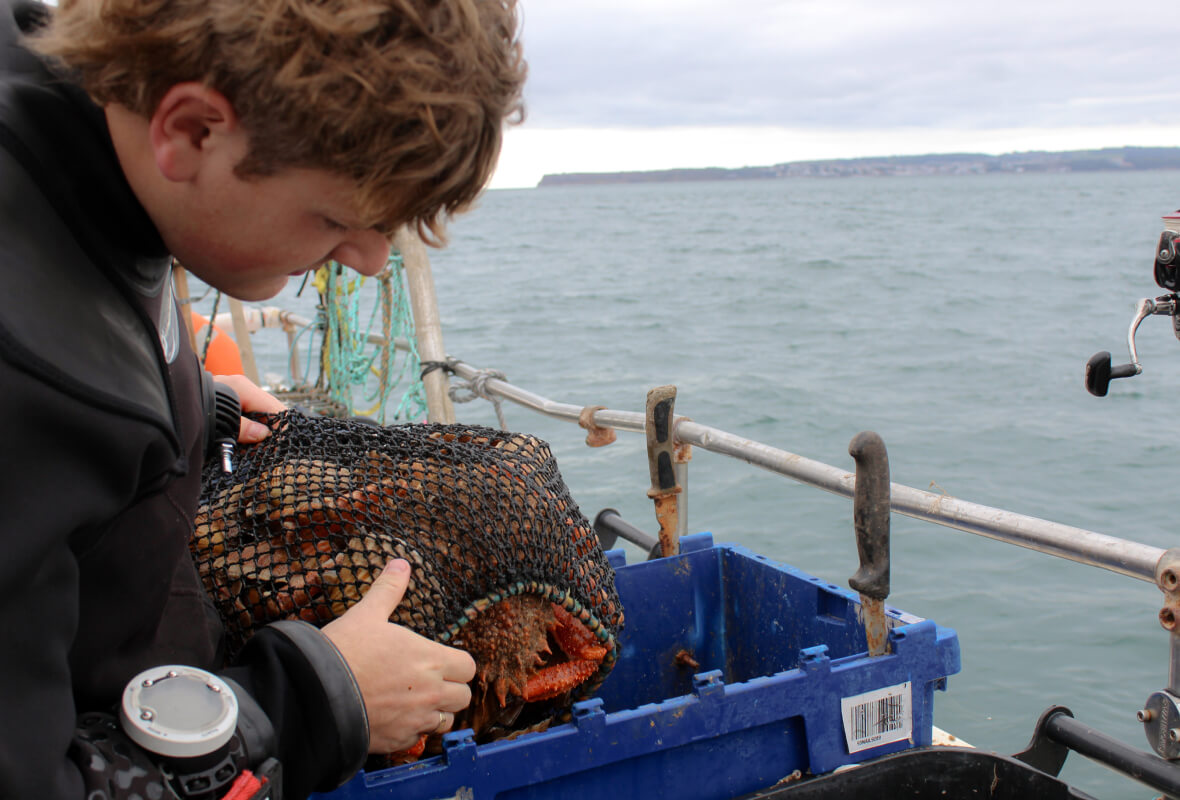
Toby’s first question when he gets back on deck, barely out of his mask, is: ‘Where is it?’
The troublemaker knows better than to think his crewmates haven’t taken revenge. He searches the boat for the crab. Two minutes later, amid fits of laughter, he pulls it from the bottom of his bag and returns it to the ocean.
Dan is underwater now, and things don’t start well. A buoy pops up at the surface. No net. Joe and Toby curse.
But Dan soon redeems himself by attaching two nets to the same buoy. It means a tricky manoeuvre for Joe and Toby as they disentangle them from the boat’s ladder, but relief soon gives way to the meticulous work of sorting the catch.
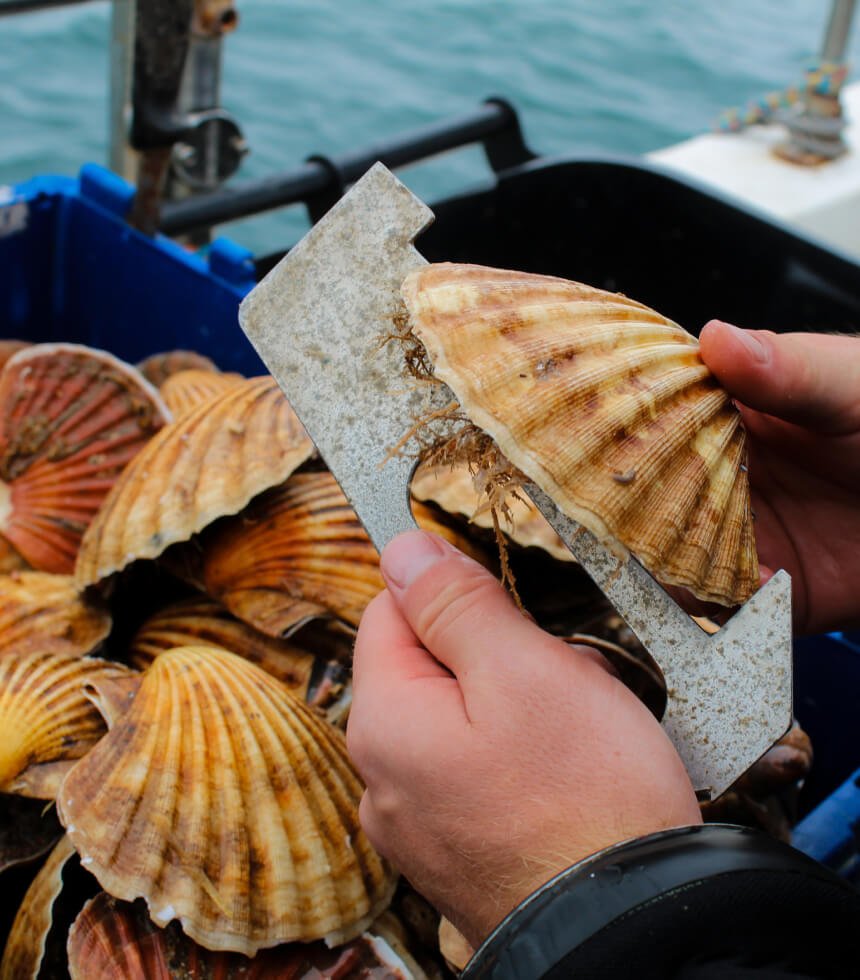
Every scallop brought aboard is measured with a rudimentary steel gauge. The younger ones, still too small, go straight back into the water to keep growing.
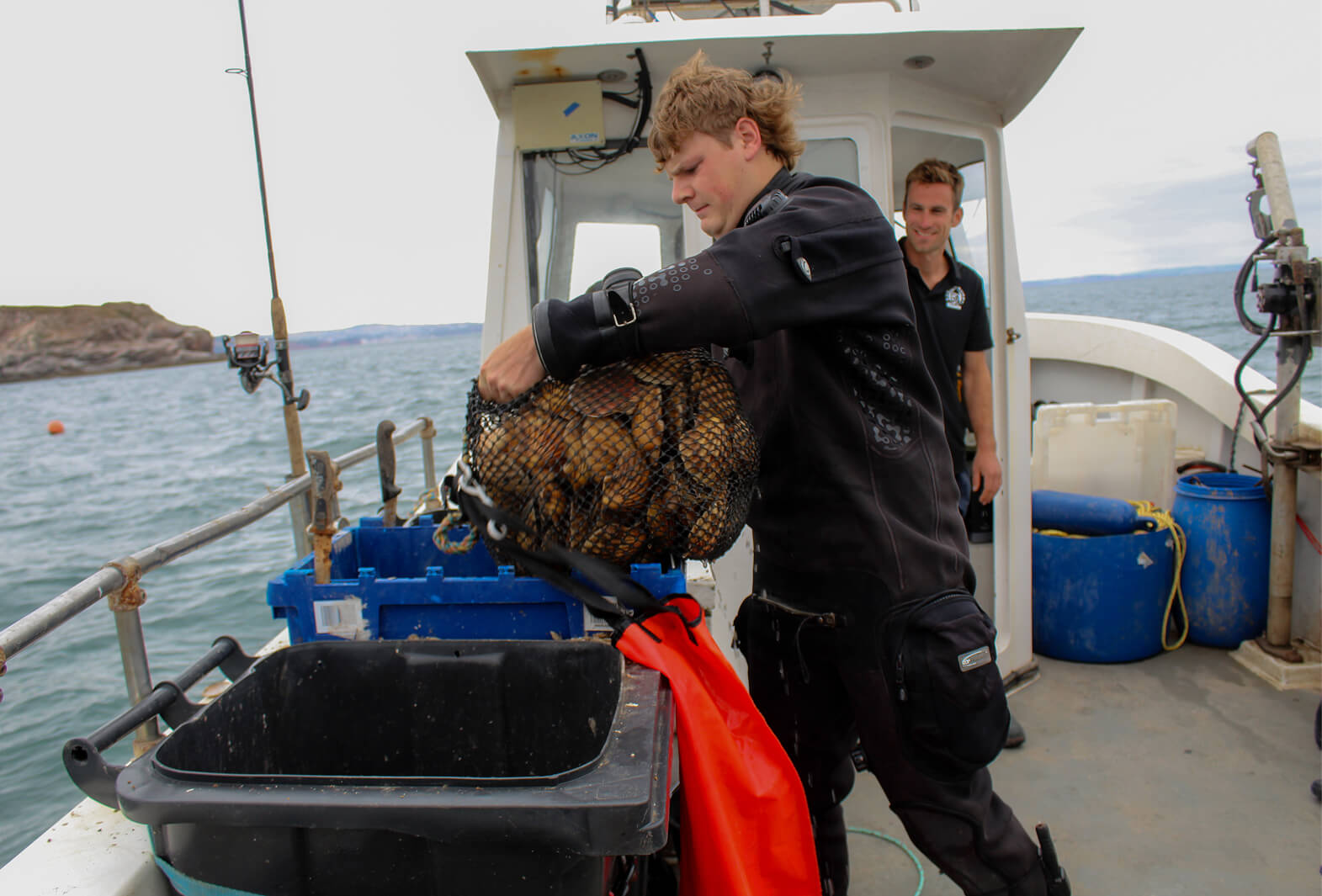
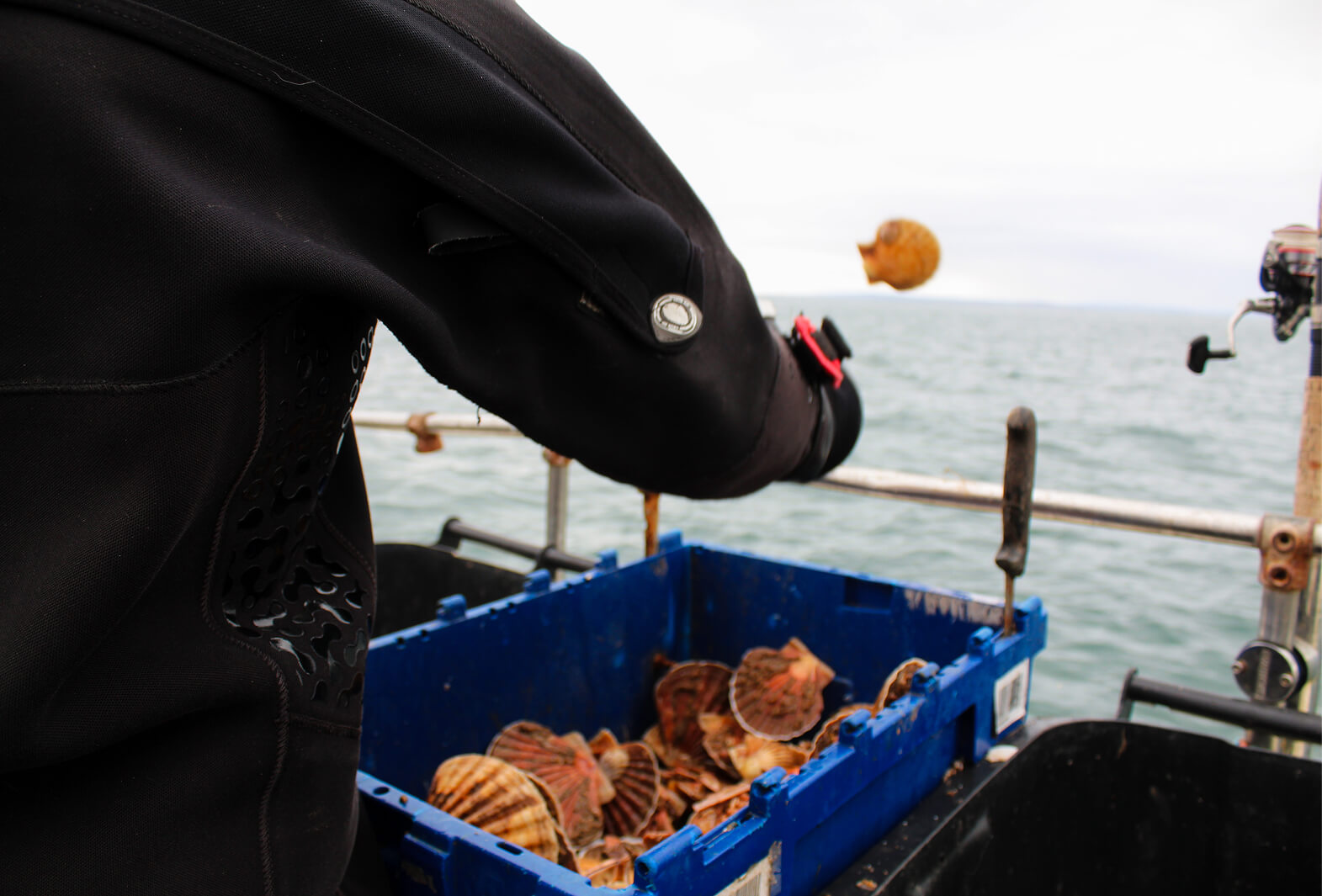
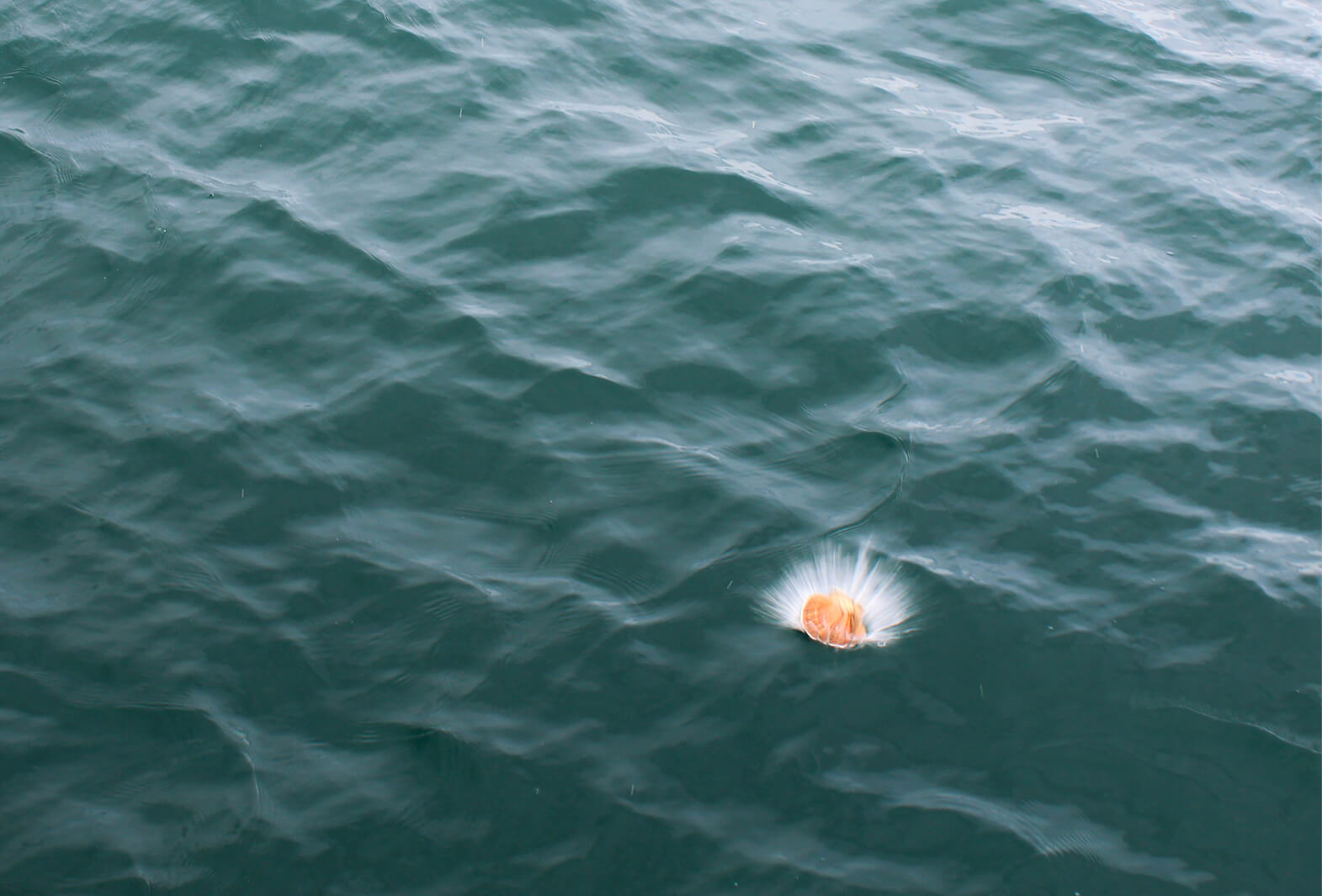
Once Dan is back aboard and the sorting is done, it’s time to set course for Torquay harbour, where a friend and two very good bottles are waiting for us. Now we can raise a glass with a clear conscience.
The sky has been deceptive. It has, in fact, been a very good day. Visibility underwater is excellent: there has been no rain, and the swell has been low for two days.
The result: four hours at sea and two hours underwater for a haul of around a thousand scallops. The Hollie Rose manages trips like this only four or five times a month. They’re the trips that keep the crew going.
The rest of the time, barring truly terrible weather, the divers still go down, feeling around for scallops in murky mud.
The conditions are difficult, and gathering the shells is a skill in itself. Even experienced divers trying it for the first time come back with a fraction of what our experts collect.
Their way of doing things is admirable, exemplary even. But it isn’t easy to follow. The learning curve is steep and the pay unpredictable.
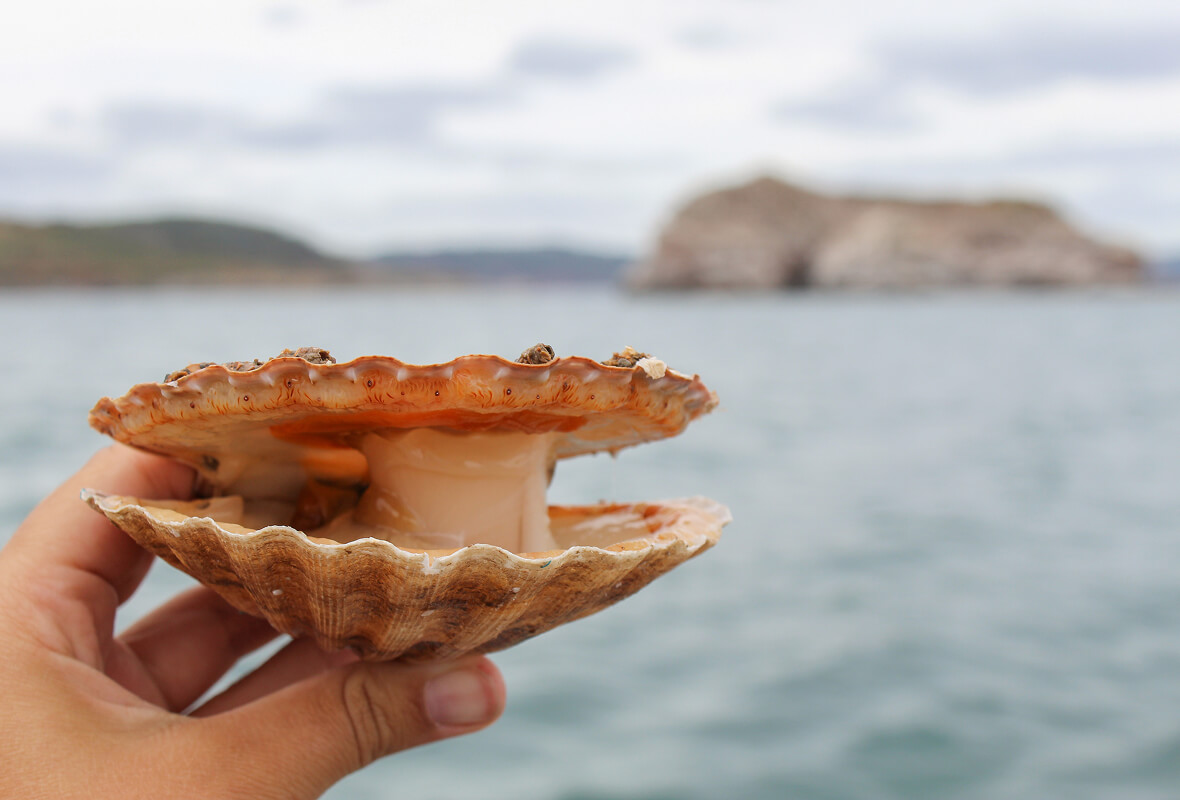
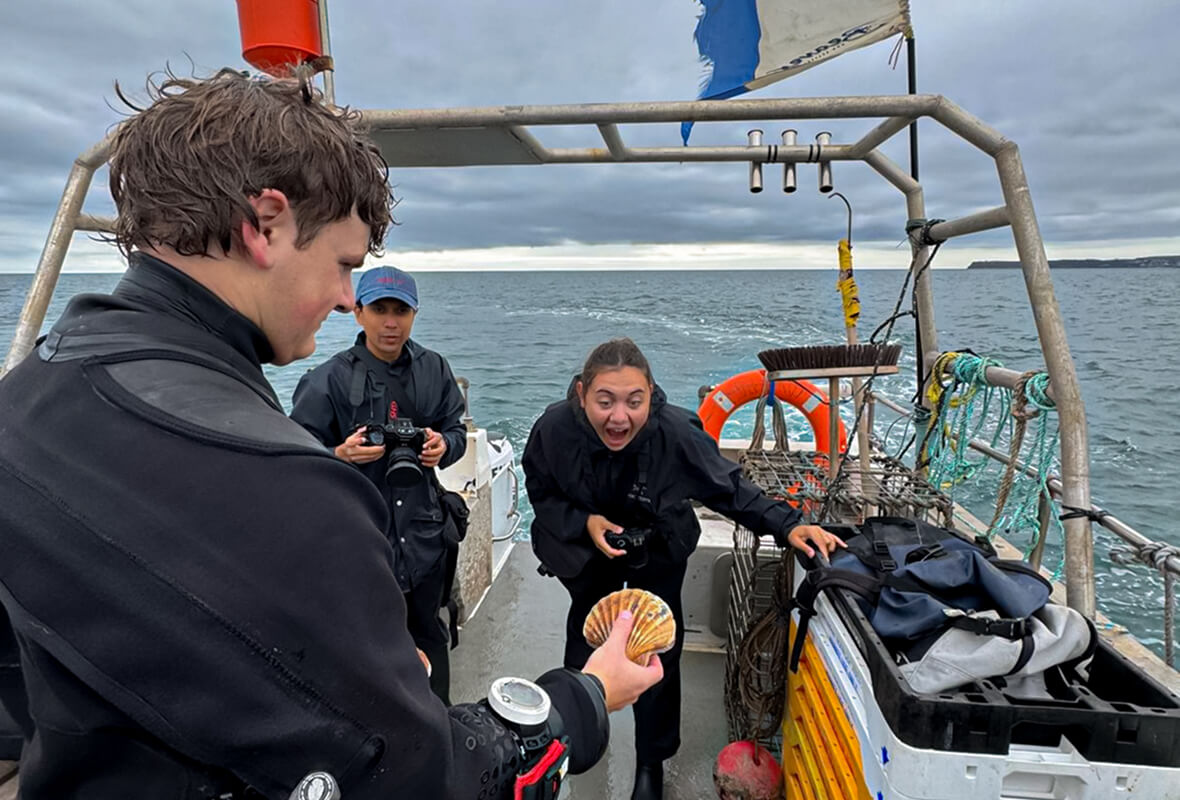
It is hardly surprising, then, that large offshore trawlers, dragging their gear across the seabed, make up the bulk of the fleet. Even though some plough through the ocean floor, damaging fragile ecosystems that can take years to recover.
Beside them, the Hollie Rose has something of Don Quixote about it: a champion of a pre-industrial kind of fishing, and of a way of working that respects the natural world.
Fortunately, there is more than one Don Quixote tilting at this particular windmill.
Pesky Fish, which sells most of Joe’s catch, brings together a growing number of small boats from around the British coast, boats that simply cannot compete with the big trawlers.
Pesky guarantees them a fixed purchase price, protecting them from the wild fluctuations of the fish market. All it takes is one large vessel returning with its hold full for prices to collapse to a few pence per scallop. Pesky, meanwhile, buys at the price agreed.
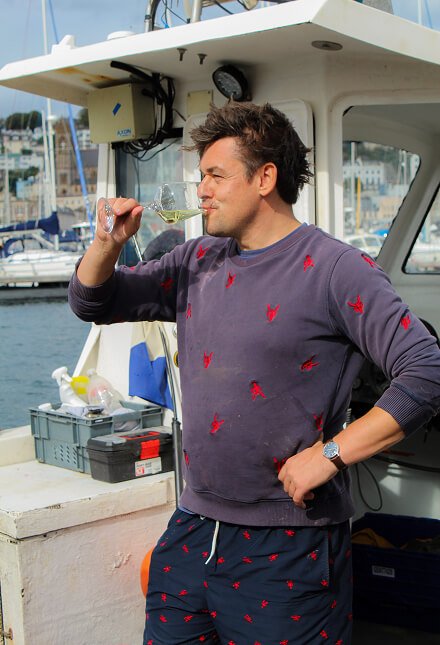
Ben King, the entrepreneur who wants to change fishing for the better
Ben King, founder of Pesky Fish, is waiting for us at Torquay harbour.
He has neither sea legs nor the local accent, and makes no attempt to pretend otherwise. Not that we could miss him. There he is in the distance, waving enthusiastically, dressed in a matching shorts-and-sweatshirt ensemble covered in tiny lobsters.
That alone might be enough to make him a marked man around the harbour, if his work with Pesky hadn’t already done the job.
The idea for Pesky came to him in Japan, where he spent part of his adolescence. At Tokyo’s Tsukiji market, he saw the respect with which fish was treated. Back in a country with more than thirty thousand kilometres of coastline, what he found instead were displays of fish that had spent days sitting around, vacuum-packed into fillets.
Ben rails against the absurdity of a system in which the very same wild sea bass can fetch £11.50 a kilo at Ramsgate fish market and £19 at Newlyn, for no better reason than the number of middlemen present that day. Or one where plentiful species such as pollock once sold for 50p, before Pesky began selling them directly to chefs for as much as £4.50.
He tells us all this with humour and passion, his enthusiasm perhaps helped along by the two bottles from Domaine William Fèvre entrusted to him, which he is rather keen to open.
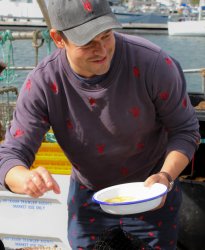
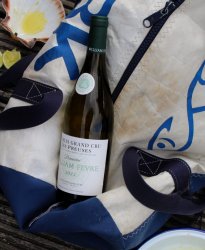
Ben also pulls everything we need for a rather fine scallop ceviche from his bag: thin slices of fresh scallop, a drizzle of oil, lime juice and zest.
The result is surprisingly delicate. Behind the fresh salinity of the scallops is a subtle almond flavour that works beautifully with our two Chablis Grands Crus from Domaine William Fèvre.
There is the obvious echo of the wines’ minerality, but also a delicate contrast with the spice and fruit of Les Clos and the roundness and smoky notes of Les Preuses.
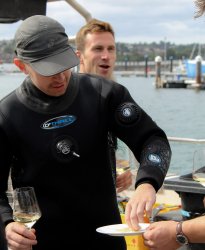
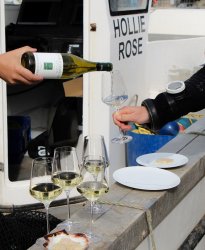
Chablis, a terroir itself shaped by shellfish (see our article ‘Beneath the vines, an ancient shore’), has a natural affinity with shellfish on the plate.
And that is where the idea for our underwater harvest came from.
The gestures are remarkably similar from one craft to the other. The winemaker sorts the grapes; the diver measures the scallops. Both defend the same idea of craftsmanship: one that chooses patience over yield, even if it means leaving behind what industrial operations would scoop up indiscriminately.
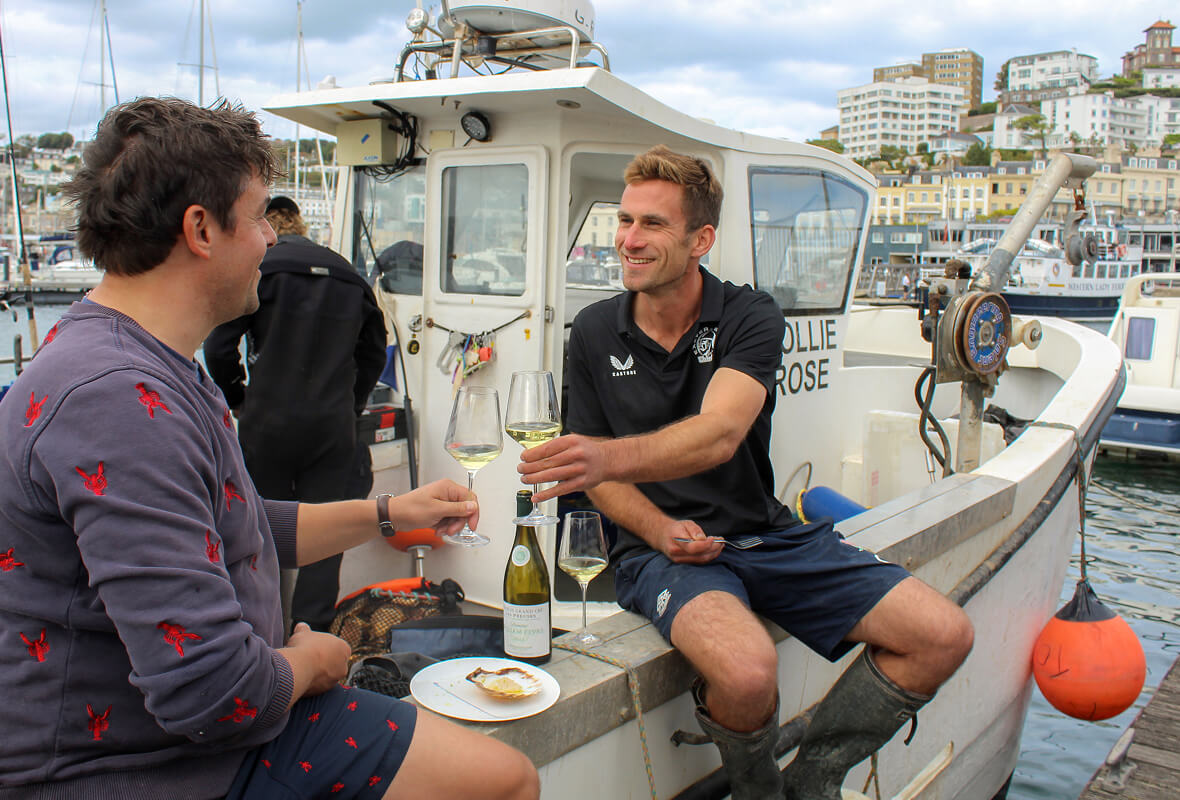
Fortunately, the theory holds up in practice.
Our fishermen are delighted with our improvised apéritif. It is a considerable upgrade on the usual fare aboard. Dan puts away his packet of Lunchables crackers, the sort of snack more suited to a school lunchbox, and nobody complains.
Over scallop ceviche and glasses of Chablis shared on deck, the Hollie Rose crew finally welcomes us into the fold, inviting us to return whenever we like. Preferably, of course, with something to satisfy their newfound taste for Domaine William Fèvre wines.
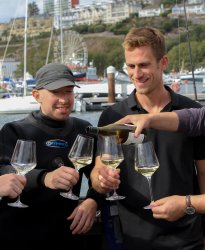
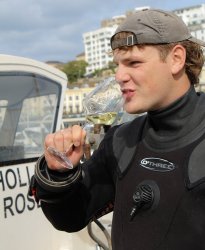
As for us, we leave with arms full of scallops and a newfound respect for just how much patience, muscle and skill it takes to bring them to the surface.

RECIPE - From market stall to table: where the sea meets the cellar.
In each edition of The Journal, we share recipes that bring flavours and stories together. This time, the journey takes us to Bordeaux and Chablis, where Olivier de Butler and Mathieu Crosnier reflect on the fruits of their labour at Bonne Mer. They create a dialogue between the briny depth of black mullet, the crisp freshness of R de Rieussec, and the saline tension of William Fèvre’s Grands Crus.
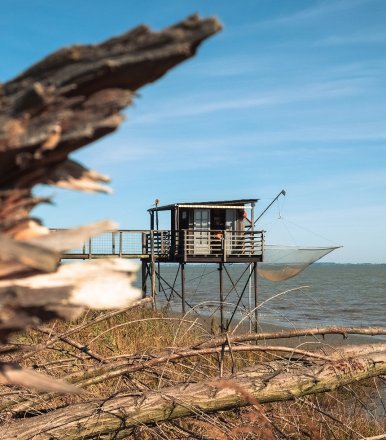
A day in a carrelet on the banks of the Gironde, some rather elusive prawns and two white wines to console ourselves: Blanc de Duhart-Milon 2024 and Château Paradis Casseuil Blanc 2024.
A hydrographic guessing game. Can you identify the river, sea or ocean behind seven Domaines Barons de Rothschild Lafite estates?